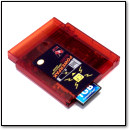
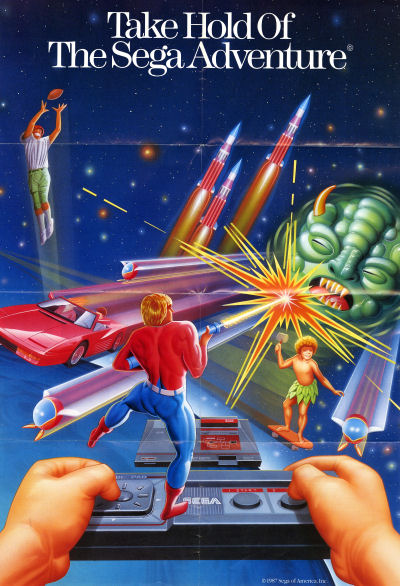
 Hudson’s Adventure Afro (Side 1)
As a kid that grew up with Atari and Nintendo consoles in the household, I was always curious about Sega.
I remember seeing the Master System in a glass case at Toys ‘R’ Us, and it seemed exotic and wonderful with its 3D glasses and futuristic angular design. It felt like the cooler, anti-Nintendo.
But I didn’t get a Master System until around 1995, when my dad bought one for me used at a local used game store called Buy-Rite Video Games. At that time, Buy-Rite was located inside an indoor flea market mall off Capital Blvd. in Raleigh. It was a seedy, run-down place, but my dad enjoyed hunting for good deals at flea markets, and we regularly did that together on the weekends.
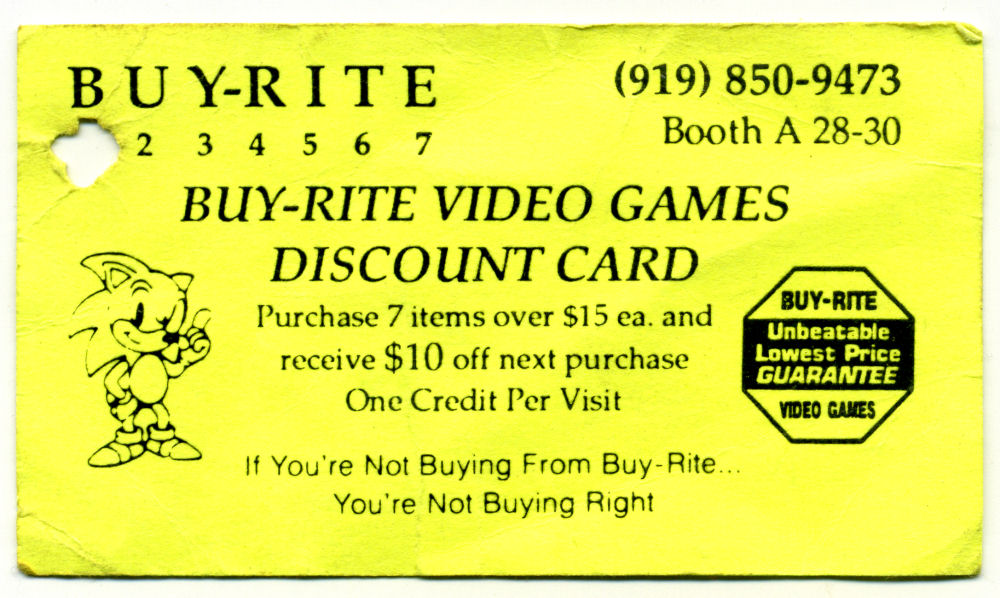 A short time after I got my first used Master System at Buy-Rite, we bought another one. As I browsed Buy-Rite with my dad on another occasion, I just happened to be there when I overheard someone trying to sell a Sega Master System to the store. I looked over and saw a young black kid, maybe 8 or 9 years old, by himself with a green backpack. The owner, a mid-40s white guy, was being rude and giving the kid a hard time about it, and he refused to buy it.
After that, my dad approached the kid in the store and said we’d buy it from him. As the kid was excitedly showing me what was in his backpack, the owner of Buy-Rite stepped out from behind the counter and began openly yelling at all of us — about “trying to steal his business” out of his own store, or some such nonsense. My dad exchanged a few mildly harsh words with him, and the owner demanded that we leave. We did.
On the curb outside of the Flea Market Mall, we cut a deal with the kid. I remember we gave him $40 cash, and I got a great set of Sega Master System, controllers, a light gun, and a handful of games in much better condition than the one we bought from Buy-Rite — and for much cheaper, too. The kid was very happy, and I never shopped at Buy-Rite again.
It turns out the owner of Buy-Rite was a serial asshole — he kept gipping people for years, and finally shut down the store in 2005. Good riddance. (Watch him show up in the comments.)
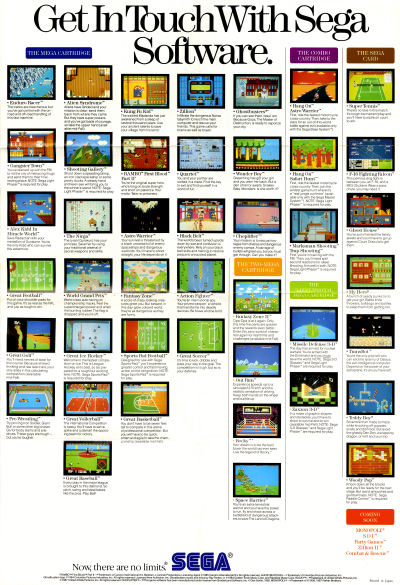 “Now, there are no limits.” (Side 2)
I’ve played a lot of Master System games since then, but my favorite is still Enduro Racer played with a Sega Control Stick, which I got from that kid back in 1995. (I wrote a big post about Enduro Racer back in 2006.)
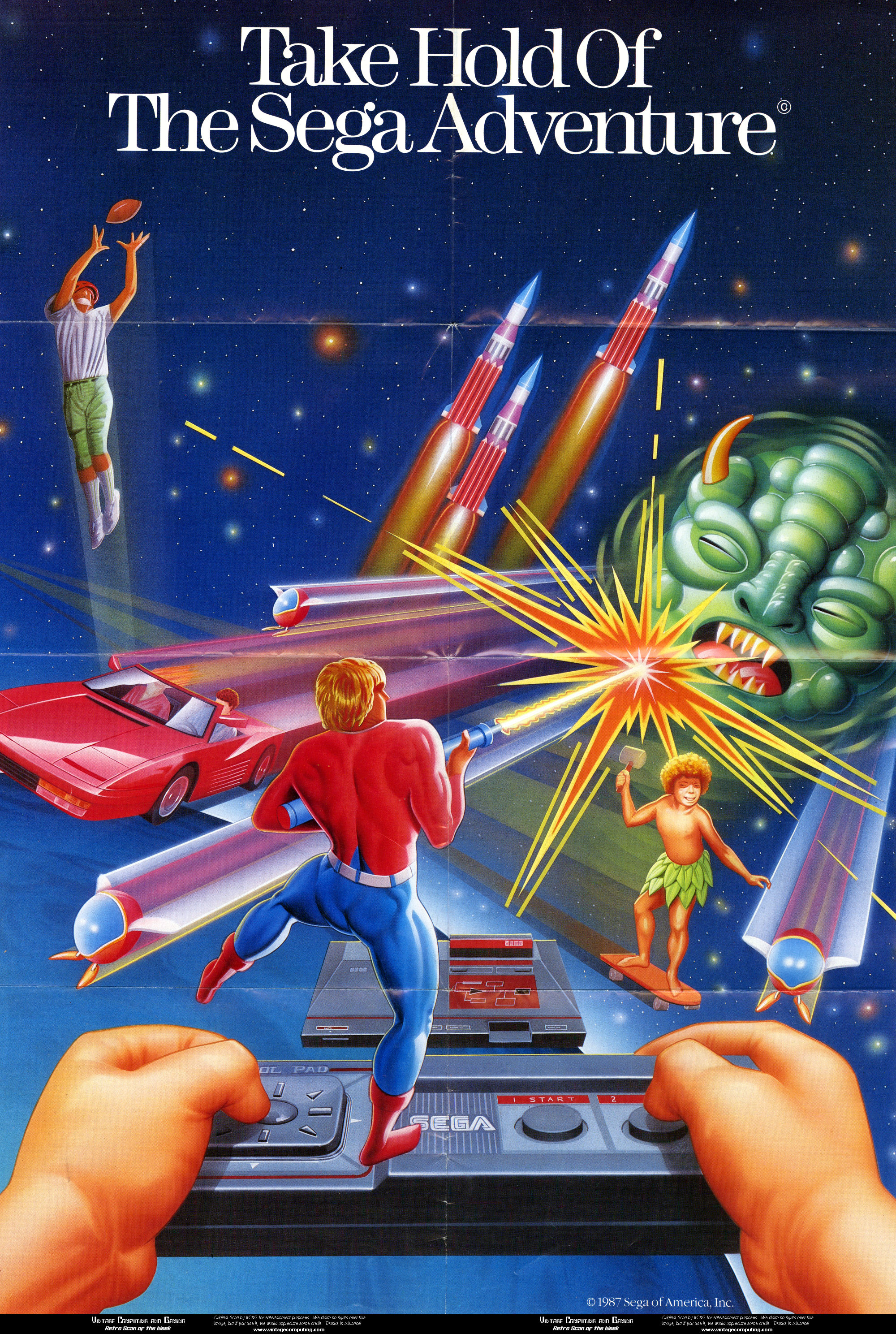
What you’re looking at here is a promotional Sega poster that came with a Sega Master System game — maybe one of those I received that day at the Flea Market Mall. I think the poster was originally folded up and placed inside a plastic SMS game case next to an instruction manual, although it is possible it originally came in the Sega Master System console box itself.
[ From Sega Master System Poster / Flyer, 1987 ]
Discussion Topic: What’s your favorite Sega Master System game?
—
See Also:
Lessons from the Master: The Zen of Enduro Racer (2006)
Nintendo vs. Sega: Christmas 1987 Shootout (Retro Scan, 2010)
Benj’s 1989 Christmas List (Retro Scan, 2013)
 Fear has an address: 677 Bluebonnet Ln., Wichita, Kansas 67218