Apple II Agent: An AI coding environment for the Apple II

Monday, November 9th, 2026
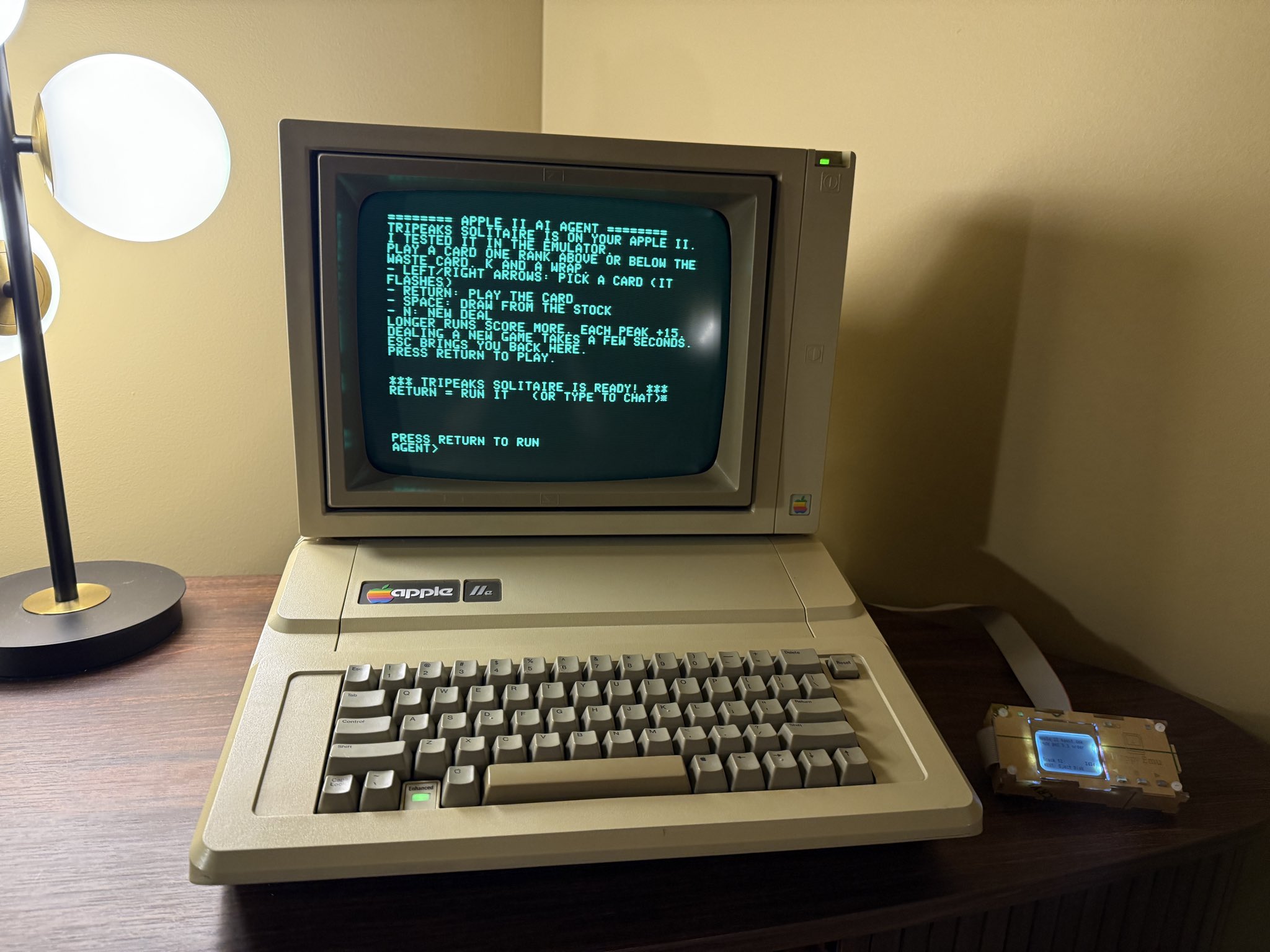
I recently revived an open source Apple II Agent project I began in January: An Apple IIe with a custom client that allows AI to easily write software through a chat taking place on the machine itself, similar to Anthropic’s Claude Code.

Through an Ethernet card, the client links to Anthropic’s Claude Opus AI model using a Mac proxy with API access to Claude. After automated testing in emulators on the proxy (allowing rapid iteration in an accelerated Apple II simulation), the agent deploys the new program (in BASIC or assembly) directly into real Apple II memory, over the Ethernet link (it’s an Uthernet II card). That part feels like magic.
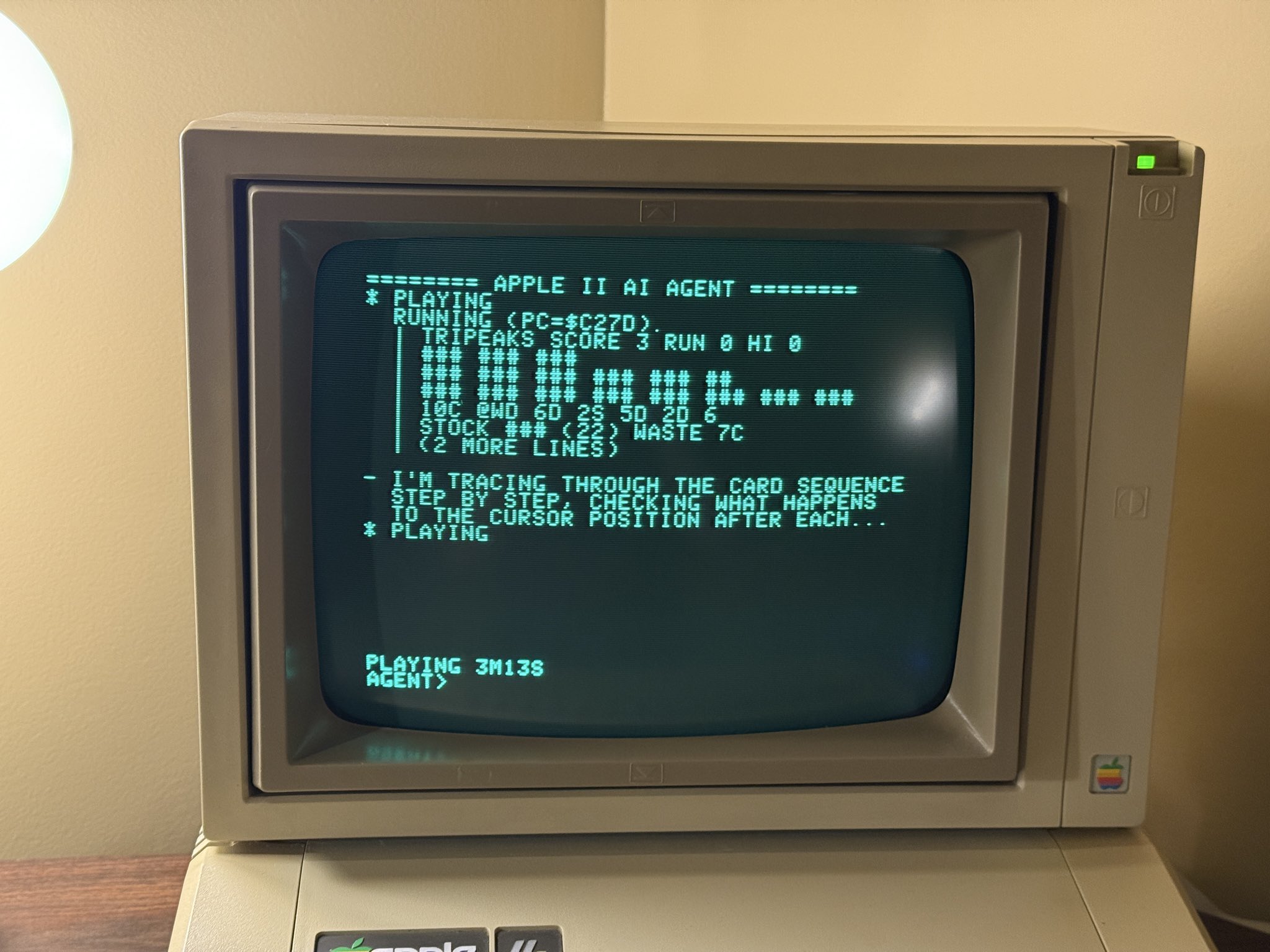
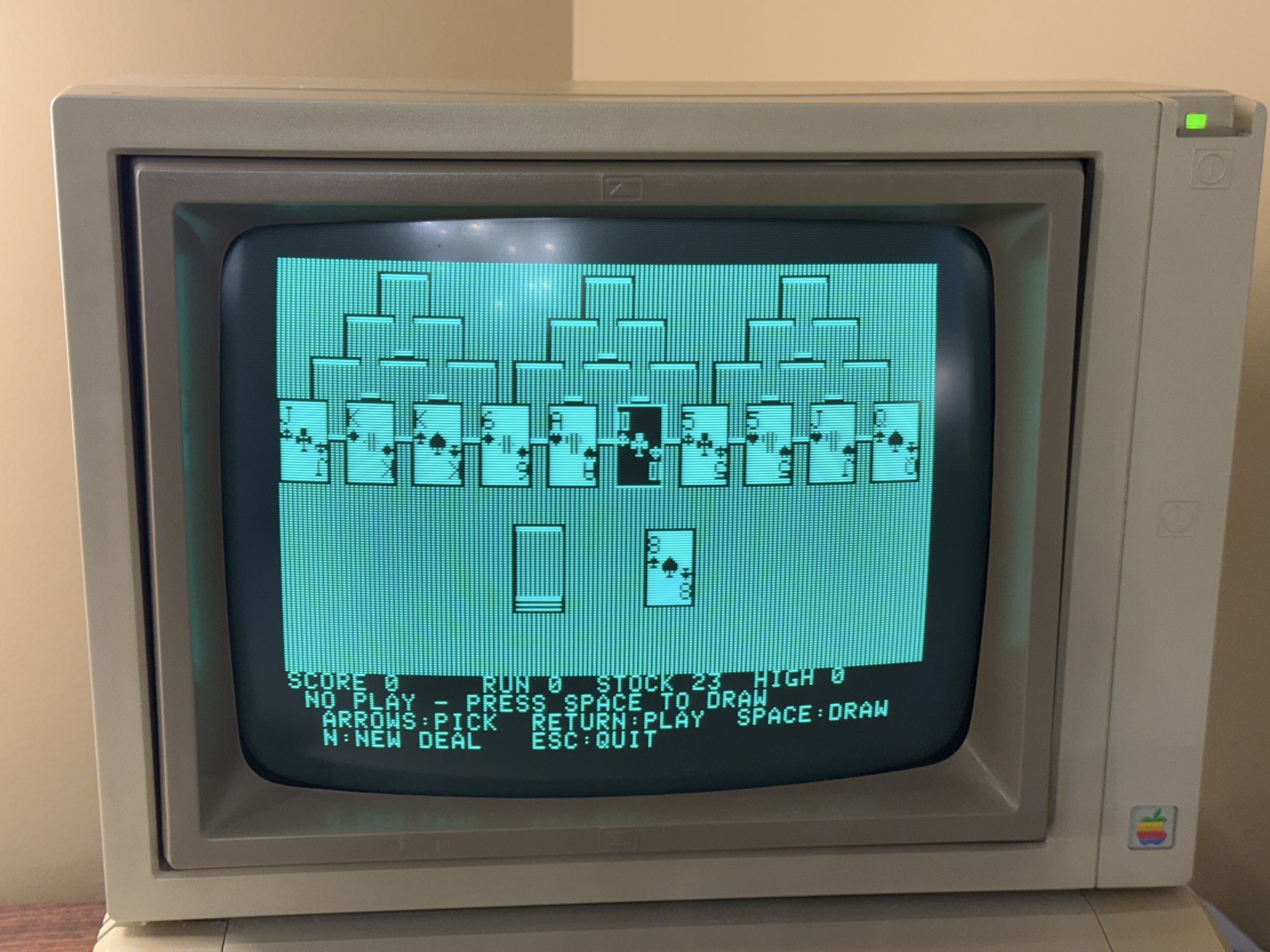
The goal is that a user sitting at the Apple II can type whatever they want and just have it appear in front of them, and so far it works very well! I’ve made some solitaire games with mouse support (and a Sim City clone) that are really fun to play. I might get addicted to creating hi-res monochrome Apple II games with the mouse (using Apple’s official Apple II mouse card of course!).

The code for the agent is currently available on GitHub if you want to try it yourself. The proxy runs on a Unix-like machine (can be a Mac), and right now the Apple II end requires an Uthernet II card, but it could be adapted to other types of network interfaces.
Aside from the Apple II Agent, I’ve also been experimenting with using AI to make multiplayer mods of classic NES games (four-player Super Mario Bros. is my fave so far) and to port PC games to unusual platforms (such as ZZT for the NES, a BBS door game for the NES, and the first NES game with a built-in AI language model). You can see (and play) many of them over at the BX Foundry website, which is my home for experimental projects.

Unfortunately, just after I finished getting the Apple II Agent in great working order and had coaxed Opus into creating an awesome mouse-based Solitaire engine, my wife requested that my somewhat smelly Apple IIe (musty with age) should leave the house, so now I’m searching for a less malodorous unit to keep running it on. 🙂

I recorded a quick demo back in October you can see below:
[ Retro Scan Special ] Buying from Epic Games in 1996

Monday, March 18th, 2013

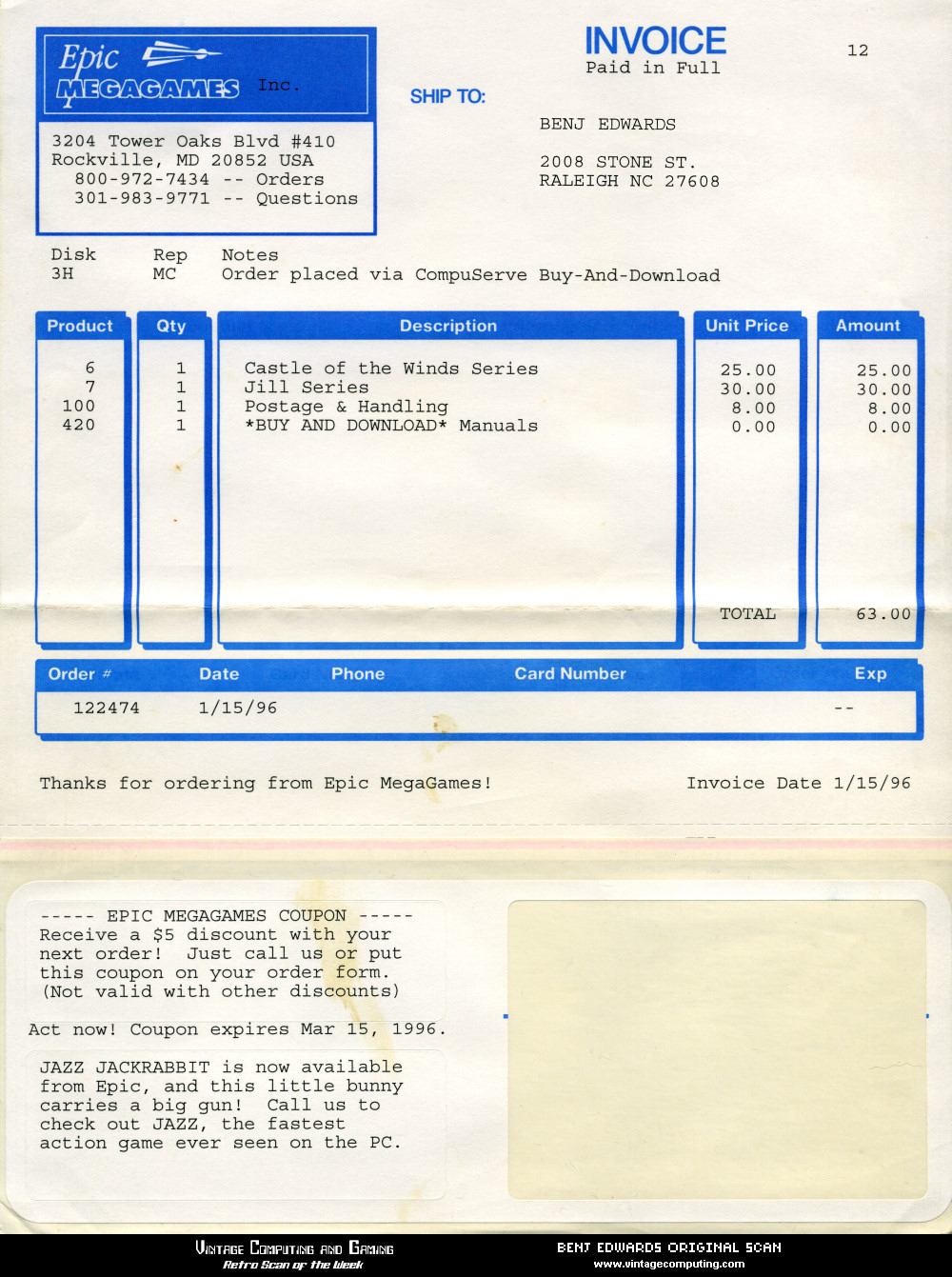
Epic MegaGames Shareware Registration Invoice - 1996Epic MegaGames purchase invoice in January 1996.

You’re looking at a rare physical artifact from the twilight of shareware’s golden age.

Way back in 1996, when Gears of War maker Epic Games still went by “Epic MegaGames,” I ordered a few registered copies of its shareware games through CompuServe.

Since it was a special buy-and-download deal (very unusual in 1996), I didn’t receive copies of the games themselves on disk. Instead, Epic mailed an invoice, copies of the games’ instruction manuals (which have been displaced from this set, or else I would have scanned them too) and a shareware demo disk from Epic partner Safari Software.

[ Continue reading [ Retro Scan Special ] Buying from Epic Games in 1996 » ]

Tim Sweeney Interview: On ZZT, Shareware, Epic, and More

Monday, May 25th, 2009

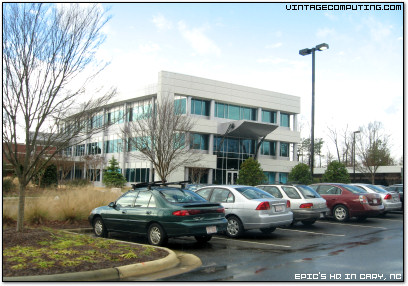
Epic Games' Headquarters

You’ve probably heard of Epic Games by now — you know, the company behind Gears of War and the Unreal Engine. We read a lot about those blockbuster products these days, but Epic’s story stretches back much farther than that. For example, did you know that the very same Epic was once one of the world’s foremost shareware game publishers?

In January of this year, I had the immense honor of exploring Epic’s rich history in a sit-down interview with Tim Sweeney, founder and CEO of Epic. Over lunch at a local restaurant, we discussed his early programming years, the genesis of ZZT (Epic’s first game), Jill of the Jungle, Apogee Software, the shareware wars, his thoughts on id Software’s early work, the future of game graphics, and much more.

After some time on the back burner, this long, in-depth interview has finally seen the light of day over at Gamasutra. Shareware fans and general history computer buffs shouldn’t miss it. Heck, I did the interview and I’m reading it again. I hope you enjoy it.

Great Moments in Shareware: ZZT

Monday, September 3rd, 2007

ZZT

Read any popular game publication these days, and you’ll probably come across ample mention of Epic Games’ Unreal Engine, the 3D powerhouse behind blockbuster first-person shooters like Bioshock and Gears of War. Believe it or not, one of today’s hottest game engines traces its roots back to a 2D text-based game programmed by a University of Maryland college student during the golden age of shareware.

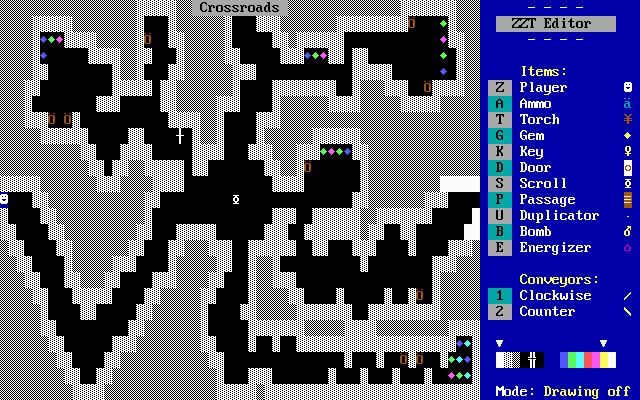
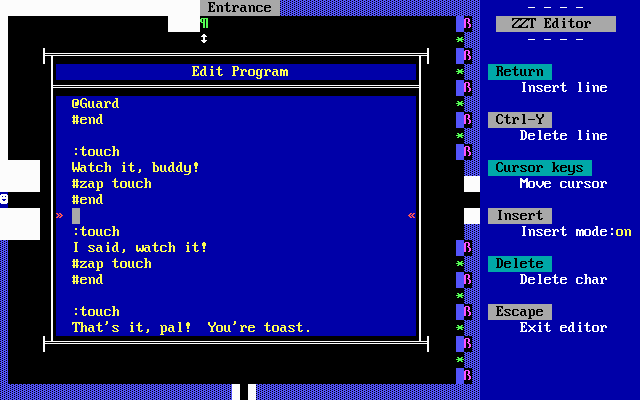
Tim Sweeney founded Potomac Computer Systems in 1991 with the release of ZZT, a graphical ASCII character-based game that ran on a simple object-oriented platform programmed by Sweeney. With an in-game editor, Sweeney created multiple ZZT episodes that he sold to finance the new company. Luckily, Sweeney didn’t limit the in-game editor to himself; it featured prominently on the title screen of the free shareware edition. Much to Sweeney’s surprise, the editor itself soon became the most popular part of ZZT, allowing players to create their own games in the ZZT engine. Potomac changed its name to Epic MegaGames, and a shareware giant was born.

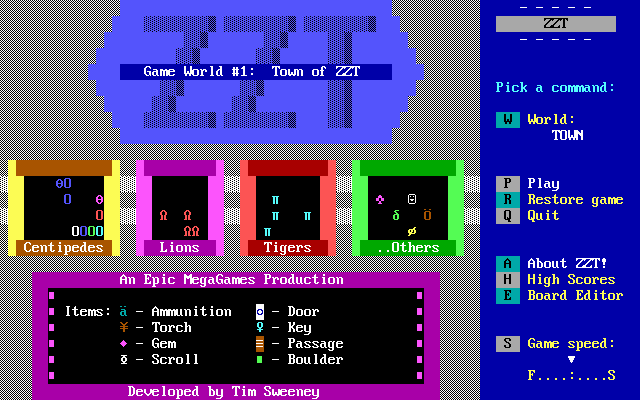
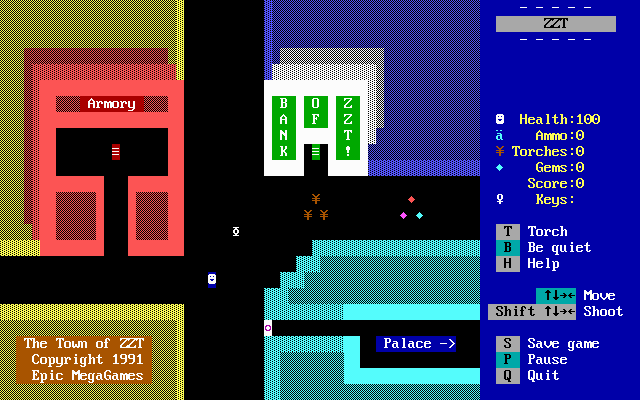
ZZT Title Screen ZZT Game Screen ZZT Board Editor ZZT-OOP Code

A large community of rabid ZZT fans still thrives thanks to the Internet, where enthusiasts trade nostalgia, user-made games, and the latest attempts to squeeze every last drop out of the ZZT engine through emergent programming techniques. For example, clever world builders have managed to reproduce just about every major 2D game genre — even genres the engine wasn’t designed for — in ZZT‘s editor, albeit in primitive forms. For modern ZZT fans, the game’s fun lies not only in playing the community’s user-created games, but in the challenge of creating new and unexpected things with a simple set of tools and components.

The original shareware package of ZZT only included one game: Town of ZZT, a whimsical adventure created by Sweeney that calls upon a player’s action and puzzle-solving skills. But in the late 1990s, Epic released all of Sweeney’s classic ZZT episodes as freeware, so you’ll find those worlds in the file below as well, including Dungeons of ZZT.

Have fun. Feel free to share your fond ZZT memories (or latest ZZT exploits) with the rest of us.

(Update – 05/25/2009: If you love ZZT, check out this interview I conducted with its creator, Tim Sweeney.)

ZZT 3.2
Release Date: 1991
Author: Tim Sweeney (Epic MegaGames)
Platform: MS-DOS
Runs Best On: Any 286 PC or faster with MS-DOS
Notes:
Includes full Town, City, Caves, and Dungeons of ZZT episodes. ZZT runs pretty well on modern computers under Windows. You might also want to try running the game under DOSBox. Uses the PC speaker for sound.
– Download ZZT 3.2 – (175KB)