Archive for the 'Regular Features' Category

Ask the Chessmaster

Tuesday, November 29th, 2011

Ask the Chessmaster

Greetings, my fellow chess fans. Welcome to The Chessmaster.

That is, welcome to a new feature where I, The Chessmaster, will answer your personal letters to the best of my chessly ability.

Since I have been playing chess almost non-stop for over 300 years, I thought it might be a good time to bring my accumulated wisdom directly to the people.

In preparation for this column, I have been soliciting questions from a troubled American populace for the last six months. It is my hope that my responses will benefit all readers as much as they help those who submitted the questions.

With that out of the way, let’s get to the first question.

[ Continue reading Ask the Chessmaster » ]

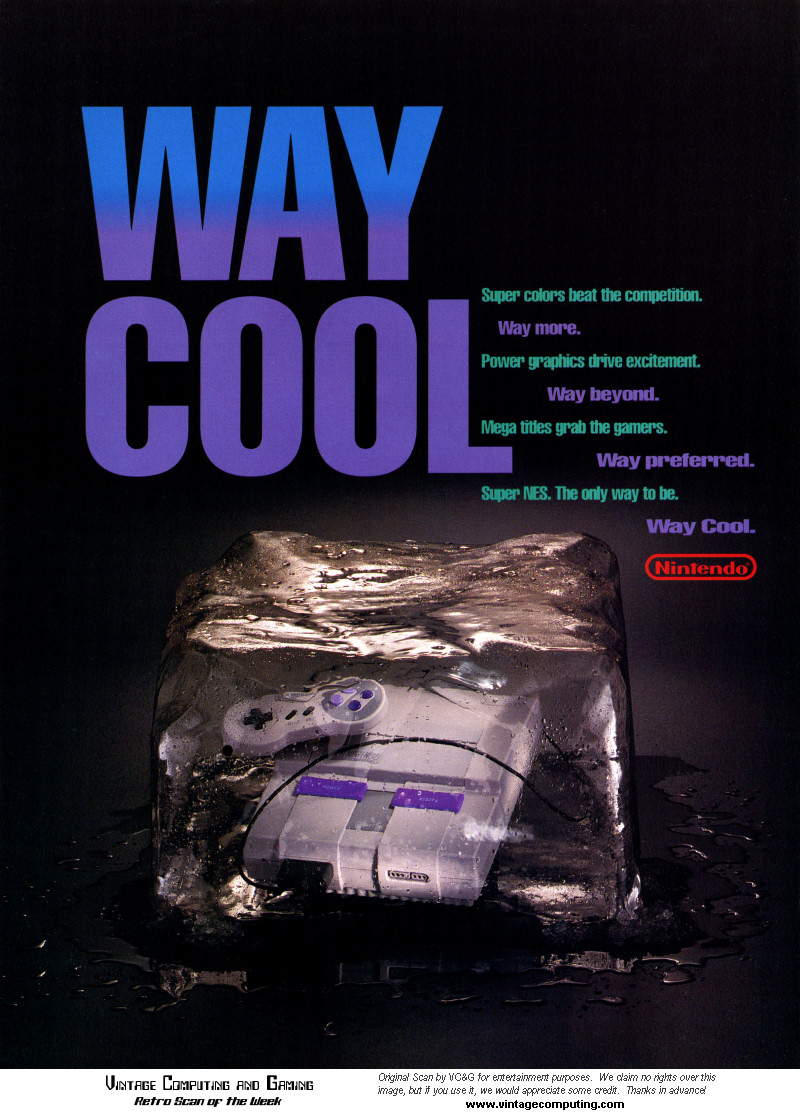
[ Retro Scan of the Week ] Super NES on Ice

Monday, November 28th, 2011

Way Cool Super NES Super Nintendo Ice Cube Ad -1994A novelty cocktail ice cube for giants.

[ From Nintendo Power, January 1994, back cover ]

Discussion Topic of the Week: Has one of your computers or video game consoles ever overheated? Tell us about it.

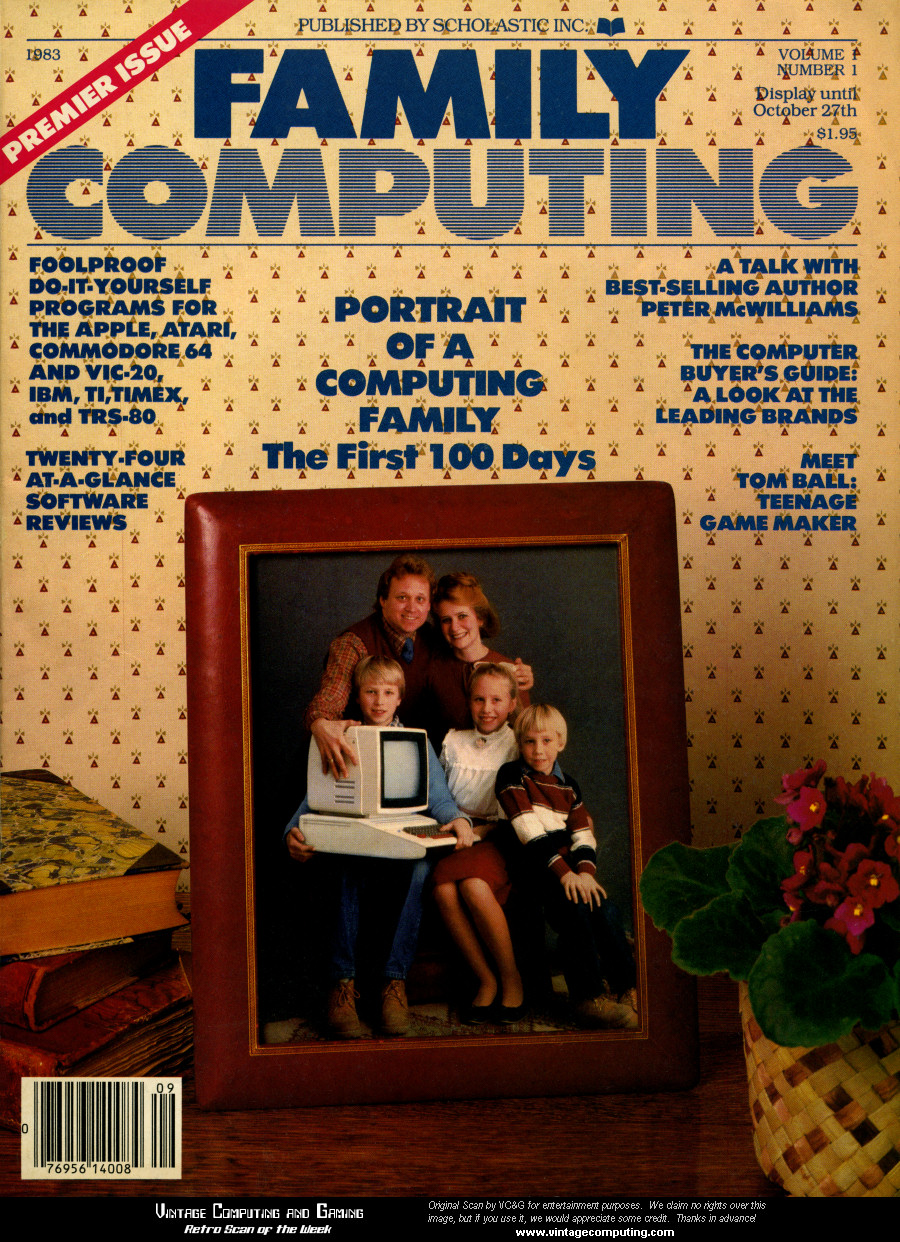
[ Retro Scan of the Week ] Family Computing

Monday, November 21st, 2011

Family Computing - September 1983 - Cover ScanThe cover of the first issue of “Family Computing” magazine, September 1983.

Happy Thanksgiving from VC&G

[ From Family Computing, September 1983, cover ]

Discussion Topic of the Week: What’s your favorite food to eat for Thanksgiving? Favorite video game to play?

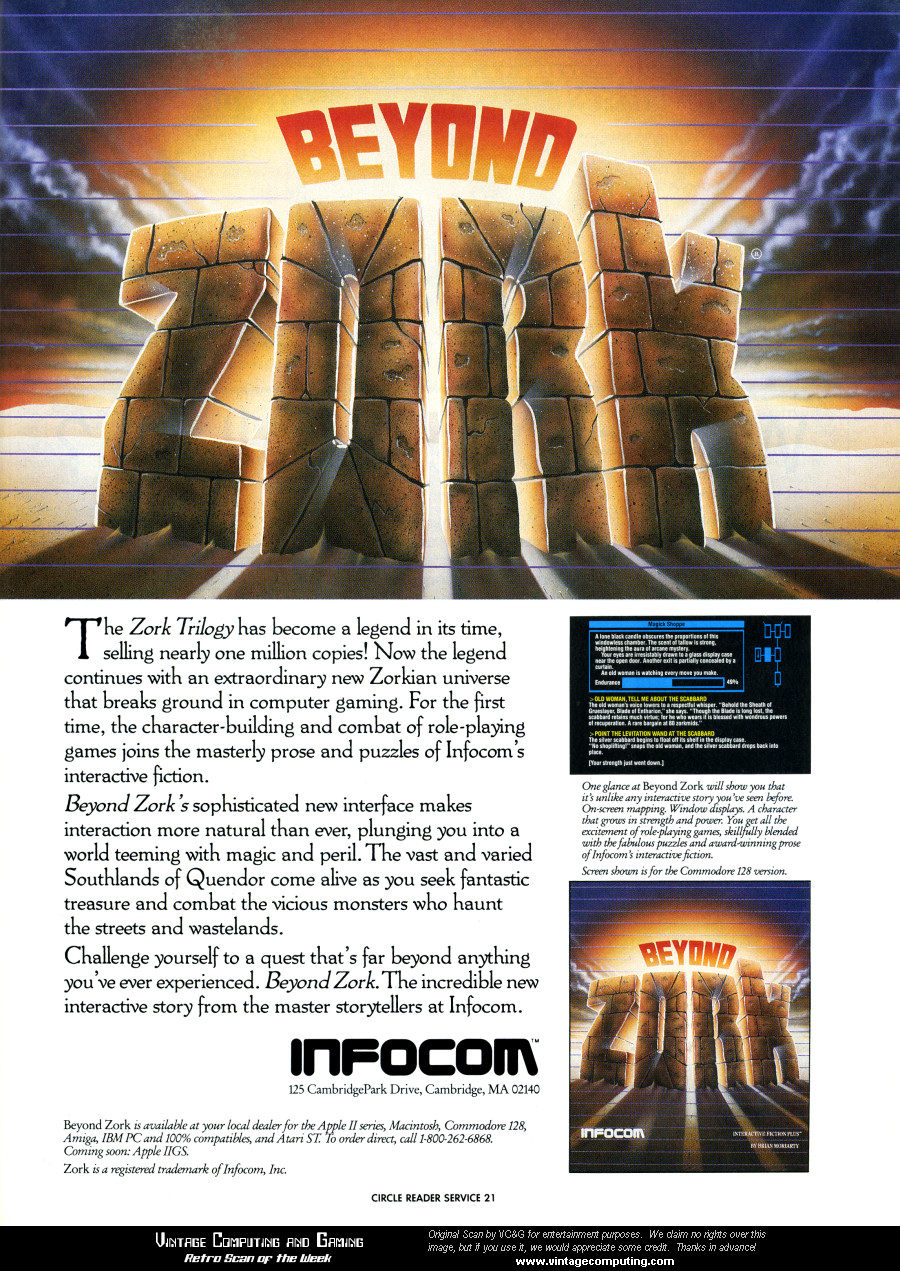
[ Retro Scan of the Week ] Beyond Zork

Monday, November 14th, 2011

Atari 400/800 BASIC Reference Manual Cover - 1979That spot in the upper left is actually mold that grew on the paper.

When is a text adventure game not a text adventure game? When it’s Beyond Zork: The Coconut of Quendor.

Infocom’s fourth entry in the Zork series (actually the 8th if you count the related Enchanter series and Wishbringer) combined interactive fiction with light RPG elements such as equipment, stat sheets, an on-screen map, and character leveling to create a unique game that may be best compared to a single player MUD (a SUD?).

Beyond Zork sports procedurally generated maps in some areas, so replay value is theoretically infinite. But randomness is a double-edged sword in this case: its magic items move around between saves and loads, and that can frustratingly break the suspension of disbelief (i.e. you see it, you die, you come back, and it’s gone). Still, Beyond Zork is an amazing game that deserves more attention than it usually gets.

[ From Family and Home Office Computing, November 1987, p.89 ]

Discussion Topic of the Week: What’s your favorite entry in the Zork series? Every Zork-related game counts.

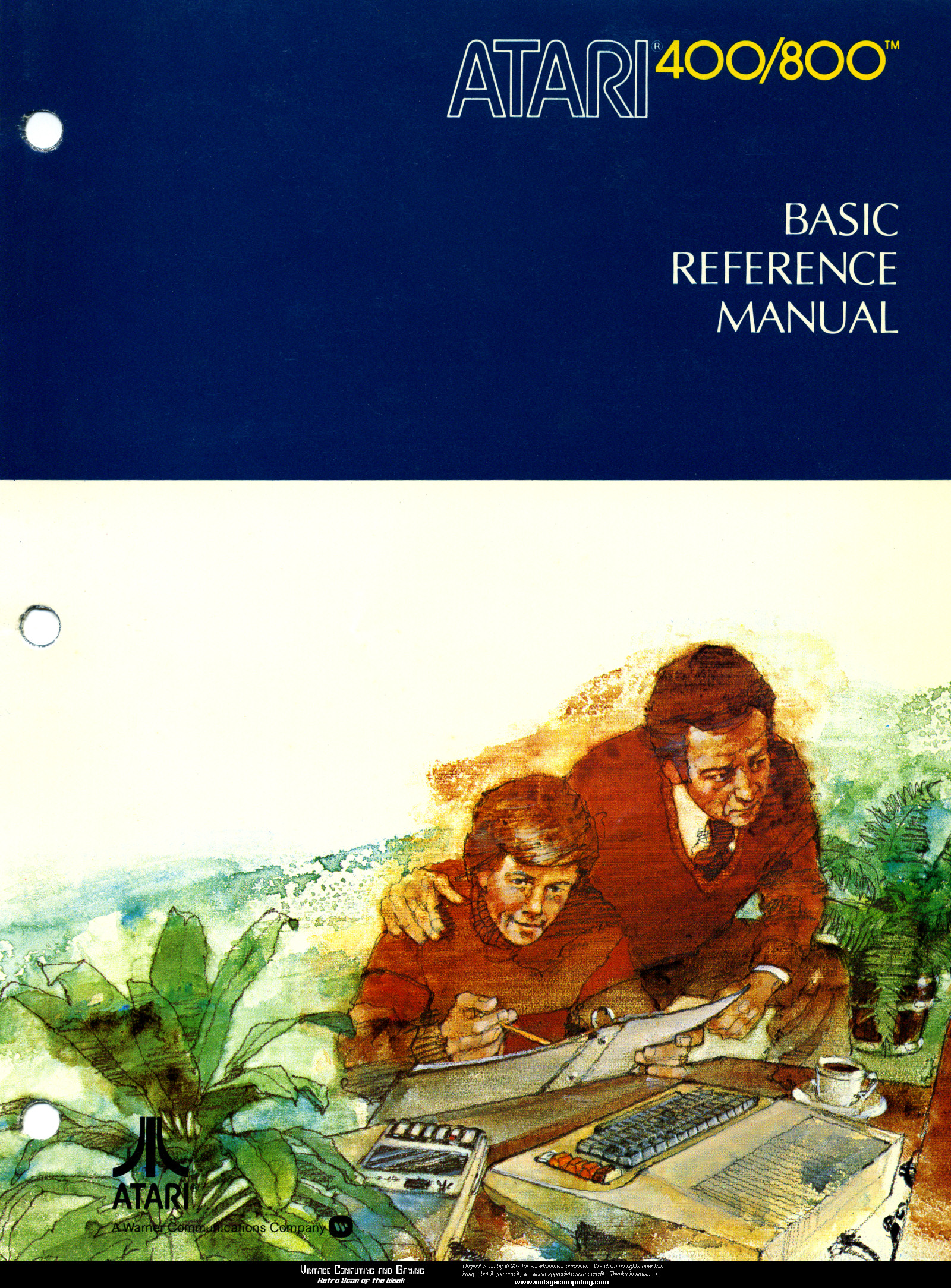
[ Retro Scan of the Week ] Father and Son at the Atari

Monday, November 7th, 2011

Atari 400/800 BASIC Reference Manual Cover - 1979Stranded in a jungle with only a desk, a cup of coffee, and an Atari 800.

I’ve always enjoyed the illustration style found on the earliest Atari 400/800 instruction manuals, such as the one here for the Basic Reference Manual. I’ve included an extra large scan this time so you can enjoy the detail up close.

Does anybody know the name of the artist who did them? I’ll admit I haven’t looked very hard.

By the way, this manual was written by River Raid creator Carol Shaw.

[ From Atari 400/800 BASIC Reference Manual, circa 1979, cover ]

Discussion Topic of the Week: Have you ever programmed with your dad? Tell us about it.

[ Retro Scan of the Week ] Dungeon Master Duo

Monday, October 31st, 2011

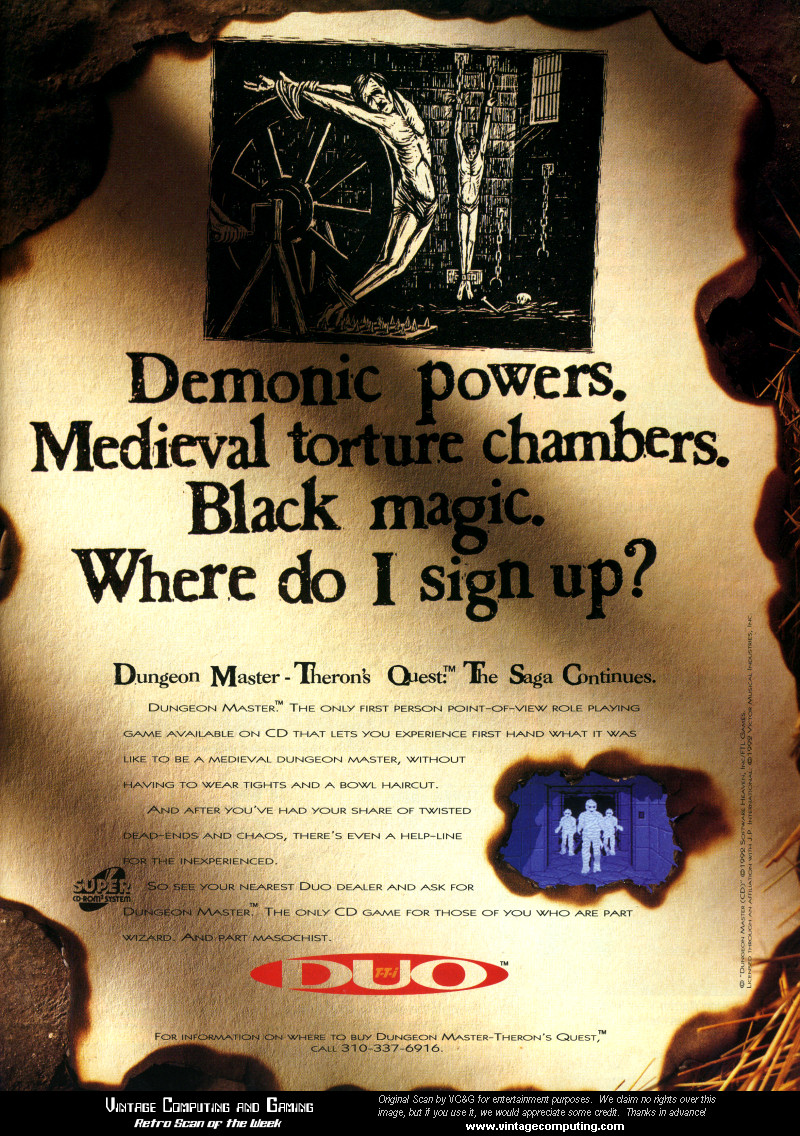
Dungeon Master: Theron's Quest for the TTI Turbo Duo Ad - 1993Dungeon Master: Theron’s Quest – The video game for brutal dictators.

Happy Halloween from VC&G

P.S. Here’s a Dungeon Master II scan from last year.

[ From Electronic Gaming Monthly, June 1993, p.77 ]

Discussion Topic of the Week: Have you ever dressed as a video game character for Halloween? Tell us about it.

[ Retro Scan of the Week ] The Daisy Wheel

Monday, October 24th, 2011

Scan of a Daisy Wheel Printer Font WheelText in bloom.

Here’s an interesting piece of obsolete technology — a plastic Lanier daisy wheel for a daisy wheel printer. Its actual size is about three inches in diameter.

There was a time when having a “letter quality” impact printer meant that the machine printed text using pre-formed, typewriter-like type elements. Some printers held these elements in the shape of a cylinder or a sphere, but in the case of the daisy wheel printer, the character forms projected from a central wheel in a shape that resembled a daisy flower.

Daisy wheel printers produced text by rotating the wheel to the proper character spoke and striking the back of it against an ink ribbon, which would leave a mark on the underlying paper.

Each daisy wheel rendered a different font (or type size), and thus fonts could be changed as easily as replacing one wheel with another. In this case, you’re looking at a wheel for the font called “Prestige Elite 12,” but printer makers sold dozens of other font wheels, such as those for Courier 10 or Cubic 15.

The daisy wheel method reproduced fonts using a dramatically different technique than, say, dot-matrix printers, which used a single matrix of metal pins to form various characters.

Laser and inkjet printers, which produce much less noise and use software-based fonts, made impact printers thoroughly obsolete for every-day PC use by the late 1980s (though stragglers used dot-matrix printers well into the mid-1990s due to lower prices). Even so, impact printers still reign supreme in specialized applications that require physical force, such as document reproduction via carbon copy paper.

[ Scan of Lanier daisy wheel, circa 1978 ]

Discussion Topic of the Week: Have you ever used a daisy wheel printer? Tell us about it.

[ Retro Scan of the Week ] Gwendolyn

Monday, October 17th, 2011

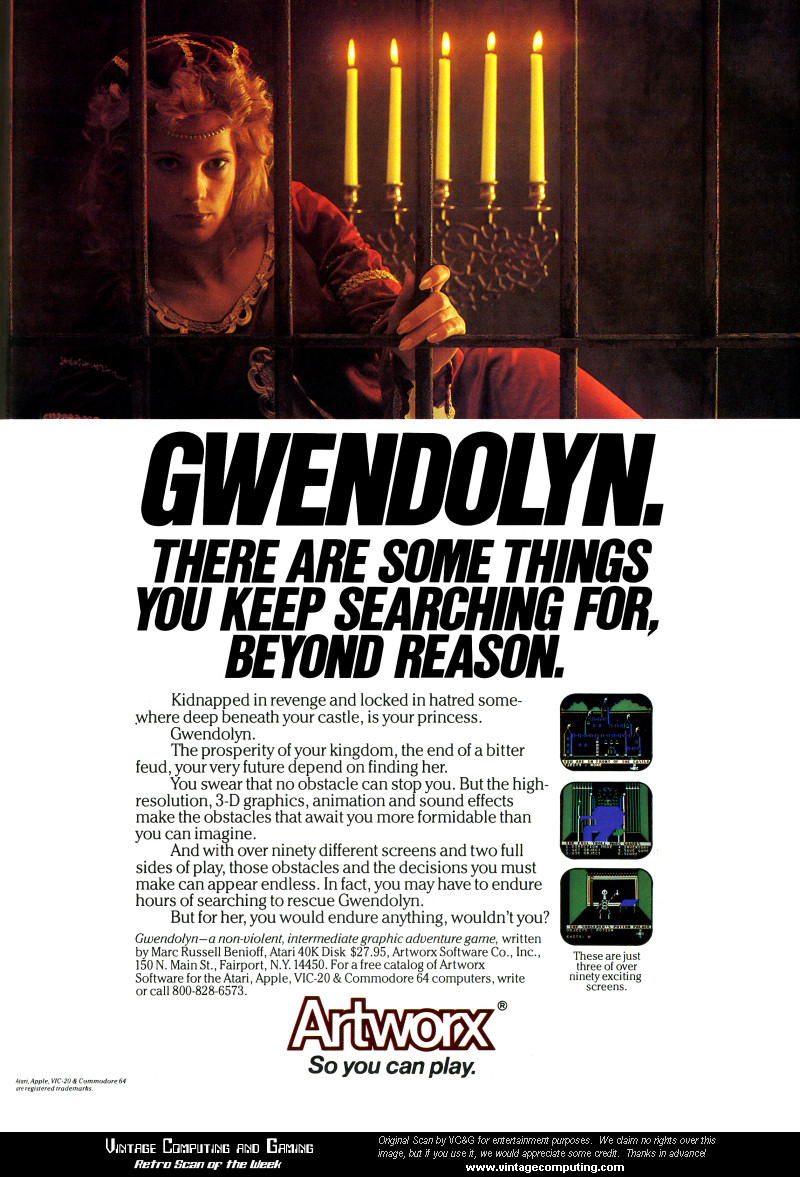
Artworx Gwendolyn Atari 800, Apple II Ad - 1983It’s a trap!

[ From Compute!, September 1983 ]

Discussion Topic of the Week: What’s your favorite static-screen graphical text adventure game?

Dennis Ritchie (1941-2011)

Thursday, October 13th, 2011

Dennis Ritchie in MemoriamIn Memoriam: Dennis Ritchie (1941-2011)
Developer of the C programming language, co-creator of UNIX

Few individuals have been as influential in the field of computers as Dennis Ritchie. Programmers have used his language, C, to author much of the world’s best software. UNIX, an operating system Ritchie first co-developed in 1969, led the way for all modern interactive operating systems, including MS-DOS, Linux, and Mac OS X. UNIX still forms the conceptual and technological basis of most server operating systems in use today. Ritchie will be richly missed.

[ Retro Scan of the Week ] Black Tie Optional

Monday, October 10th, 2011

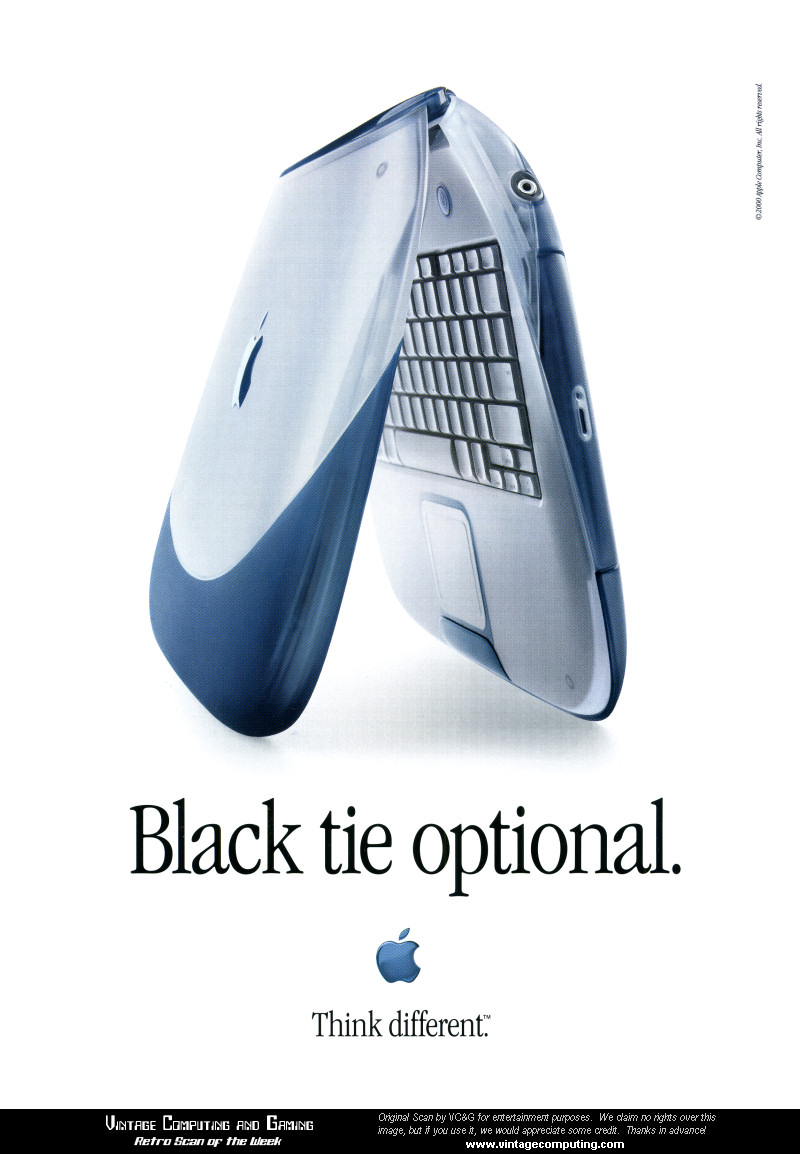
iBook Black Tie Ad - 2000The iBook: a minimalist scan in honor of Steve Jobs.

[ From Self, June 2000, back cover ]

Discussion Topic of the Week: What did you think of the original iMac when you first saw it?