[ Retro Scan of the Week ] Electronics Boutique Flyer

Monday, July 30th, 2012

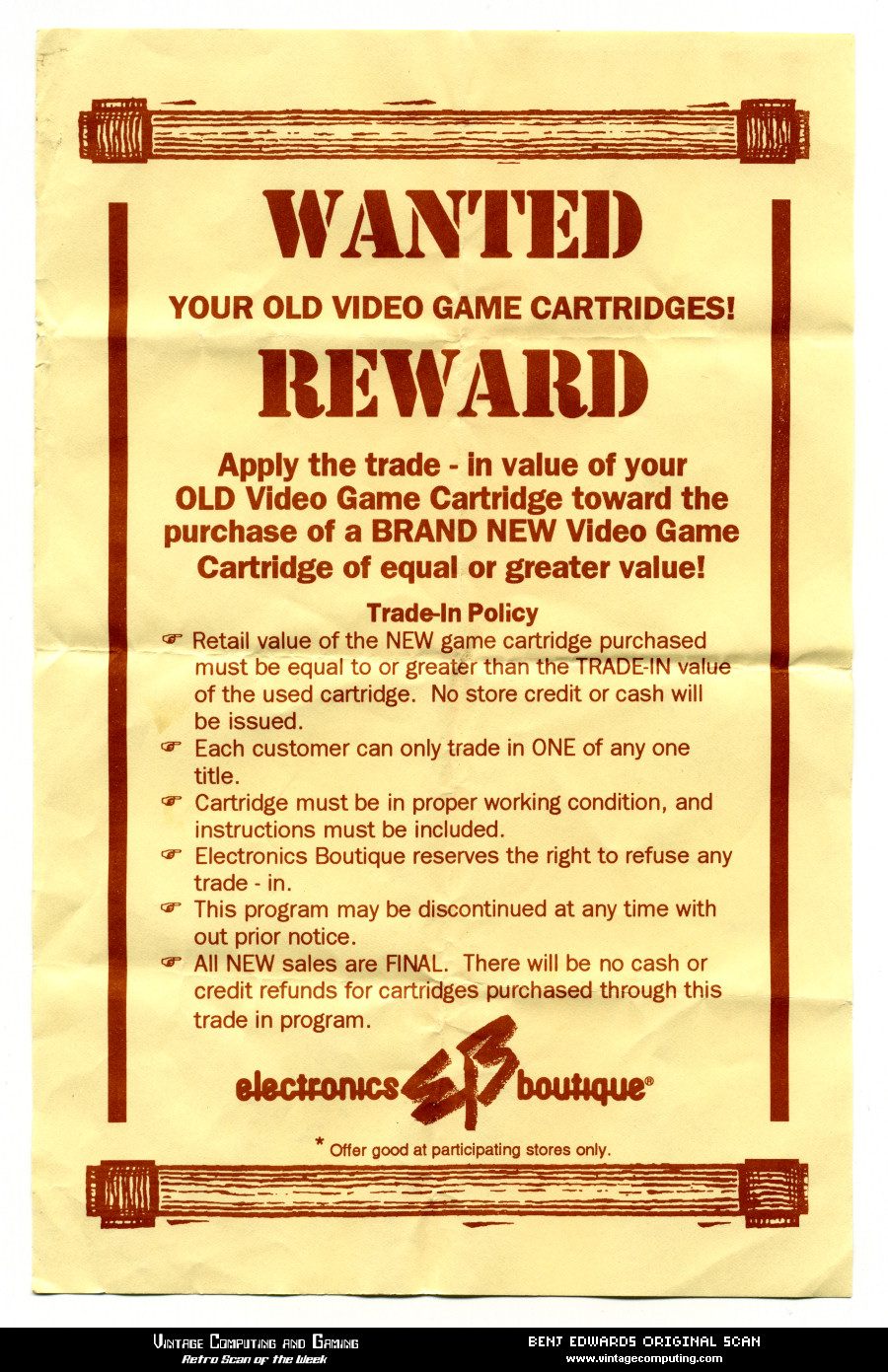
Electronics Boutique Used Games Wanted Reward Flyer Flier - circa 1994Cartridges, cartridges, cartridges.

I found this Electronics Boutique flyer in my old files recently. It measures about 5.5″ by 8.5″ in size. Sometimes I’m glad I save everything, and other times, well…ask my wife.

[ From Electronics Boutique flyer, circa 1993, front ]

Discussion Topic of the Week: What’s the worst deal you’ve ever received when trading in used games?

[ Retro Scan of the Week ] Virtual Boy Vortex

Monday, July 16th, 2012

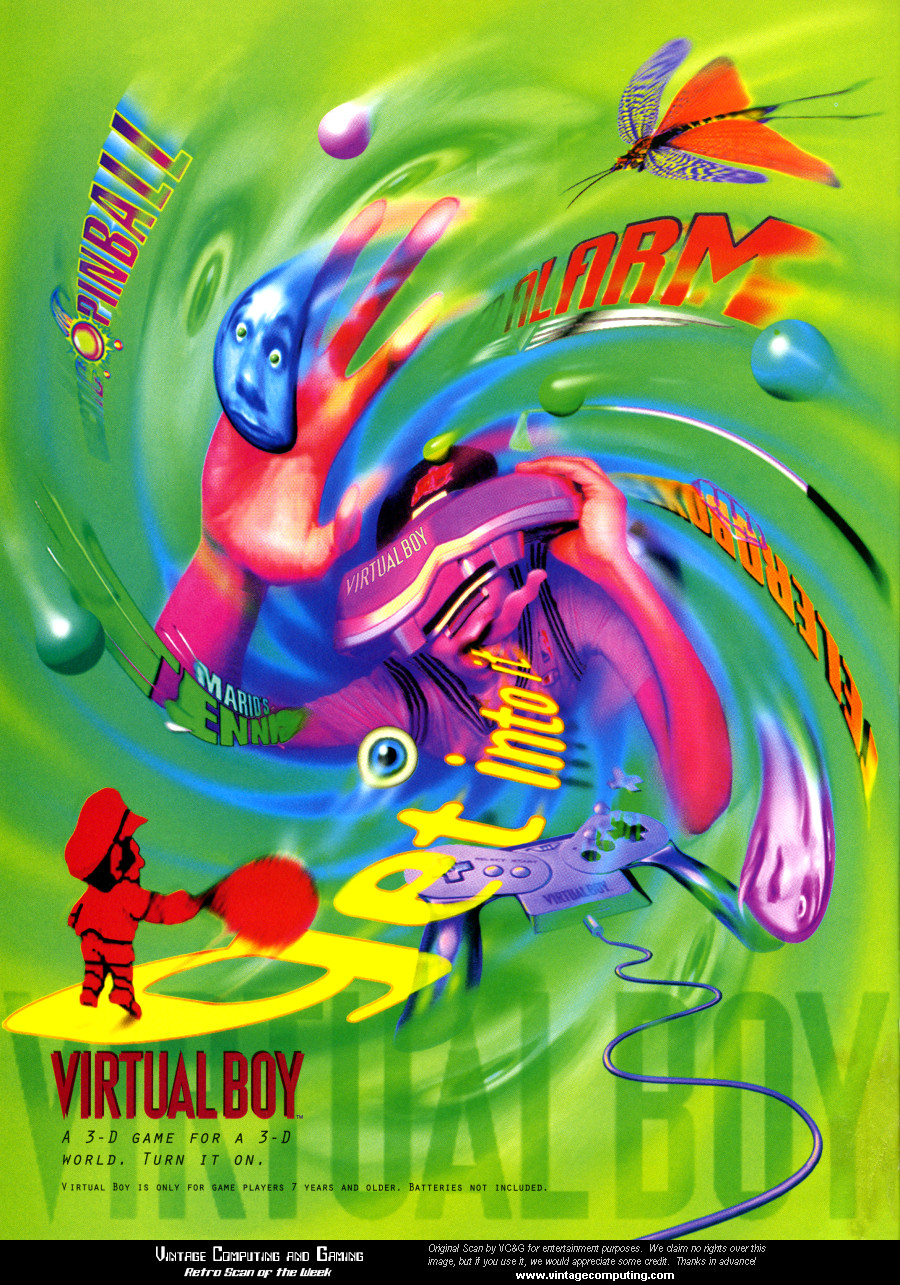
Nintendo Virtual Boy Promotional Ad from Nintendo Power - 1995Virtual Boy: Eating Mario’s face since 1995. (Artwork © David Julian)

[Update (03/05/2018): The illustrator of this image contacted me via email and asked me to add a copyright credit. His name is David Julian, and you can see more of his work on his personal website.

[ From Nintendo Power, November 1995, back cover ]

Discussion Topic of the Week: Have you ever felt sick while playing a video game in 3D?

[ Retro Scan of the Week ] The Official IBM PC Desk

Monday, July 9th, 2012

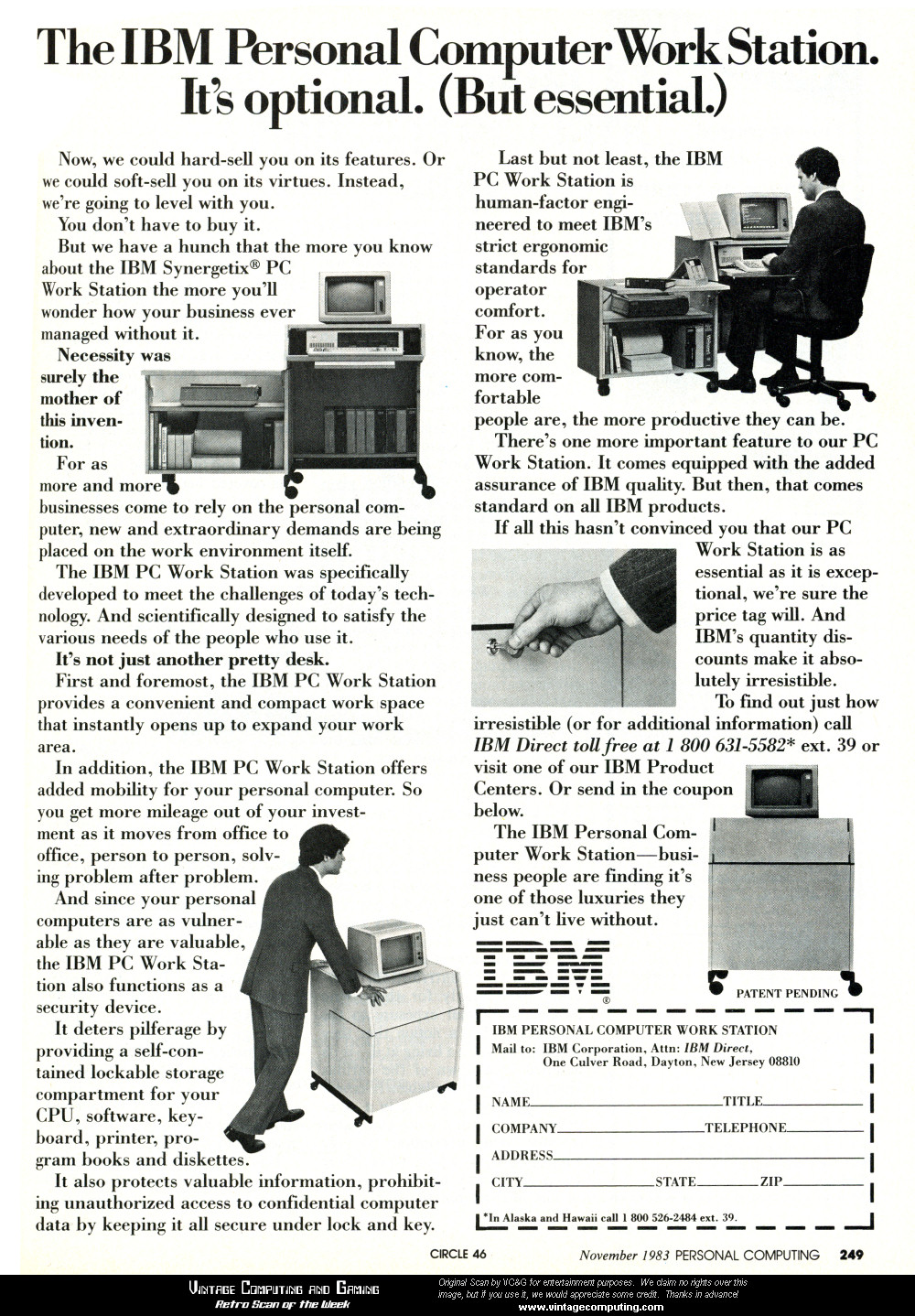
IBM Synergetix Personal Computer PC Work Station Ad -  1983The IBM PC Workstation: Almost as small as a refrigerator.

Once upon a time, IBM made furniture.

Specifically, they created a custom folding desk for its IBM Personal Computer called the “IBM Synergetix PC Work Station,” which we see in the 1983 ad above.

IBM registered the trademark “Synergetix” in 1981 to cover its line of IBM PC-related furniture, which even included an official IBM PC Table and IBM PC chair. Big Blue let the trademark expire in 1989, which shows you how successful that idea was.

I’ve been trying to think of modern analogies to the IBM PC Work Station, and the closest I can come up with is Apple making a special cover for its iPad — although Apple’s Smart Cover has been popular and well-received. The Smart Cover also doesn’t cost $850 like the IBM PC Work Station did (that’s about $1,961 today).

[ From Personal Computing, November 1983, p.249 ]

Discussion Topic of the Week: Have you ever used a desk specifically designed for use with a computer?

[ Retro Scan of the Week ] Crystalis Tips

Monday, July 2nd, 2012

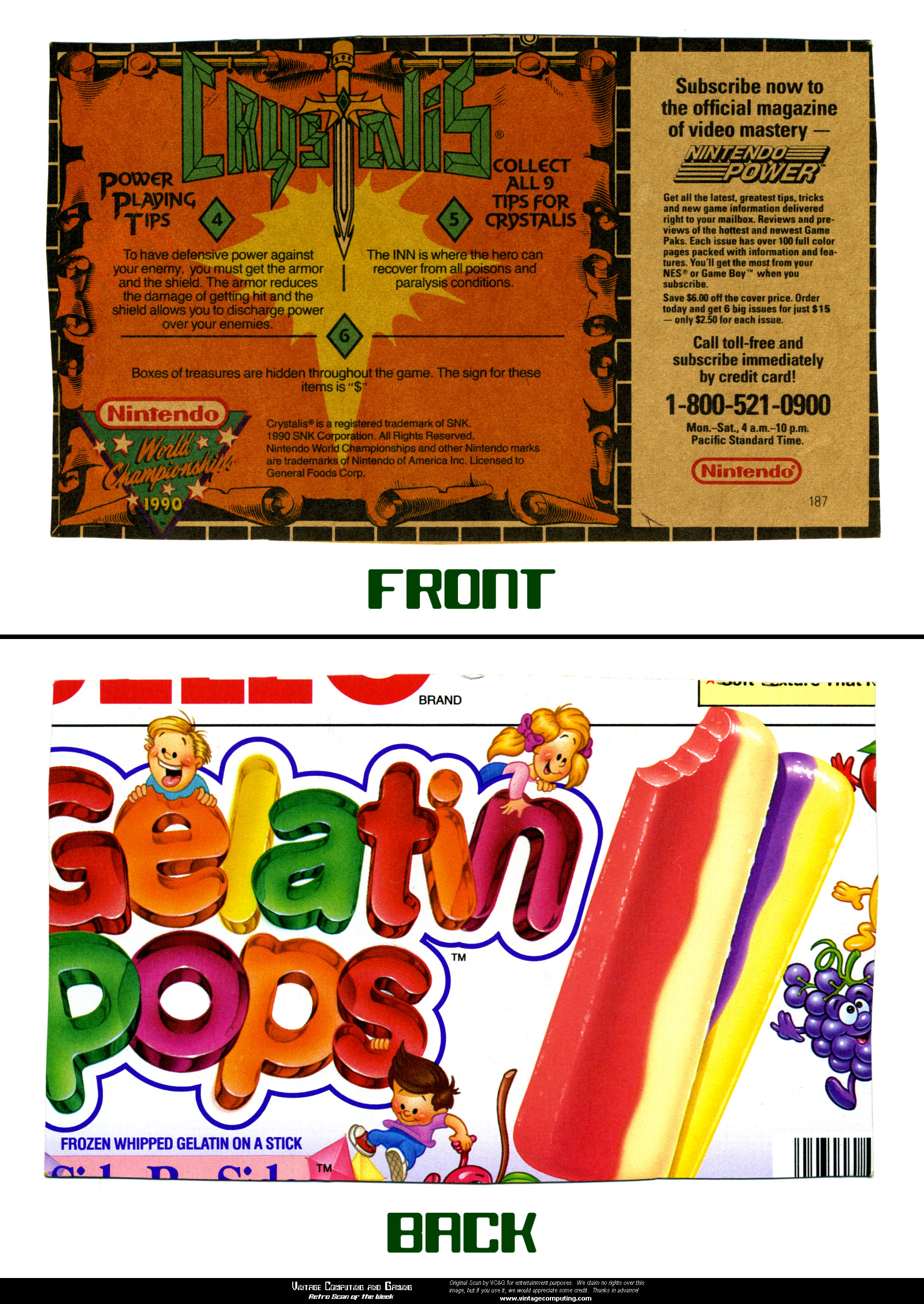
Crystalis Power Playing Tips from JELLO Gelatin Pops Box NES -  1990Frozen whipped gelatin on a stick.

I recently found this cardboard tip sheet for Crystalis in a pile of my old stuff at my parents’ house. As you can see, I cut it out of a JELLO Gelatin Pops box in or around 1990.

The tip sheet seems to serve a triple marketing purpose: 1) to promote NES games (specifically Crystalis, in this case), 2) to promote the 1990 Nintendo World Championships, and 3) to promote Nintendo Power magazine.

I love finding tie-in marketing artifacts like this — I’m glad I saved it all those years ago.

[ From JELLO Gelatin Pops box, circa 1990 ]

Discussion Topic of the Week: Do you remember cutting video game tips out of boxes, magazines, or other paper publications? Tell us about it.

[ Retro Scan of the Week ] The Osborne 1

Monday, June 25th, 2012

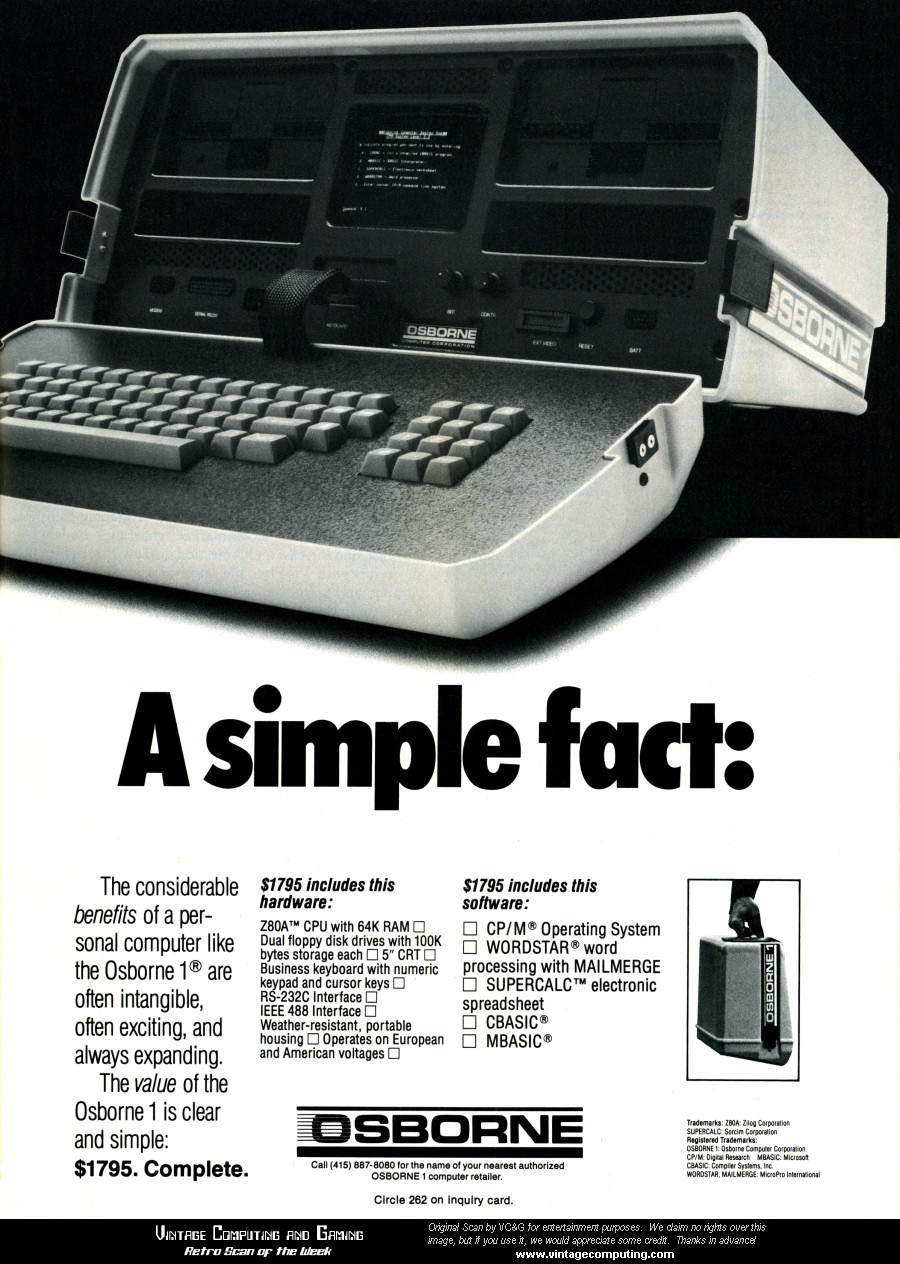
Osborne 1 Portable Computer ad -  1982Two out of three doctors recommend Osborne 1 for muscle fatigue.

We’ve come a long way from what many consider to be the first commercial portable PC, the Osborne 1 (seen here), and the recently announced Microsoft Surface tablet.

Here’s a brain twister for you. If you packed a case the size of the Osborne 1 (think small suitcase) with Surface-sized portable tech, how powerful would the machine be?

[ From BYTE Magazine, February 1982, p.31 ]

Discussion Topic of the Week: What was your first portable computer? When did you get it?

[ Retro Scan of the Week ] The Odyssey Manual

Monday, May 28th, 2012

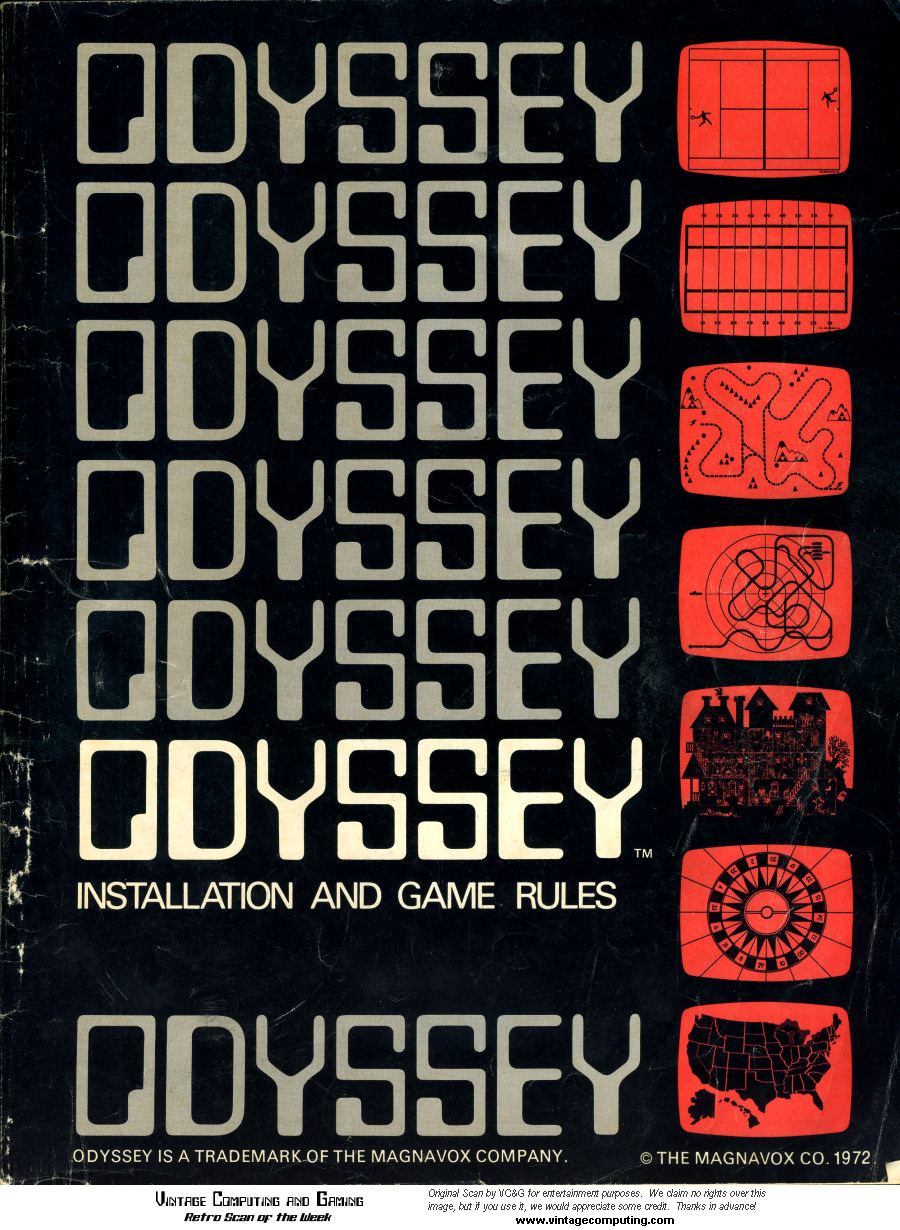
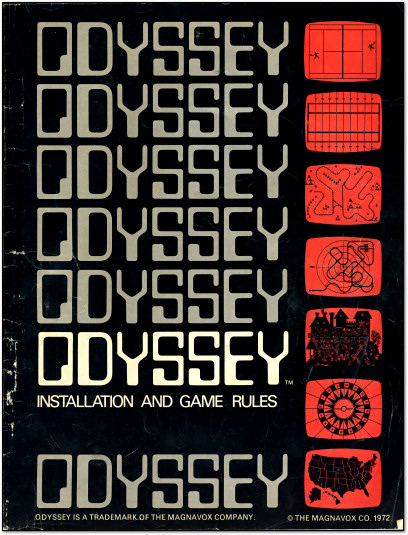
Magnavox Odyssey Manual Cover Scan - 1972“We’ve got a lot of space here, Fred, and I’m tired.” [stamps 7 times] “Fixed.”

Forty years ago, Magnavox lifted the veil on the world’s first commercial video game console, the Odyssey. Designed to work with a home TV set, the Odyssey blazed a trail that every game console follows today.

While the Odyssey had first been revealed to the press in April 1972, the Odyssey reached the market at $99.99 (about $548 in today’s dollars) in August of that year.

Magnavox’s console relied on technology originally developed by Ralph Baer, Bill Harrison, and Bill Rusch at Sanders Associates in the mid- to late 1960s. Baer’s invention, together with Atari’s work during the same period, founded an industry.

Even though I’ve been writing about the work of Ralph Baer for over five years now, I still am amazed that the commercial video game console is now 40 years old. But 40 years is a long time in technology, and it’s easy to see how we’ve come so far if you keep that time scale in mind.

By the way — in honor of this anniversary, I recently took apart an Odyssey console for PC World. You can read about that adventure in another post.

[ From Odyssey Installation and Game Rules, circa 1972, cover ]

Discussion Topic of the Week: Have you ever played an original Magnavox Odyssey console? Describe how you felt about the experience.
[ Retro Scan of the Week ] Apple II Mountain Music

Monday, May 21st, 2012

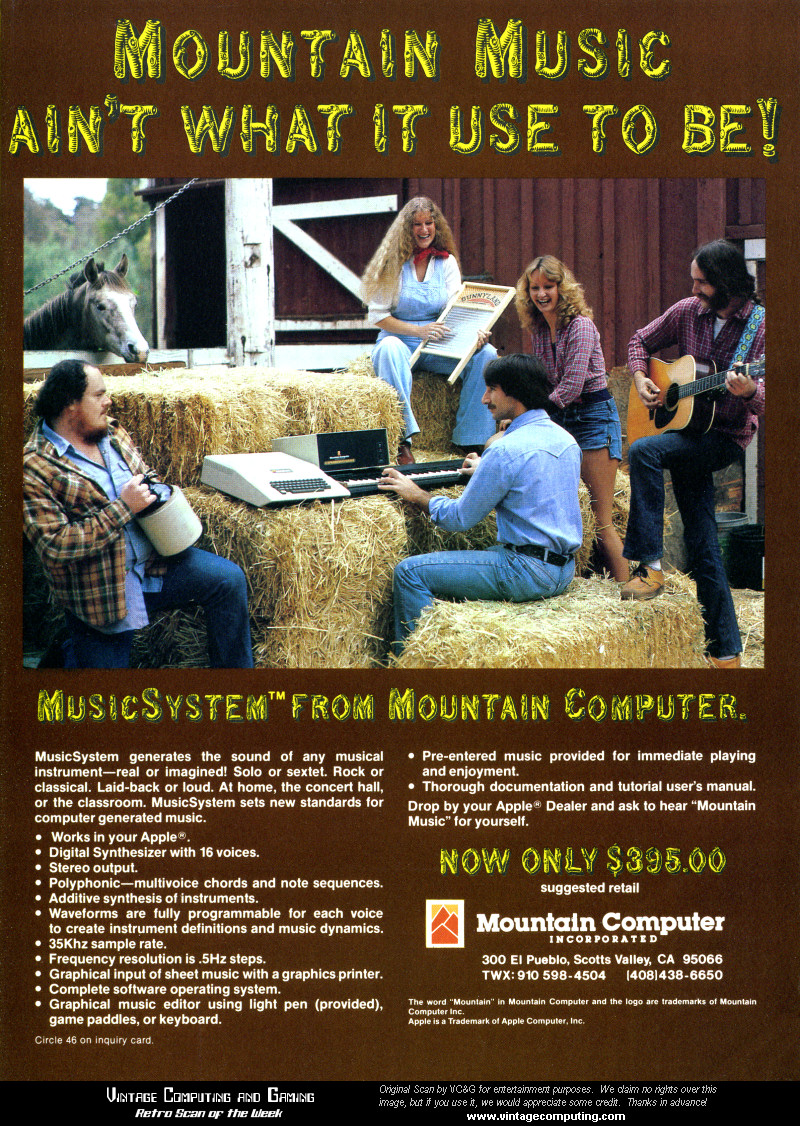
Mountain Computer MusicSystem Music System Apple II Ad - Mountain Music - 1982The Mountain Computer MusicSystem. Not a scene from Hee Haw.

In an age when the vast majority of commercial music is recorded or produced using computers, it’s interesting to look back to a time with computer-based music tools were in their infancy. In this case we’re turning back the clock 30 years to examine an ad for the Mountain Computer MusicSystem, a musical synthesizer and sequencer add-on for the Apple II (horse not included).

Admittedly, I know nothing about this system beyond what you read in the ad above (and some Googled info found here and here). But I wouldn’t be surprised if the original creators of the MusicSystem are lurking somewhere out there on the Internet — just waiting for this subject to come up so they can post a comment about it on a blog like this one. If that’s the case, please do!

[ From Popular Computing, January 1982, p.1 ]

Discussion Topic of the Week: When was the first time you used a computer as a tool in music production?

[ Retro Scan of the Week ] The Magnavox Odyssey 2

Friday, May 11th, 2012

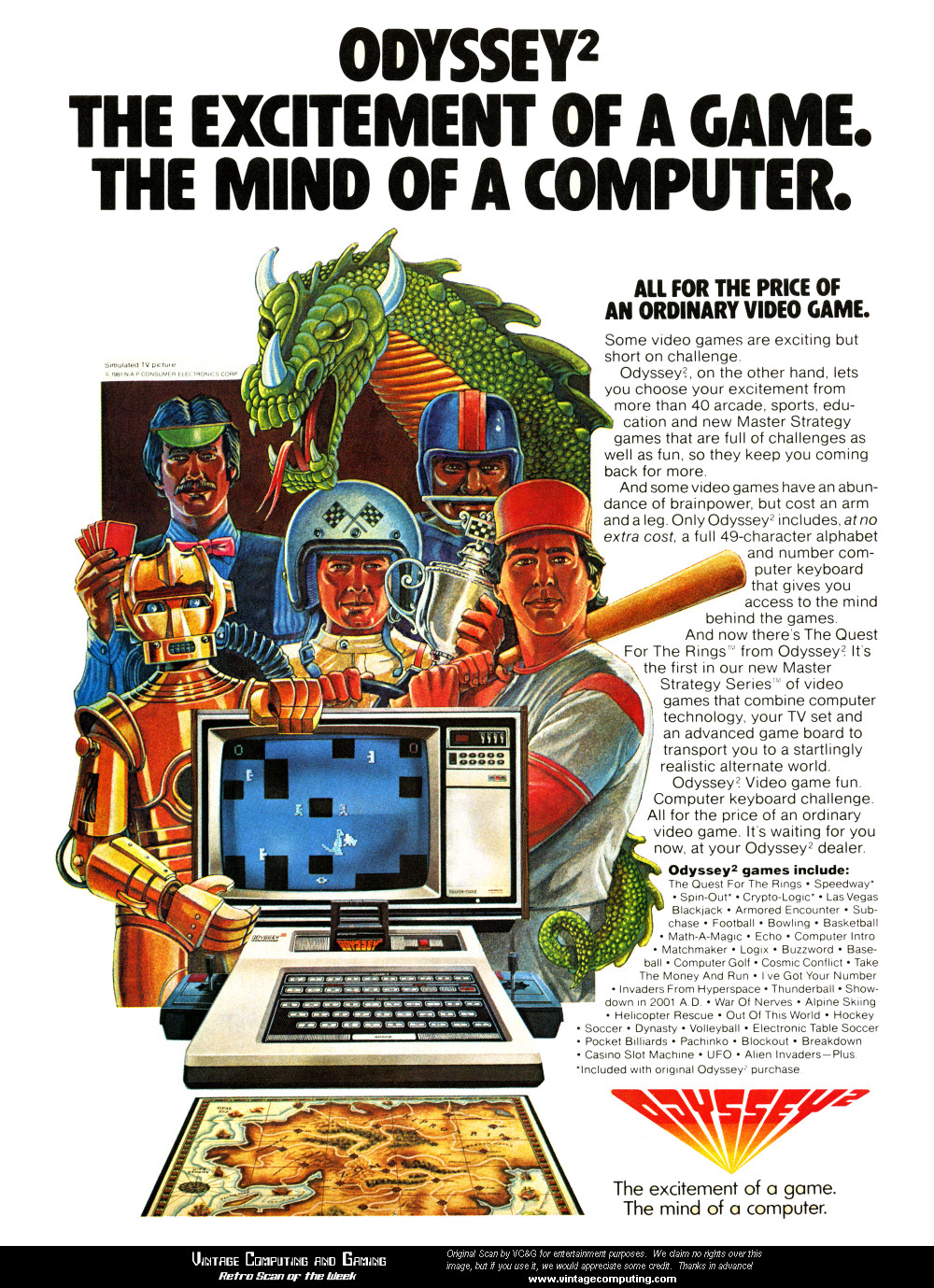
Magnavox Odyssey 2 Ad - 1981The Excitement of a Game. The Mind of a Computer. The Soul of an Edsel.

The Odyssey 2, released in 1978, ranks among the most misunderstood video game consoles. It boasted more CPU intelligence than the Atari 2600, but it lacked the licensed arcade titles and third-party developers to make it competitive over the long run. While its games were mostly clones of popular games on other systems, the console played host to a few interesting curiosities like The Voice, a speech synthesis module, and The Quest for the Rings, a beautiful board game that tied into the Odyssey 2 console.

The Odyssey 2 also included a built-in keyboard (a very poor membrane model), which I believe might be the only time such a thing has happened — unless you count certain home PCs as video game consoles.

[ From TIME, November 2, 1981, p.24 ]

Discussion Topic of the Week: What’s your favorite Odyssey 2 game? If you have one, that is.


If you liked this, check out these related Retro Scans:

[ Retro Scan of the Week ] Game Genie Update Flyer

Monday, May 7th, 2012

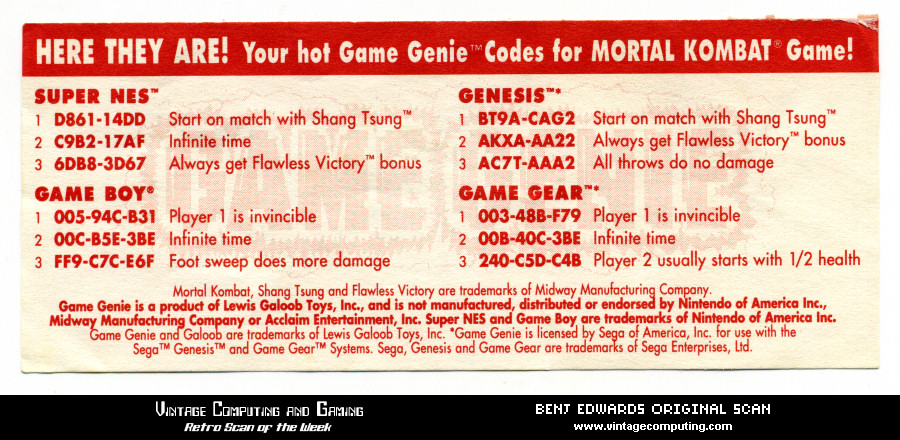
Game Genie Code Update Pull-off flier flyer - circa 1993HERE THEY ARE! Your HOT Game Genie CODES for MORTAL KOMBAT!

I picked up this 5-inch by 2-inch Game Genie flyer/note at a local store (probably Toys’R’Us or K-Mart) in the early 1990s. Back then, Galoob printed up pads of these miniature flyers that would then be attached to retailer shelves near new games for sale. The pads looked much like office note blocks; a hard dry layer of glue covered the top side of the stack, allowing people to pull the flyers off one at a time.

I presume that Galoob distributed these flyers to stores as marketing tools. Since newly released games did not appear in Game Genie code books printed years before (such was the case with Mortal Kombat, seen here), these flyers provided an opportunity to both prove that the Game Genie was still relevant and to also to suggest the benefits of owning a Game Genie (“wow, infinite lives!”) to people buying the game.

While I owned a Game Genie when I acquired this historical morsel, I’m pretty sure I didn’t own Mortal Kombat at the time. I grabbed the flyer because I saved anything and everything video game related that I could get my hands on, which is why I still have it today.

[ Game Genie Code Update Flyer, circa 1993 ]

Discussion Topic of the Week: Do you remember seeing flyers like this in stores? Tell us about your experience.

[ Retro Scan of the Week ] When EA Wasn’t Evil

Sunday, April 15th, 2012

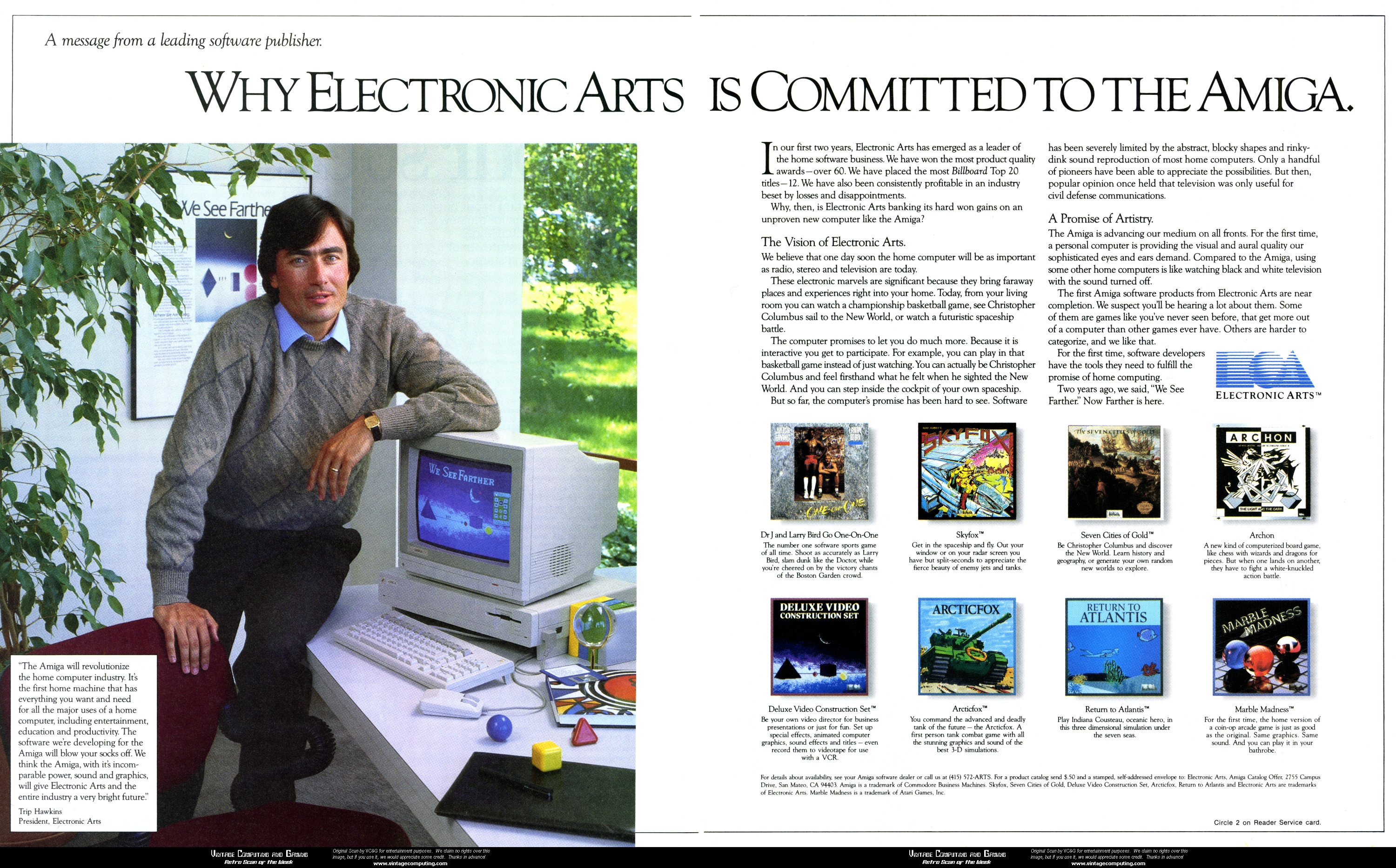
Why Electronic Arts is Committed to the Amiga Ad - 19851980s breakthroughs in workplace ergonomics led to this optimal seating position.

Long before the gaming public considered Electronic Arts the worst company in America, EA made its name as a creative haven that valued its talent.

No, really.

EA went out of its way to convey a developer-friendly image in its early years, prominently featuring designers’ names in the company’s box art and marketing materials. Gamers bought into it, in large part, because EA developed and published some of the most advanced and highly regarded early home computer games of their time (think Archon, M.U.L.E., The Seven Cities of Gold, etc.). EA must have been doing something right.

Of course, things changed over the years. From a personal standpoint, I remember when public sentiment seemed to turn against Electronic Arts in the mid-1990s after it acquired legendary development house Origin (most famous for the Ultima series) and proceeded to drive it directly into the ground. Origin would not be the last highly regarded game development firm to suffer this fate at the hands of EA.

[ Continue reading [ Retro Scan of the Week ] When EA Wasn’t Evil » ]