Author Archive

You Know It’s an Old Website If…

Wednesday, November 23rd, 2011

You Know Its An Old Website If...

Just a little while ago on Twitter, I started spouting out some one liners, Jeff Foxworthy style, about how you know if a website is old. I love coming across old websites, so it’s fun to spit these out.

I can’t guarantee that they’re funny, but I think they’re at least amusing. People liked them enough that I decided to post my lines here and ask you guys to continue the list. I may add more to it over time.

  • You know it’s an old website if…
    …every image on the site rotates.
  • You know it’s an old website if…
    …they refer to AltaVista in the present tense.
  • You know it’s an old website if…
    …you found it through a web ring.
  • You know it’s an old website if…
    …it says “Best viewed in IBM WebExplorer.”
  • You know it’s an old website if…
    …your browser complains that there’s no MIDI plug-in installed.
  • You know it’s an old website if…
    …it forces you to enter the site through a splash page.
  • You know it’s an old website if…
    …it asks you not to hotlink the GIF images.
  • You know it’s an old website if…
    …every single link on the page ‘404s.
  • You know it’s an old website if…
    …the owner claims it’s “under construction.”
  • You know it’s an old website if…
    …it brags about having 1,000 hits.

Now it’s your turn. Add your one-liners in the comments below.

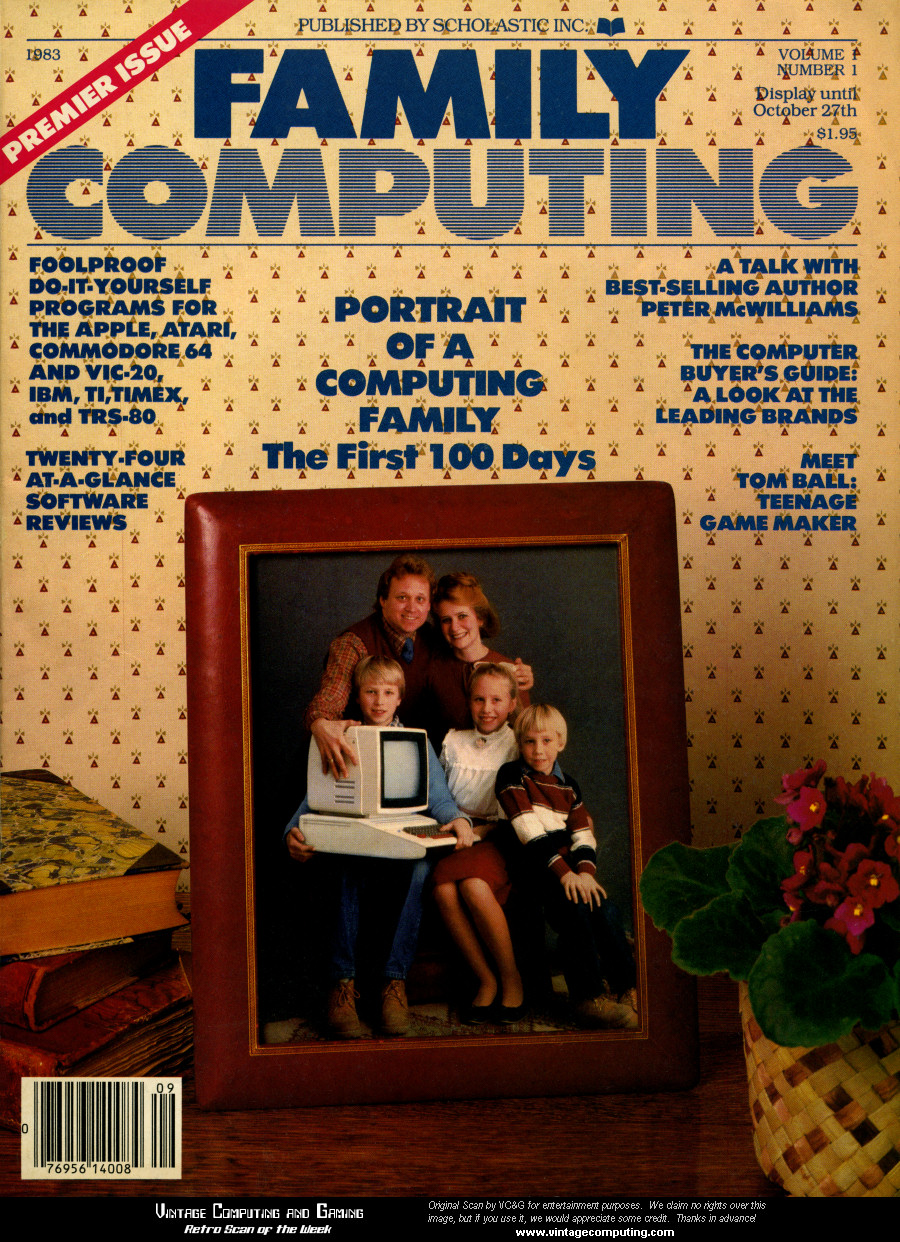
[ Retro Scan of the Week ] Family Computing

Monday, November 21st, 2011

Family Computing - September 1983 - Cover ScanThe cover of the first issue of “Family Computing” magazine, September 1983.

Happy Thanksgiving from VC&G

[ From Family Computing, September 1983, cover ]

Discussion Topic of the Week: What’s your favorite food to eat for Thanksgiving? Favorite video game to play?

Time for a VC&G Redesign?

Wednesday, November 16th, 2011

Vintage Computing and Gaming LogoVintage Computing and Gaming has retained the same general site design, albeit with a few aesthetic changes, since it started in 2005. Do you think it’s time to change the layout of the site? Do you think I should add any features to the site to make it like more modern blogs?

For VC&G, my philosophy has long been, “If it ain’t broke, don’t fix it.” And I defintely don’t think the site is broken. But perhaps it is time to modernize a few elements of the blog. The thing I’d like to add most is a tag-based post system. I think that would work better than post categories as they now stand.

The commenting system works pretty well for the number of comments we get, so I don’t think we need a complex comment rating or moderation system at the moment.

As for the current design, I like the fact that, because I haven’t added complex bells and whistles to the site’s software, VC&G is easy to view on older computers with slightly older browsers. It’s simple and it does the trick.

Let’s put it this way: do you think if I redesigned the site that more people would read VC&G? (Although statistically speaking, we have more readers than ever.) Is the design out of touch with a “modern” web audience? Your thoughts count, so let me know in the comments.

Secret Lives of the Intel 4004 (40th Anniversary)

Tuesday, November 15th, 2011

Intel 4004 40th Anniversay

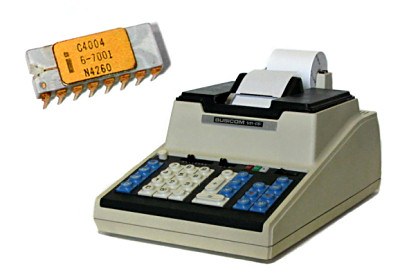
Forty years ago today, Intel announced the 4004. It was the first single-chip microprocessor in the world — an entire central processing unit (CPU) rendered as in integrated circuit on a single chip of silicon.

Up to that point CPUs were typically constructed of many ICs and discrete components soldered onto multiple circuit boards that, when combined, would have trouble fitting in a cigar box. The 4004 compressed similar functionality into a silicon chip 1/8 inch wide by 1/6 inch long.

The story of the 4004 began in in 1970, when Japanese manufacturer Busicom commissioned Intel to help create a chipset for a desktop calculator. Intel rejected the initial Busicom-designed chipset and countered with its own simplified design, which included the 4004 and three other supporting chips. Those chips, when used together, could form the heart of a complete microcomputer.

While the 4004 first appeared in the Busicom 141-PF calculator (seen above) during mid-1971, a contract renegotiation later in the year left Intel free to sell the microprocessor and its supporting chipset to others. It announced the 4004 to the general market using a carefully placed advertisement in the November 15, 1971 issue of Electronic News, an important trade newspaper for the emerging semiconductor industry.

It’s a Secret to Everybody

Once available to the general market, the Intel 4004 appeared in only a handful of 1970s commercial products before more powerful microprocessors, like the 8008, made the 4-bit CPU thoroughly obsolete.

Those early 4004-bearing products are quite hard to find today, making them generally unknown to computer history. That’s why I created a slideshow over at Technologizer that explores little-known applications of 4004. Some of the applications — like arcade games and electronic voting machines — might surprise you.

I hope you enjoy it.

[ Retro Scan of the Week ] Beyond Zork

Monday, November 14th, 2011

Atari 400/800 BASIC Reference Manual Cover - 1979That spot in the upper left is actually mold that grew on the paper.

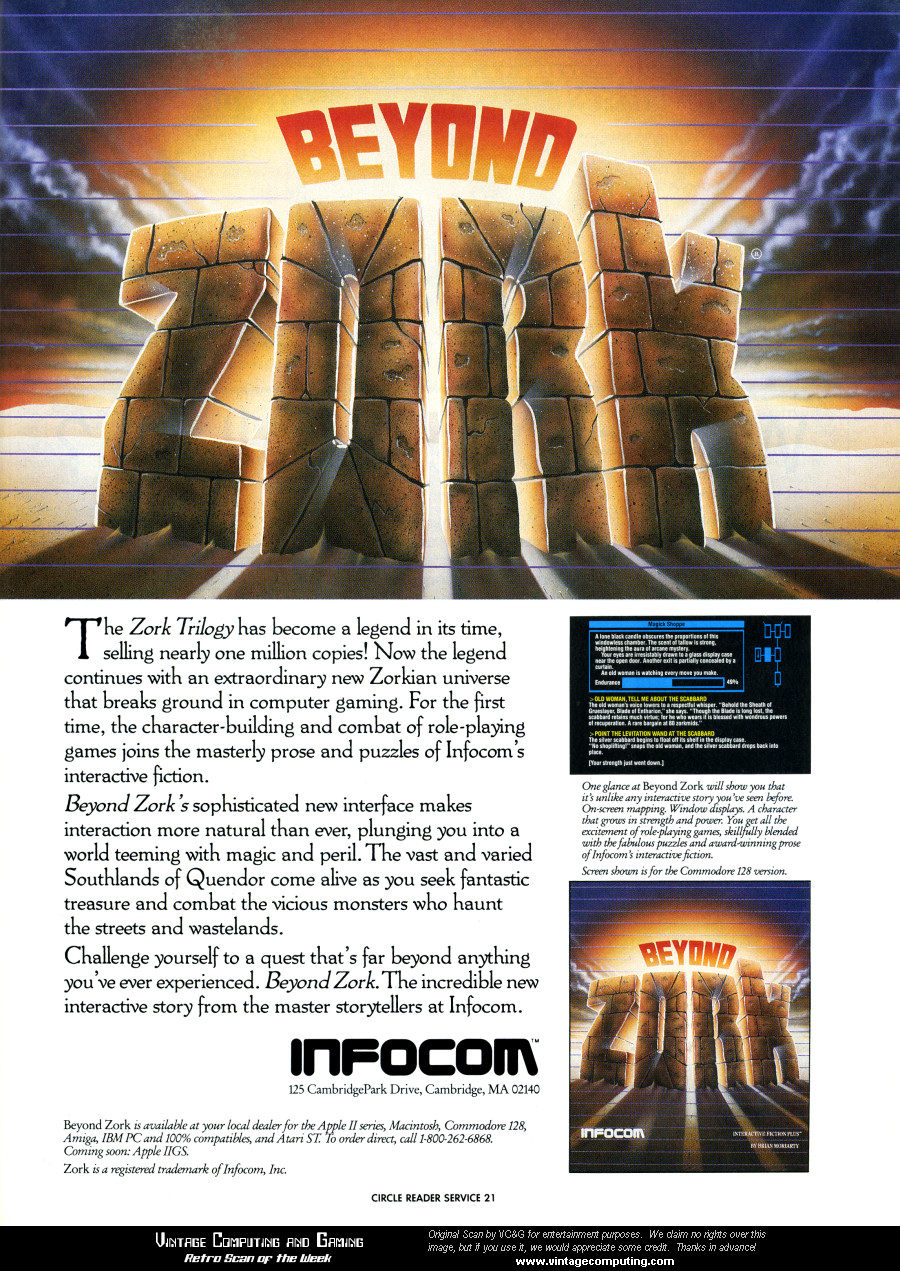
When is a text adventure game not a text adventure game? When it’s Beyond Zork: The Coconut of Quendor.

Infocom’s fourth entry in the Zork series (actually the 8th if you count the related Enchanter series and Wishbringer) combined interactive fiction with light RPG elements such as equipment, stat sheets, an on-screen map, and character leveling to create a unique game that may be best compared to a single player MUD (a SUD?).

Beyond Zork sports procedurally generated maps in some areas, so replay value is theoretically infinite. But randomness is a double-edged sword in this case: its magic items move around between saves and loads, and that can frustratingly break the suspension of disbelief (i.e. you see it, you die, you come back, and it’s gone). Still, Beyond Zork is an amazing game that deserves more attention than it usually gets.

[ From Family and Home Office Computing, November 1987, p.89 ]

Discussion Topic of the Week: What’s your favorite entry in the Zork series? Every Zork-related game counts.

[ Retro Scan of the Week ] Father and Son at the Atari

Monday, November 7th, 2011

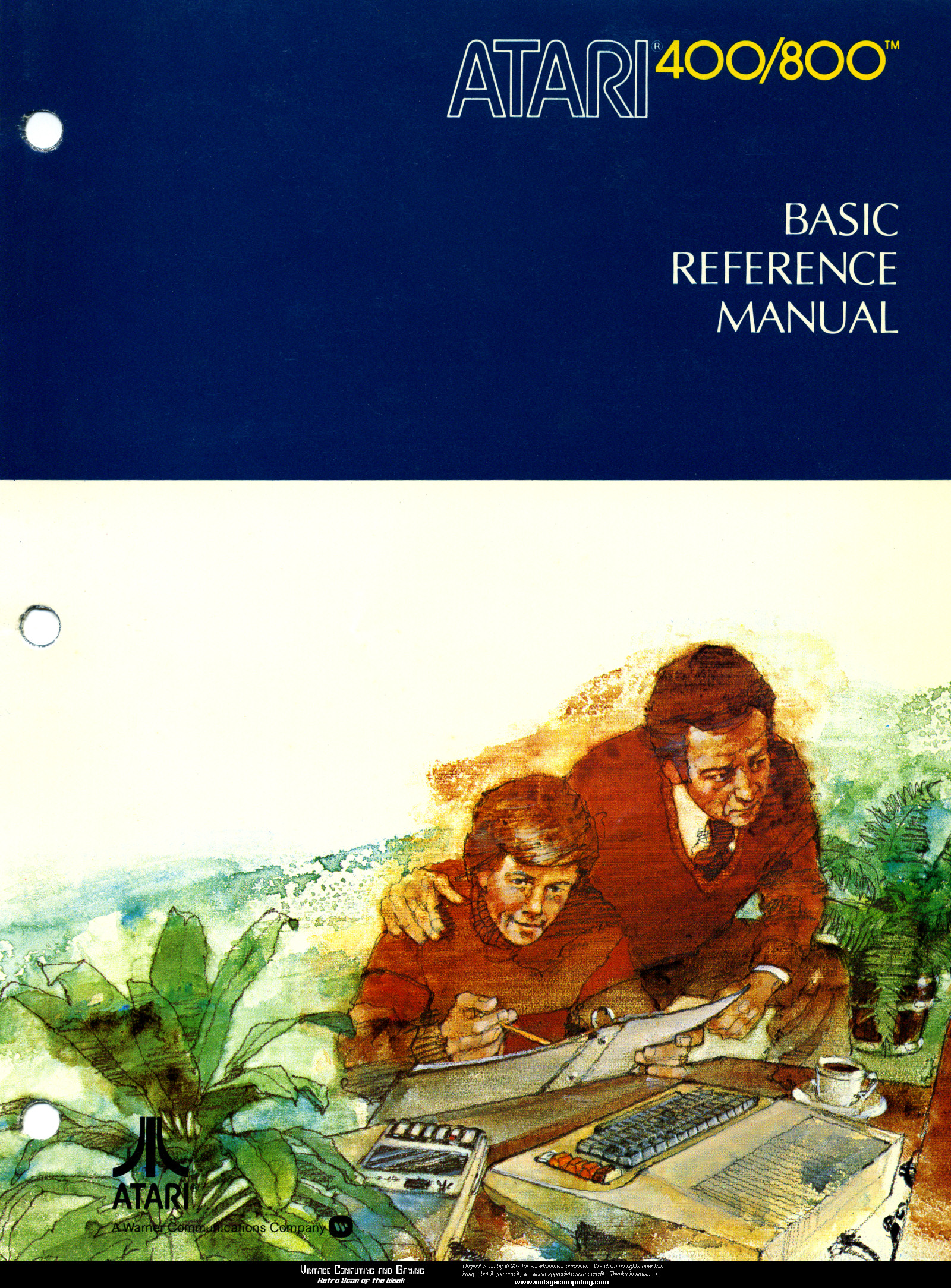
Atari 400/800 BASIC Reference Manual Cover - 1979Stranded in a jungle with only a desk, a cup of coffee, and an Atari 800.

I’ve always enjoyed the illustration style found on the earliest Atari 400/800 instruction manuals, such as the one here for the Basic Reference Manual. I’ve included an extra large scan this time so you can enjoy the detail up close.

Does anybody know the name of the artist who did them? I’ll admit I haven’t looked very hard.

By the way, this manual was written by River Raid creator Carol Shaw.

[ From Atari 400/800 BASIC Reference Manual, circa 1979, cover ]

Discussion Topic of the Week: Have you ever programmed with your dad? Tell us about it.

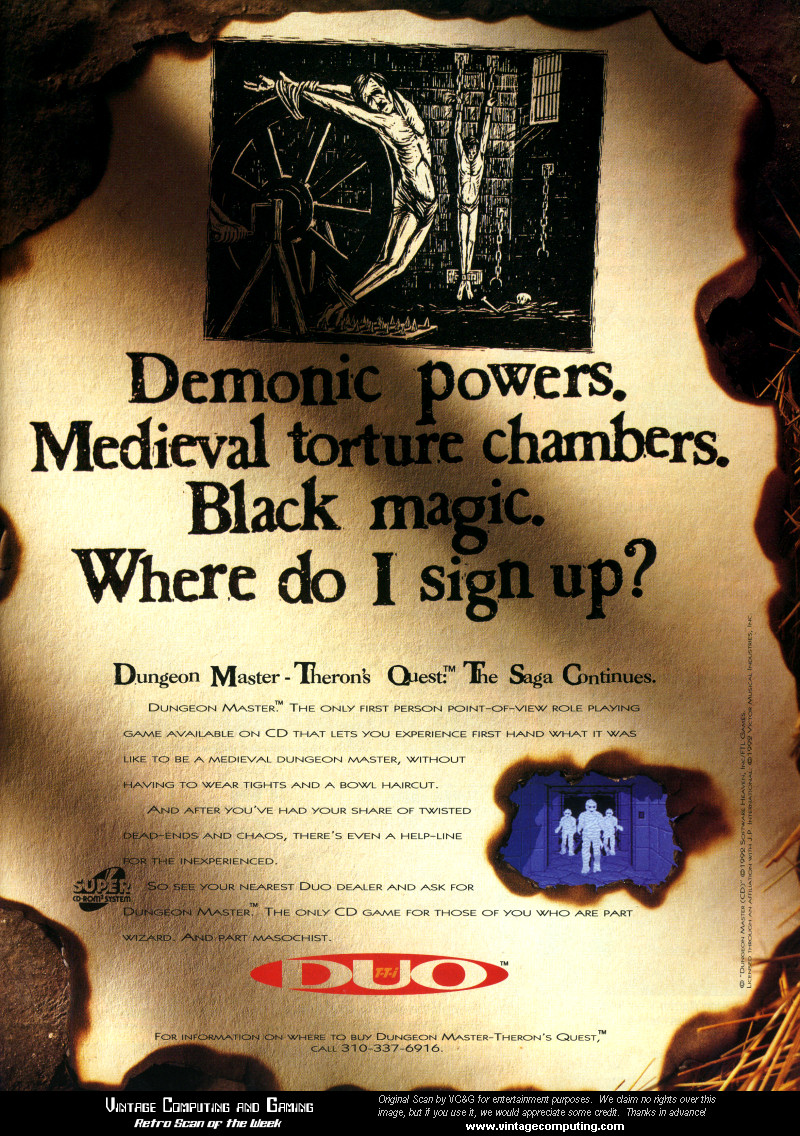
[ Retro Scan of the Week ] Dungeon Master Duo

Monday, October 31st, 2011

Dungeon Master: Theron's Quest for the TTI Turbo Duo Ad - 1993Dungeon Master: Theron’s Quest – The video game for brutal dictators.

Happy Halloween from VC&G

P.S. Here’s a Dungeon Master II scan from last year.

[ From Electronic Gaming Monthly, June 1993, p.77 ]

Discussion Topic of the Week: Have you ever dressed as a video game character for Halloween? Tell us about it.

[ Retro Scan of the Week ] The Daisy Wheel

Monday, October 24th, 2011

Scan of a Daisy Wheel Printer Font WheelText in bloom.

Here’s an interesting piece of obsolete technology — a plastic Lanier daisy wheel for a daisy wheel printer. Its actual size is about three inches in diameter.

There was a time when having a “letter quality” impact printer meant that the machine printed text using pre-formed, typewriter-like type elements. Some printers held these elements in the shape of a cylinder or a sphere, but in the case of the daisy wheel printer, the character forms projected from a central wheel in a shape that resembled a daisy flower.

Daisy wheel printers produced text by rotating the wheel to the proper character spoke and striking the back of it against an ink ribbon, which would leave a mark on the underlying paper.

Each daisy wheel rendered a different font (or type size), and thus fonts could be changed as easily as replacing one wheel with another. In this case, you’re looking at a wheel for the font called “Prestige Elite 12,” but printer makers sold dozens of other font wheels, such as those for Courier 10 or Cubic 15.

The daisy wheel method reproduced fonts using a dramatically different technique than, say, dot-matrix printers, which used a single matrix of metal pins to form various characters.

Laser and inkjet printers, which produce much less noise and use software-based fonts, made impact printers thoroughly obsolete for every-day PC use by the late 1980s (though stragglers used dot-matrix printers well into the mid-1990s due to lower prices). Even so, impact printers still reign supreme in specialized applications that require physical force, such as document reproduction via carbon copy paper.

[ Scan of Lanier daisy wheel, circa 1978 ]

Discussion Topic of the Week: Have you ever used a daisy wheel printer? Tell us about it.

iPod Turns 10, Benj Writes

Sunday, October 23rd, 2011

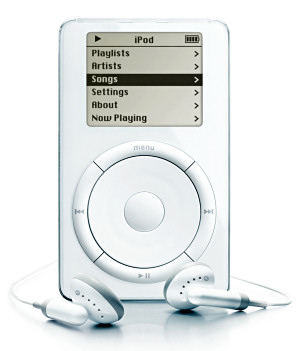
2001 iPod 1G

Ten years ago today, Steve Jobs introduced the first iPod to the world. Many people didn’t know what to think. It would take a little time for idea of the iPod to sink in, so to speak, but once it did, it did so in a very big way.

I first encountered the iPod shortly after its 2001 launch at a local Circuit City. Its simple white scroll wheel stared at me from across the room like a giant eye that had just opened for the first time. Yep, it got my attention. A ring-shaped kiosk in the middle of the room held iPods projected upwards, each player perched on a security rod, restricted, but available for public tinkering.

I walked up to it and touched it, ran my fingers across the front and spun the wheel. It was almost insultingly intuitive to a gadget freak like myself. It worked, and it was obvious that everyone would know how to use it almost immediately after picking it up.

Before playing with the iPod, I was skeptical of the device — like just about everyone else. But after touching it, I knew that the future of music consumption wore an Apple logo. By God, I wanted one. Bad.

Three Articles about iPod

So here we are, ten years later. The iPod unquestionably shook up the world. How should we mark the anniversary? Well, to start, I have written three pieces about the iPod for this exact occasion. I’ll go through them below.

  1. The Birth of the iPod – In this piece over at Macworld, I take a look at the origins of the first iPod — how it was created, by whom, and why. I owe great thanks to Tony Fadell for sharing his time to talk about the iPod’s creation, and to Steven Levy and Leander Kaheney, whose previous works on the iPod also provided invaluable sources for my article.

    Despite those sources, this is not some iPod creation rehash. In fact, it puts together a number of disparate information sources for the first time. And thanks to my interview with Fadell, you’ll definitely learn some new tidbits about the birth of the iPod.

  2. iPod Oddities – In which I continue my long-running Technologizer-hosted Oddities series by examining weird accessories, art, and history related to the iPod. Fun stuff, as always. Don’t miss the iPod ballistics calculator.
  3. The iPod as an Iconic Cultural Force – Also at Macworld, this piece openly muses about how the iPod changed our culture, the music industry, and the world around us.

I wish I could say that I wrote more (ha), but you’ll have to be satisfied with that — oh, and all the other iPod tributes you’ll find on the web in the next few days.

Happy birthday, iPod.

Discussion Topic of the Anniversary: What did you think about the iPod when you first heard about it? Did your opinion change after you actually used it?

[ Retro Scan of the Week ] Gwendolyn

Monday, October 17th, 2011

Artworx Gwendolyn Atari 800, Apple II Ad - 1983It’s a trap!

[ From Compute!, September 1983 ]

Discussion Topic of the Week: What’s your favorite static-screen graphical text adventure game?