Author Archive

[ Retro Scan of the Week ] Kickle Cubicle Blows In

Monday, December 21st, 2009

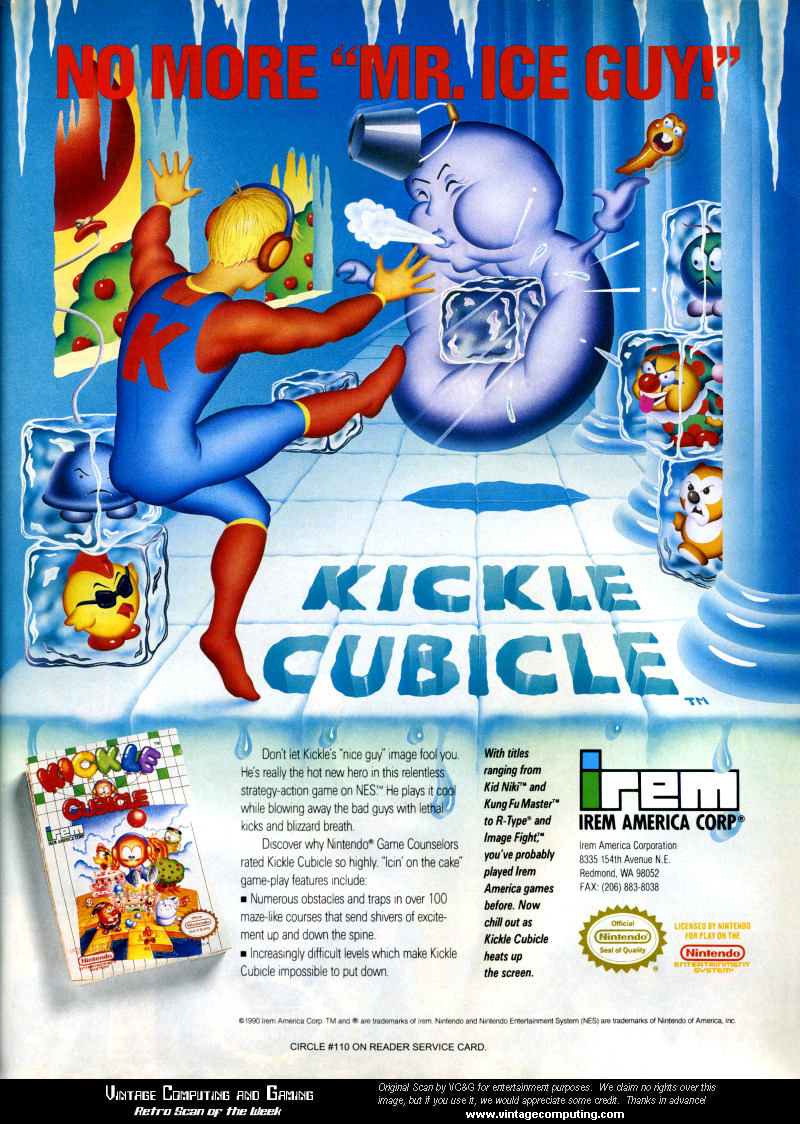
Kickle Cubicle NES Ad - 1990“No more Mr. Ice Guy.”

It looks like Kickle Cubicle visited much of the Eastern U.S. coast over the weekend with a nasty snowstorm; hope you guys are digging out all right. Here in NC, some of us lucked out with a light dusting and a lot of rain.

Kickle Cubicle itself is a fun, Lolo-esque NES puzzler with a silly name that hints at both kicking and modular office partitions (thankfully, cubicles do not actually appear in the game). If you run across it, I highly recommend picking it up.

Merry Christmas from VC&G!

[ From Video Games and Computer Entertainment, December 1990 ]

Discussion Topic of the Week: It’s Santa time once again. If you could magically (and freely) have any one item for your classic computer or video game collection, what would it be?

[ Retro Scan of the Week ] Give The Gift of TRS

Monday, December 14th, 2009

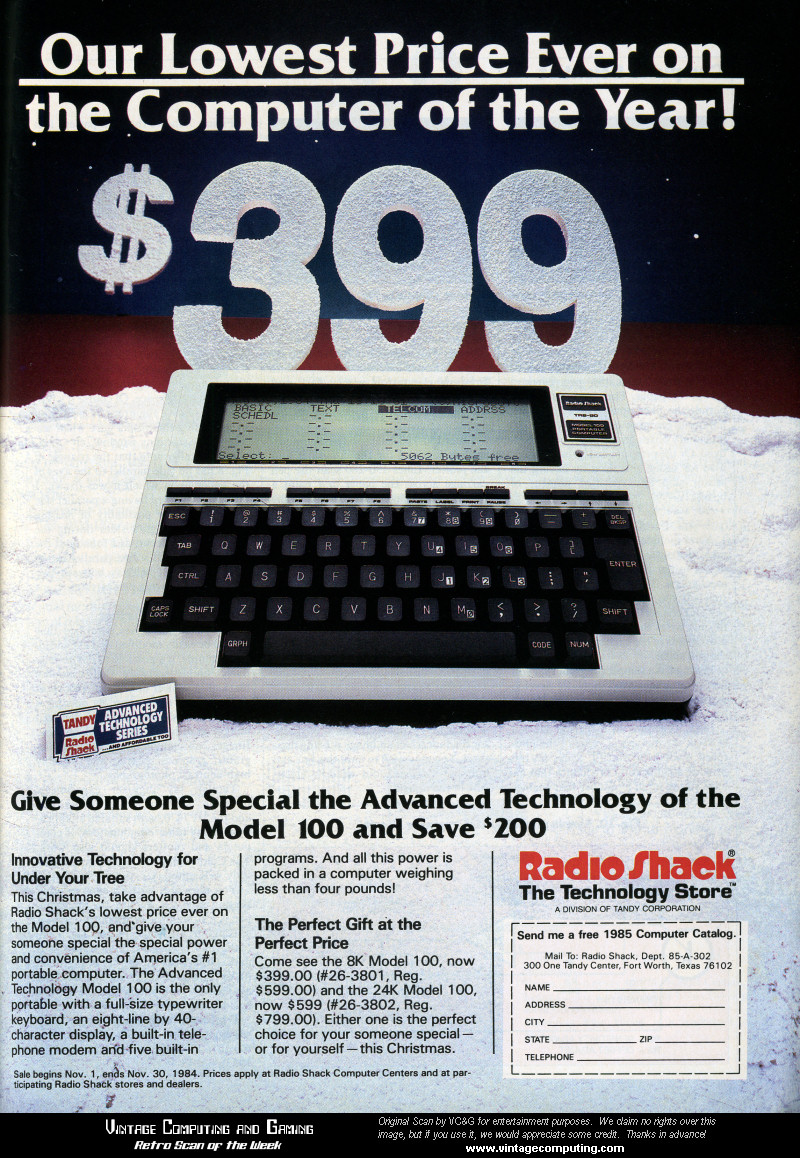
TRS-80 Model 100 Snow Christmas Ad - 1984Red Wizard, your life force is running out.

I’m presently so sick that I’m about to keel over and mop the floor with my head, so you’ll have to provide your own commentary on this one. All I know is that the TRS-80 Model 100 is awesome, I have two of them, and I took one apart for PC World last year.

And look — Christmas theme!

[ From Computers and Electronics, December 1984 ]

Discussion Topic of the Week: Have you ever bought someone a computer for Christmas? Tell us about it.

Apple’s Five Most Important Printers

Sunday, December 13th, 2009

Apple's Five Most Important Printers

Younger computer fans may not know this, but for almost twenty years (1980-1999), Apple, Inc. sold Apple-brand printers for use with its computers — a fact that’s easy for us to forget today, ten years since Apple shipped its last printer.

That being so, Macworld recently asked me to write an article about Apple’s long history in the printer business. I was happy to take the assignment, of course, and a few days ago, Macworld published the result, titled “Apple’s Five Most Important Printers.” I structured the article along the same lines as the popular Mac laptops piece I did back in September.

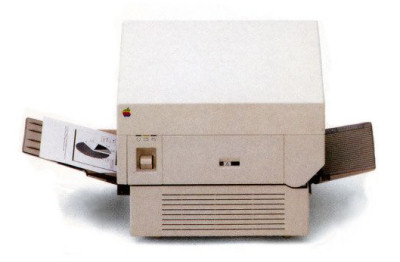
In the course of writing the article, I learned more than I thought I’d ever know about Apple printers, and I enjoyed the research process quite a bit. Of particular interest was Apple’s original LaserWriter (1985, seen above), a famous peripheral that holds a monumentally important place in computer history.

I also created a companion slideshow of various Apple printers for Macworld, which you can see here. I hope you enjoy it.

[ Retro Scan Special ] Milton-Bradley Microvision

Monday, December 7th, 2009

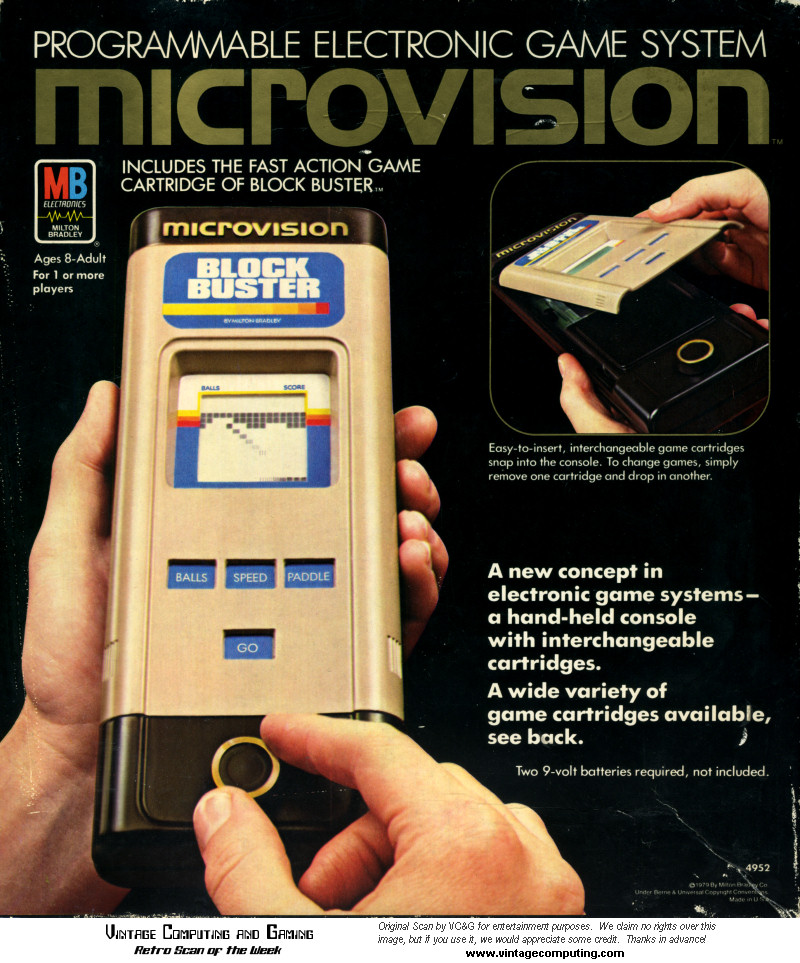
Milton-Bradley Microvision Box Front - 1979A Well-Loved Milton-Bradley Microvision Box (Front)

[ From Milton-Bradley Microvision Box (Front), ca. 1979 ]

Thirty years ago last month, Milton-Bradley released the world’s first handheld game console with interchangeable cartridges, the Microvision. As a result, the Microvision was the first handheld “system” in the classic sense: it allowed the user to play numerous arbitrary software titles on a single base console.

As you may have read in my last VC&G post, I recently celebrated this anniversary over at PC World with a slideshow of handheld system history.

It always pains me when I don’t have the time to write up an in-depth history of the subject I’m focused on at any given time, so to compensate a bit, I’d like to share some scans of assorted Milton-Bradley Microvision paraphernalia that I’ve assembled.

[ Continue reading [ Retro Scan Special ] Milton-Bradley Microvision » ]

30 Years of Handheld Game Systems

Monday, December 7th, 2009

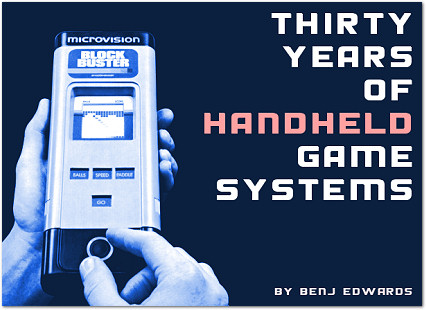
30 Years of Handheld Game Systems on PC World

My latest PC World article celebrates the 30th anniversary of the Milton-Bradley Microvision with a look back at handheld game systems of the past. Here’s an excerpt from the introduction:

Thirty years ago this fall, Milton Bradley released the world’s first handheld video game system with interchangeable cartridges, the Microvision. Prior to 1979, handheld electronic games were stuck with one predetermined game (or set of games) per unit. After the Nintendo Game Boy debuted a decade later, the market for cartridge-based handheld devices exploded, inspiring hardware vendors both prominent and obscure to release gadgets for playing multiple games on the go.

I spent quite a bit of time hand-crafting the slides (and writing the text, of course), so I think it’s one of my better slide shows. I hope you enjoy it.

As a side note, the anniversary of the Microvisions’s release was actually last month (November 2009), but due to delays in PC World’s publishing schedule, my article was pushed back until now.

[ Retro Scan of the Week ] Terminal Innuendo

Monday, November 30th, 2009

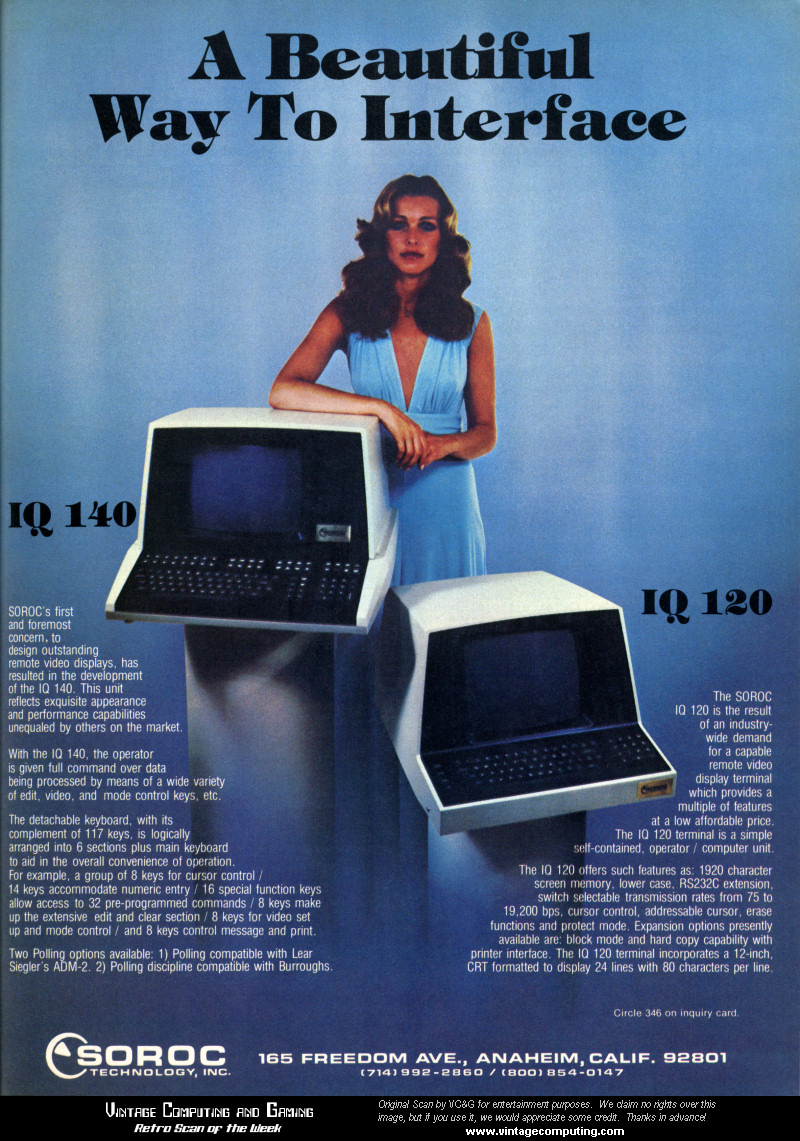
Soroc Terminal IQ 120 IQ 140 Ad - 1979Computer shopping in the Fortress of Solitude.

In this ad for the SOROC IQ 120 and IQ 140 terminals, we see a woman who clearly wants to interface with something — but what? Very few peripherals understand the cryptic FAJI/NA protocol (Female Anatomical Jiggy Interface / Network Access). Even with the proper connector and hardware handshaking, those few who succeed in uploading might end up with a virus.

Oh, I get it…they’re talking about the terminals. Nothing to see here. Move along. Move along.

[ From Byte Magazine, November 1979 ]

Discussion Topic of the Week: Have you ever regularly used a text-based terminal to get serious work done? Tell us about it.

A 1980s Home Computer Family Celebration

Tuesday, November 24th, 2009

A 1980s Home Computer Family Celebration on Technologizer

If you liked the NES Action Set Family, then you’ll probably enjoy my latest Technologizer slideshow. It examines ten early-1980s computer magazine advertisements, all of which focus on a happy family gathered around the ‘ole family PC.

Happy Thanksgiving!

[ Retro Scan of the Week ] The NES Action Set Family

Monday, November 23rd, 2009

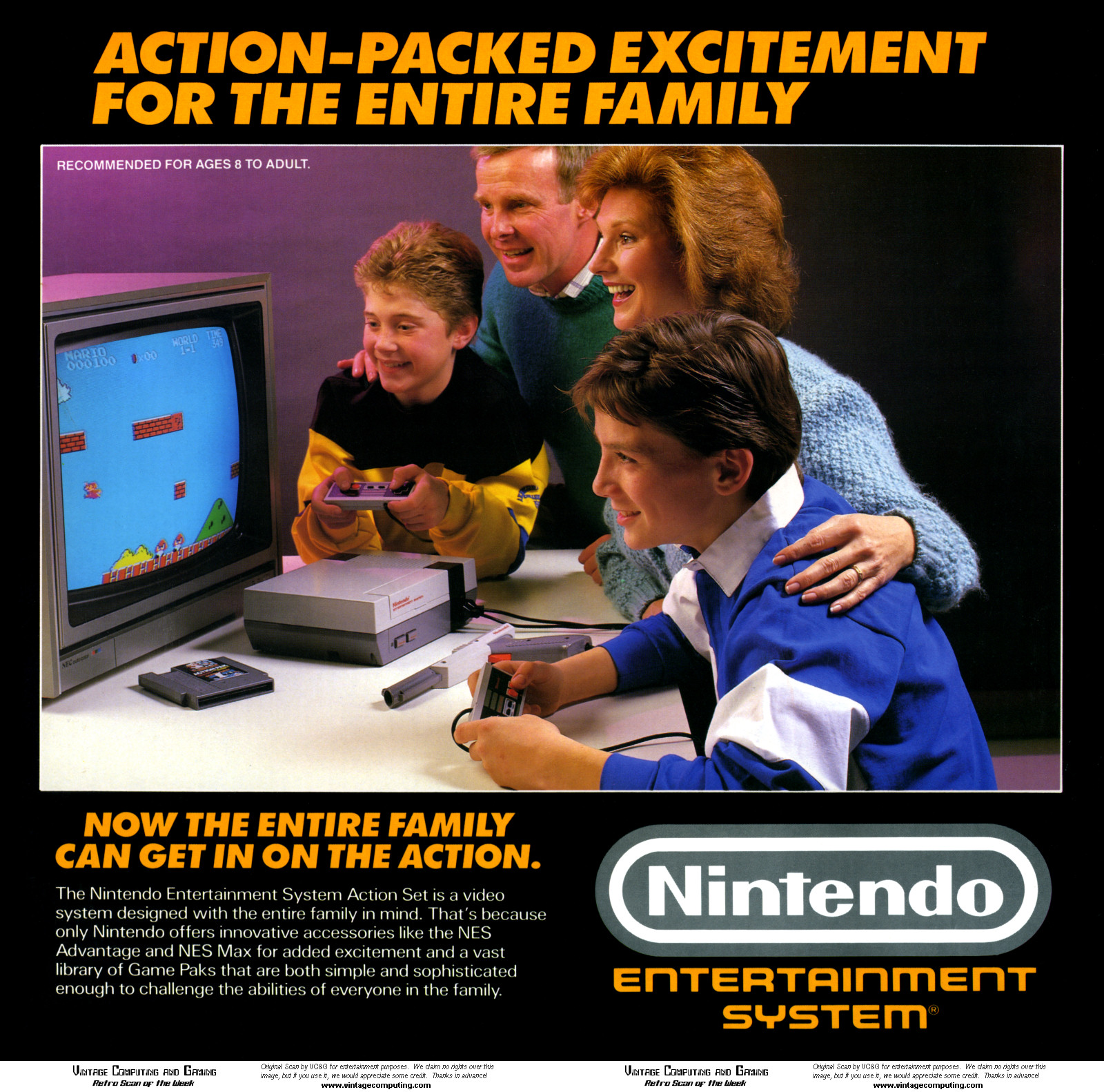
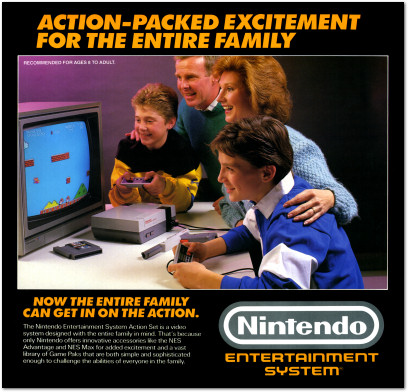
Nintendo Entertainment System NES Action Set Box Family - 1988The Euro-American family in its native habitat.

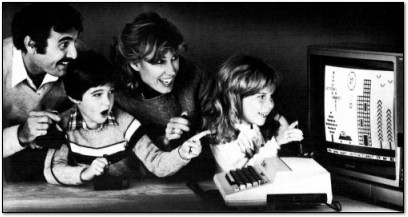
Just in time for Thanksgiving — and the ritual practice of family togetherness — comes this wonderful vintage photo from the back of the NES Action Set box. In it, we see a four-person white American nuclear family utterly consumed by a game of Super Mario Bros.

This scene looks nice at first glance, but imagine having to play through a whole game with mom and dad hanging off of your shoulders.

“Hey son.”

(Father gets in close, whispering into son’s ear.)

“Want to play some Super Mario Brothers?”

“I’m already playing, Dad.”

(Father squeezes son’s shoulder tighter.)

“My uncle’s name is Mario.”

Nintendo Entertainment System NES Action Set Box Family - 1988

Luckily, the scenario I’ve concocted above appears nowhere on the box. Still, a few amusing things about this photo jump out at me:

  • Mario is gleefully flying to his death.
  • The family apparently owns two copies of Super Mario Bros. because one is on the table, and they’re playing one in the NES.
  • The two kids are both playing a one player game at the same time. Or maybe the older brother (player 1) on the right is screwing up the little brother’s game by hitting pause at random intervals.
  • The mother and the son on the right aren’t looking at the TV set. Actually, I don’t think any of them are.

I’ve included an extra-large scan this time (when you click on the image), so you might be able to turn it into a desktop background.

For more vintage family madness, check out my latest slideshow on Technologizer.

Happy Thanksgiving!

[ From Nintendo Entertainment System Action Set Box (reverse), 1988 ]

Discussion Topic of the Week: Have you ever played a video game with your entire immediate family rapturously engaged in the action on screen?
[ Retro Scan of the Week ] Corvus Apple II Hard Drive

Monday, November 16th, 2009

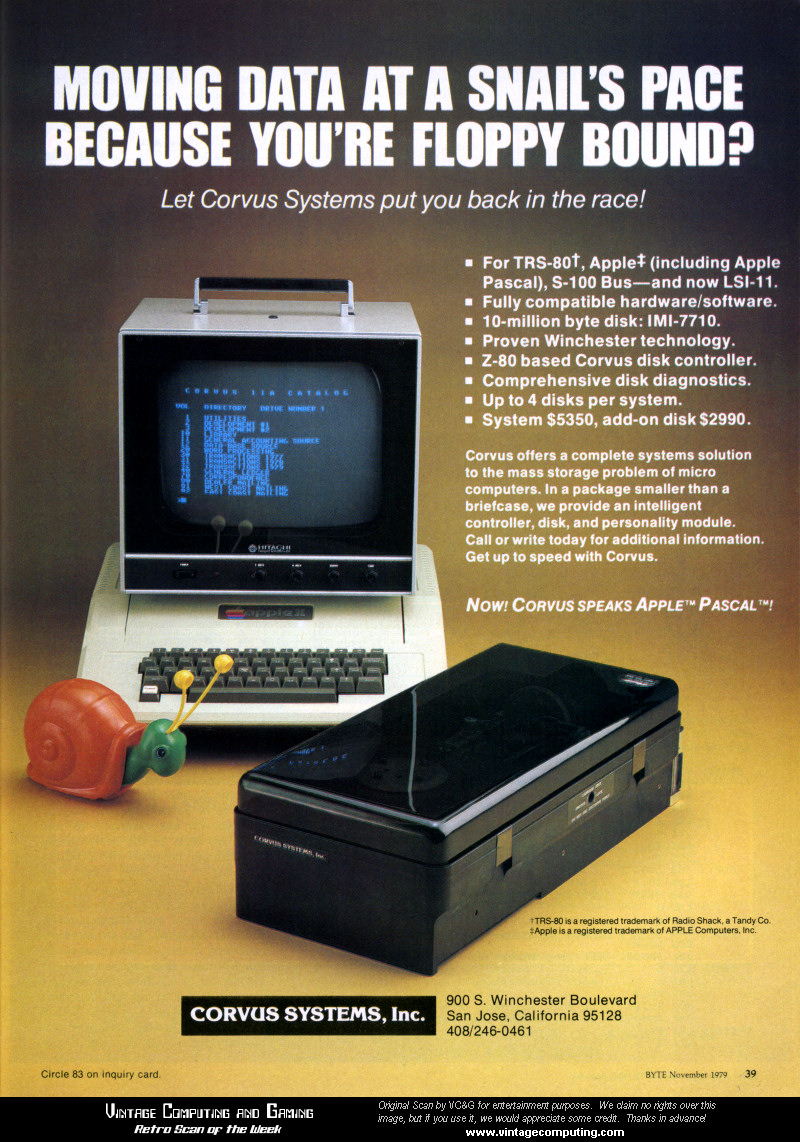
Corvus Hard Drive IMI-7710 for Apple II Ad - 1979The snail was not amused.

Wow. $5,350 for a 10 megabyte hard drive system that’s almost as big as your computer. What a bargain! It’s like a tiny coffin for your data.

In case you’re taking notes, this Corvus hard disk system sold for $15,915.07 in 2009 US dollars. Its retail price constituted a whopping 53% of the average American’s yearly income in 1979 (about $10,121). Yes, in 1979, you could spend half of your annual salary on a single 10MB hard drive setup.

Just out of curiosity, how many of you owned a hard disk for your PC before 1985? Raise your hand.

Not many, and now you see why. Even as prices dropped, most hard disks were well out of the realm of affordability for most home PC users in the 1970s and 80s. Even at 1/5th the cost, this hard drive would have still been beyond the reach of most US households.

[ From BYTE Magazine, November 1979 ]

Discussion Topic of the Week: What was the size (data capacity) of your first computer hard drive?

SNES PowerPak Materializes

Thursday, November 12th, 2009

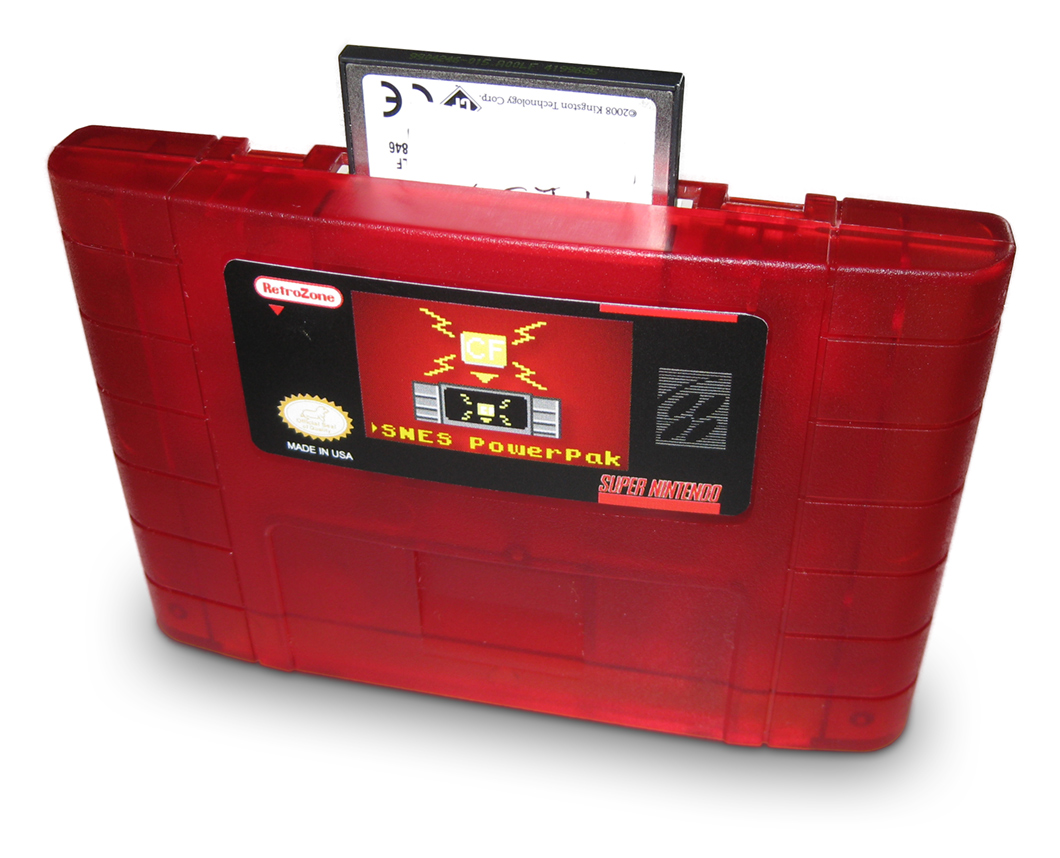
RetroZone SNES PowerPak

Remember the PowerPak — that wondrous device from RetroZone that allowed you to cram every NES game ever made into one cartridge? Well, two years later, RetroZone has released its follow-up, the SNES PowerPak for the Super NES.

Well, they’ve kinda released it. Sales appear to temporarily be on hold in order to “investigate system compatibility,” according to the RetroZone website.

RetroZone Temporarily UnavailableFor those unfamiliar with the original PowerPak concept, the SNES PowerPak allows one to copy SNES ROM files onto a compact flash card, place the card into the SNES PowerPak cartridge, and then play those games on a real Super NES unit. It supports multiple games through on-screen menu selection.

More Info to Come

When I stumbled across the new SNES PowerPak today, I initially felt like jealously hoarding the knowledge so I’ll have less competitors when I try to get my hands on one of these magical devices.

But then I realized that I have a responsibility to let you guys know about this, since so few sites out there cover the world of Nintendo hacking and modding — and especially since the proprietor of RetroZone doesn’t make much effort to get the word out.

Whenever I get one, I’ll write a review for VC&G. Until then, you can drool over it like me at the RetroZone site.