Archive for the 'News & Current Events' Category

[ Retro Scan of the Week ] Super NES Turns 20

Monday, August 22nd, 2011
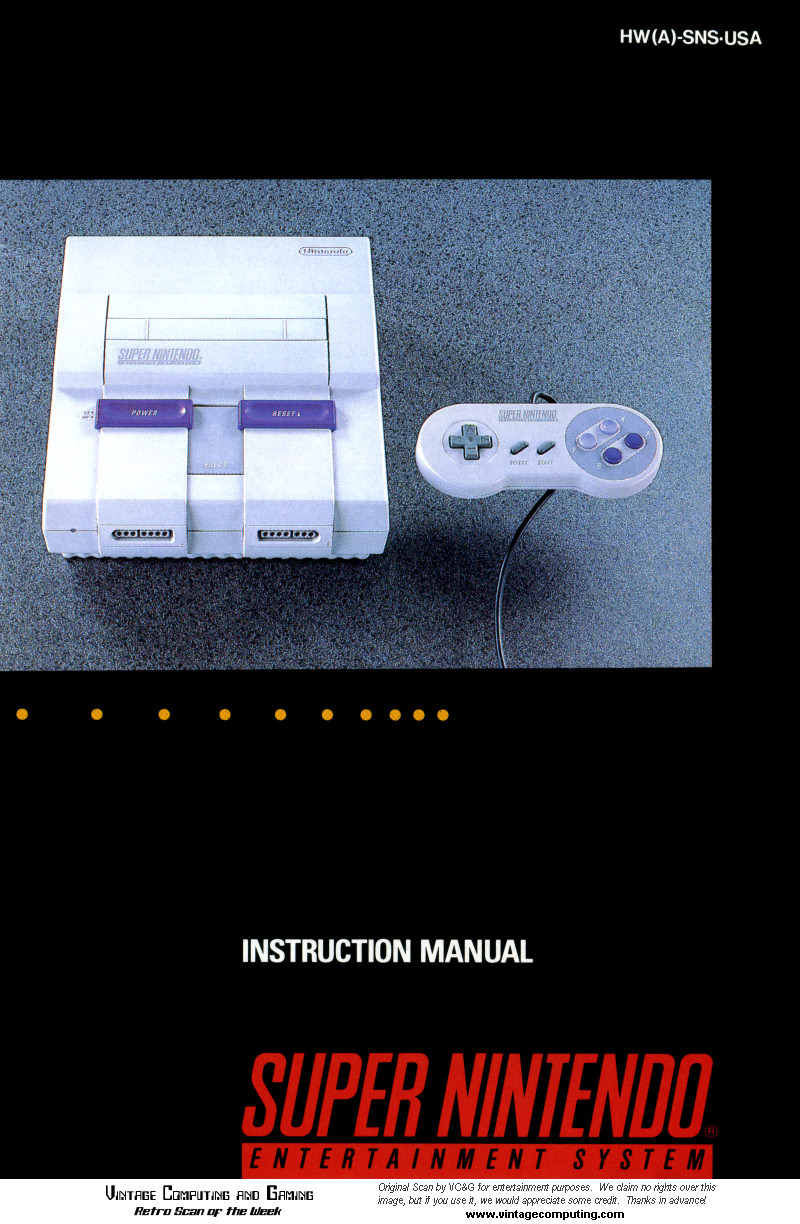
Super Nintendo Entertainment System - Super NES - SNES Instruction Manual Cover - 1991“Nintendo Super Levitation Pak (TM) not included.”

Nintendo released the Super Nintendo Entertainment System (“Super NES” or “SNES” for short) 20 years ago this week — way back in 1991.

As a devotee of the NES at the time, I wasn’t quite sure what to make of the Super NES when it came on the market. It’s funny, but I didn’t expect it at all. You’ll have to keep in mind I was only 10 years old and my video game market knowledge was limited to what Nintendo Power told me. When I first saw a preview of the Super Famicom hardware (the Japanese Super NES) in Nintendo Power, I thought “why?” Wasn’t the NES good enough?

I ended up getting a used Super NES in 1992 (in a set with Mario Paint), and I enjoyed it quite a bit. But it never felt the same as my NES (in retrospect, this was probably due to simply growing up), and I soon grew jaded by the general software offerings for the system.

Sure, I kept up with hits like Zelda: A Link to the Past, Super Mario Kart, Super Metroid, and Donkey Kong Country, but it felt like every third-party title in between paled in quality compared to Nintendo’s offerings. That trend continues to this day on Nintendo consoles.

Rose-Colored Glasses

After the advent of widespread Internet use, folks began to rediscover hidden gems of the SNES catalog, such as many classic RPGs games that many American gamers passed over (and Nintendo failed to promote) at the time of their release. As I dug through the old SNES catalog in the emulator era, I too began to appreciate the Super NES more than I had during its heyday.

Quite a few people now hold the Super NES platform as the pinnacle of 2D sprite-based gaming, which many gamers began to sorely miss after the 3D polygonal graphics revolution began. We now clearly see the SNES as a pivot point between two distinct epochs in video games. That reputation will likely continue as the story of Nintendo’s 16-bit home console echoes through history.

Further Reading

For more Super NES-related stuff on VC&G, check out my Why Super Nintendos Lose Their Color: Plastic Discoloration in Classic Machines article from 2007.

If you’ve ever wondered how many Super NES games start with the word “super,” check out Super Game 64 Advance DS: The Nintendo Game Naming Formula Revealed!, also from 2007.

That same year, I wrote about how I put Secret Cartridge Messages in certain Super NES games that I rented. I also wrote about how sad I was when I finally finished Earthbound for the Super NES.

[ From Super NES Instruction Manual, 1991, cover ]

Discussion Topic of the Week: When did you first get a Super NES? What did you think of it at the time?
[ Retro Scan of the Week ] Number 300

Monday, August 15th, 2011

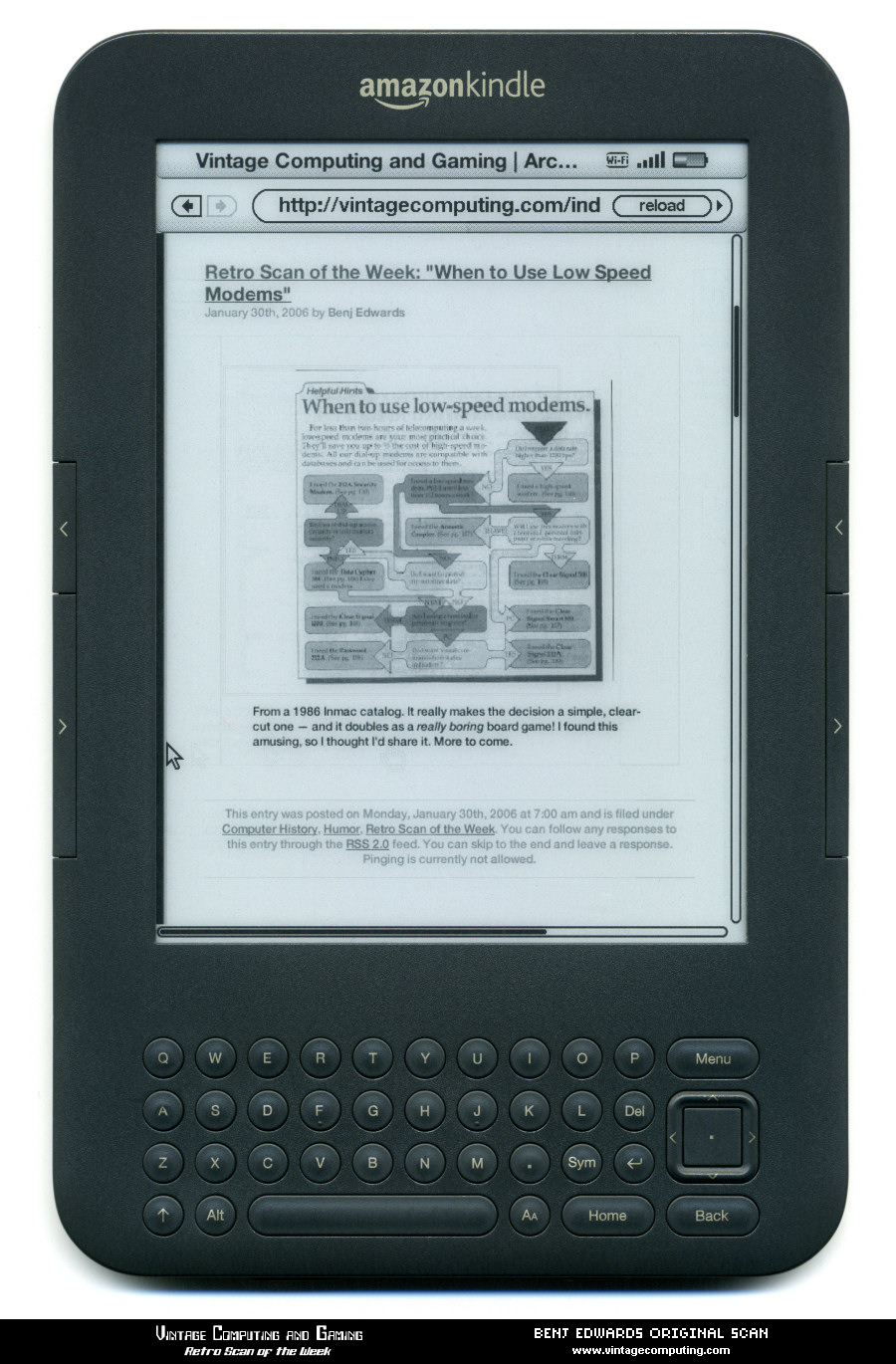
Vintage Computing and Gaming - The First Retro Scan of the Week on an Amazon Kindle - 2006Bet you’ve never scanned a website before.

This week’s Retro Scan happens to be the 300th entry of this series that I’ve posted since 2006. We already celebrated the 5th anniversary of RSTOW back in January, so this isn’t quite as exciting of a milestone.

Still, I thought I’d take this opportunity to do something once thought impossible: I scanned the Vintage Computing and Gaming website. More specifically, I scanned an Amazon Kindle showing the very first Retro Scan of the Week post from back in January 2006.

Did I scan something retro? Not really, but I have the feeling that this Kindle, with its monochrome e-paper screen, will seem very quaint in just a few years. The 2006 RSOTW post itself is already over five years old, which feels like an eternity in Internet time.

Will there be 300 more Retro Scans? Only time will tell.

[ From Vintage Computing and Gaming, January 2006 ]

Discussion Topic of the Week: Do you think e-readers will permanently replace paper books? If so, how soon?

IBM PC 30th Anniversary Extravaganza

Friday, August 12th, 2011

Can You Do Real Work With The 30-Year-Old IBM PC 5150? at PCWorld.com

If you haven’t heard by now, the IBM PC platforms turned 30 years old today. On August 12th, 1981, IBM announced its new PC, the 5150, at a press conference in New York. It was a big deal then, and it’s an even bigger deal now. For the last 30 years, most of us have been using computers descended from a standard set in motion 30 years ago.

To celebrate this momentous anniversary, I’ve put together a few articles for PC World and Technologizer. The first is titled, “Can You Do Real Work With the 30-Year-Old IBM 5150?” A few weeks ago, I locked myself in a room with a vintage IBM PC 5150 to see if I could use it for real, modern computing work. That article spells out the results.

The second is something more predictable: IBM PC Oddities over at Technologizer. It’s the latest in my Oddities series of interesting and bizarre trivia slideshows for that site. If you’ve ever used a PC, you should enjoy it.

Then there’s the stuff at VC&G. I just posted a few thoughts on the IBM PC’s anniversary and an essay on history’s treatment of the IBM PC, and on Monday I posted a new Retro Scan of the Week that features a 1982 IBM PC ad. In turn, that Retro Scan post lists previous Retro Scan entries that deal with the PC.

Happy Birthday, IBM PC!

The Beleaguered IBM PC in History

Friday, August 12th, 2011

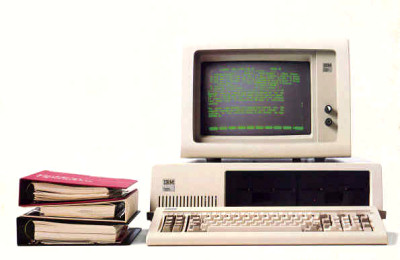
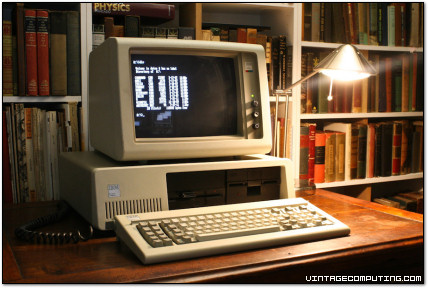
The IBM PC 5150

From the 1990s until very recently, the press has been generally unkind to the achievements of the first IBM PC. Due to the PC platform’s utter dominance of the personal computer market, popular accounts of personal computer history commonly paint IBM as the slow, lumbering, clueless enemy while cheering on spunky underdogs like Apple. I’m not even going to cite specific examples: Google “computer history.” Read. You will see it.

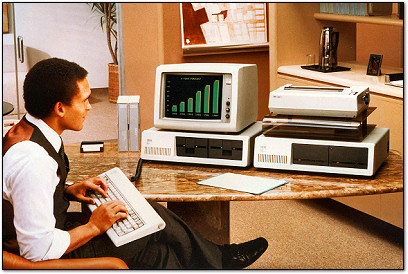
But that perspective is not fair at all. IBM truly pulled off something smart, savvy, and remarkable in designing the IBM PC 5150 (and the machines that followed it, into the PS/2 era). With the 5150, a team of 12 people took the machine from concept to shipping product in less than a year. And yet many focus on how IBM supposedly lost its way.

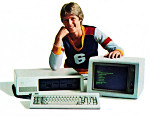
IBM PC KidMuch ballyhoo has been made, for example, about how IBM lost its grip on the PC’s direction as clones flooded the market. From a different perspective, that runaway-freight-train-of-a-platform is a success story for IBM.

While Big Blue lost market share to clone manufacturers, you have to keep in mind that IBM’s percentage shrank as the market size exploded. IBM fostered a rich PC standard that it kept reaping until it sold its PC division to Lenovo in 2004. IBM may not have kept steering the ship, but they sure made a lot of money in the cargo hold.

And if you think IBM’s influence on the PC standard ended in the early 1980s, think again. Real history is not so cut-and-dry. The PS/2 era (which dawned in 1987) gave us stalwarts like the PS/2 mouse/keyboard ports and, ah yes, that minor display technology called VGA. You can also thank the 1990s ThinkPad line for its part in streamlining the modern laptop.

Apple vs. IBM

The popular narrative of IBM vs. Apple in the 1980s, with its strong contrasts of Good vs. Evil and Hero vs. Villain was largely a creation of Apple’s marketing department. The image of Apple’s David verses IBM’s Goliath got repeated so many times that the press started using the supposed rivalry as the basis of dramatic stories. Humans need narratives to make sense of history, and writers have forced the PC market story into that archetypal mold.

Sure, IBM and Apple competed for dollars — and they may have even done it vigorously — but business is business. It’s not swashbuckling. The first thing you learn when actually studying computer history (i.e. interviewing folks) is that just about no one involved in creating these products thinks they were doing something so incredibly amazing that it should be turned into a movie. They were just doing their jobs, developing good products, and trying to make money like everyone else. When the project was over, they moved on to other things. That story is incredibly boring if you don’t dramatize it.

By using the IBM PC for a week for a recent article, I learned firsthand that the original PC really was an amazing machine for its time. It wasn’t just a generic box that happened to have an IBM logo on it, as some people argue. Sure, it didn’t have flashy graphics or a GUI, but it was solid, reliable, well-designed, and it was definitely the most qualified personal computer for getting work done in 1981. There is a reason it became a standard, after all — everyone imitated it, and they imitated it because it was amazing.

A Few Thoughts on the IBM PC’s Birthday

Friday, August 12th, 2011

The IBM PC Turns 30

When the IBM PC turned 20 back in 2001, I said to myself, “Really? It’s that old already?” I was honestly surprised. Now that the PC platform is 30 (as it just turned today), that age seems obvious. (“Thirty, you say? Sounds about right.”)

Computer technology has come a long way since 1981, and the last 10 years in PC land have been just as eventful as the first 20. We’ve seen the Internet’s social explosion, juice-sipping Intel Atom processors, netbooks, powerful sub-$500 desktop PCs, the iPhone, the rise of the consumer tablet computer, and — oh yeah — Macs are more like IBM PCs than ever, living their lives in an x86 world. PCs aren’t necessarily beige metal desktop boxes anymore (as they still were in 2001) — in fact, folks are more likely to buy a thin laptop computer in 2011.

My point, I guess, is that I’m glad the IBM PC is 30. It is probably time to move away from the paradigm set in motion by the Wintel duopoly in the 1980s, although we may never fully escape it on the desktop. That is not necessarily a bad thing, but it’s time to try some new ideas in personal computing. And we are. With non-x86, non-Windows tablets and smartphones as influential as they are now, the winds of computing seem to be blowing 180 degrees away from the Intel-Microsoft PC platform. It’s exciting to think where those winds will take us in the future.

Donkey Kong Turns 30 (Time for Oddities)

Monday, July 11th, 2011

Donkey Kong Oddities on Technologizer

Thirty years ago this month, Nintendo released Donkey Kong in the arcade. The title introduced Mario to the world and turned Nintendo of America’s fortunes around.

Since the Mario character first debuted in Donkey Kong, we could just as well be celebrating Mario’s 30th birthday. I’m sure someone will figure that out and write about it soon (if they haven’t already). But folks celebrate Mario endlessly, regardless of anniversary or season, so I think it’s time to focus on his simian rival and the game they first starred in together.

That’s why I put together Donkey Kong Oddities, which celebrates the game in that very Benj way — by finding weird and interesting tidbits of Donkey Kong-related ephemera and compiling them in a graphically-rich slideshow. I hope you enjoy it.

Other Entries in Benj’s Oddities Series:

[ Retro Scan of the Week ] Thomas Jefferson’s Apple III

Monday, July 4th, 2011

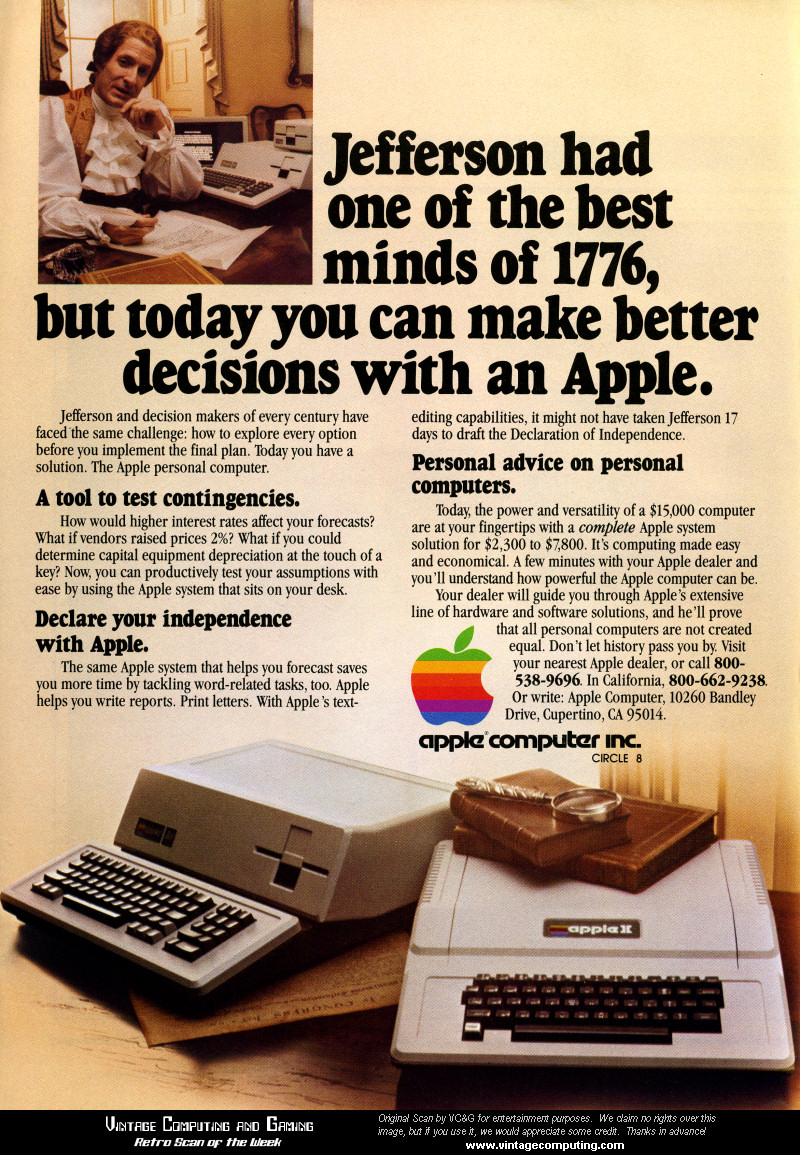
Thomas Jefferson Apple III Apple II Ad - 1981“We hold these truths to be self-evident, that all men are created floppy…no, wait.”
(click above to see the full advertisement)


10 REM DECLARATION OF INDEPENDENCE TEST BY THOMAS JEFFERSON
15 REM IN HIS BASEMENT, JULY 4TH, 1776, 14K FREE
20 PRINT "WE HOLD THESE TRUTHS TO BE ____"; INPUT I
30 IF I = "SELF-EVIDENT" THEN GOTO 100
40 IF I = "TURKEY FLAVORED" THEN GOTO 200
50 IF I = "ONLY TRUE IF YOU ARE MARTHA" THEN GOTO 300
60 IF I = "COMPLETELY FALSE" THEN GOTO 400
70 GOTO 20
100 PRINT "EXCELLENT! I LIKE YOU."; GOTO 500
200 PRINT "TRY AGAIN, FRANKLIN."; GOTO 20
300 PRINT "GO BRUSH YOUR WOODEN TEETH."; GOTO 20
400 PRINT "HOW DID THIS MAKE IT TO ENGLAND?"; GOTO 20
500 END

Happy Independence Day from Vintage Computing and Gaming

[ From Interface Age, 1981 ]

Discussion Topic of the Week: If most computers were manufactured in the USA today, would you be more or less likely to buy them?

Sonic The Hedgehog Oddities

Thursday, June 23rd, 2011

Sonic the Hedgehog Oddities on Technologizer

Twenty years ago today, Sega released Sonic the Hedgehog for the Sega Genesis. In honor of this anniversary, I dug through the lesser-known corners of blue hedgehog history and pulled together an amusing collection of Sonic Oddities for you to enjoy. You’ll find the result — which includes Sonic’s brushes with genetics, Michael Jackson, and even ketchup — compiled in a slideshow over at Technologizer. I hope you enjoy it.

Speaking of Sonic the Hedgehog, what did you think of the 1991 Sega Genesis game when you first played it?


Previous entries in Benj’s “Oddities” series:
Super Mario Oddities
Legend of Zelda Oddities
Nintendo Entertainment System Oddities
Game Boy Oddities
Windows Oddities

Interview: John Linnell of They Might Be Giants on Technology, Video Games, Injuries

Monday, June 13th, 2011

John Linnell of They Might Be Giants Interview on Technologizer

Up now on Technologizer.com is my recent interview with John Linnell of the tech-savvy rock band They Might Be Giants. Linnell and I discussed his personal computer and video game history, how he’s integrated computers into his music career, a fierce Tetris addiction, and gruesome encounters with X-Acto knives. I hope you enjoy it.

By they way — Happy Birthday to Mr. Linnell, who turned 52 yesterday.

Apple Stores Turn 10

Thursday, May 19th, 2011

A Tale of Two Apple Stores on Macworld.com

Ten years ago today, the first two Apple retail stores opened to the public. As you might expect me to do, I wrote an article about it. You can see the result, “A Tale of Two Apple Stores (The First Two),” over at Macworld right now. It’s part of a larger series of articles about the Apple retail stores’ 10th anniversary. Hope you enjoy it.

When you’re done reading, tell us about your first visit to an Apple Store. What were your feelings and impressions? Did you buy anything?