Archive for the 'Regular Features' Category

[ Retro Scan of the Week ] The Hint Book No One Wanted

Monday, June 13th, 2011
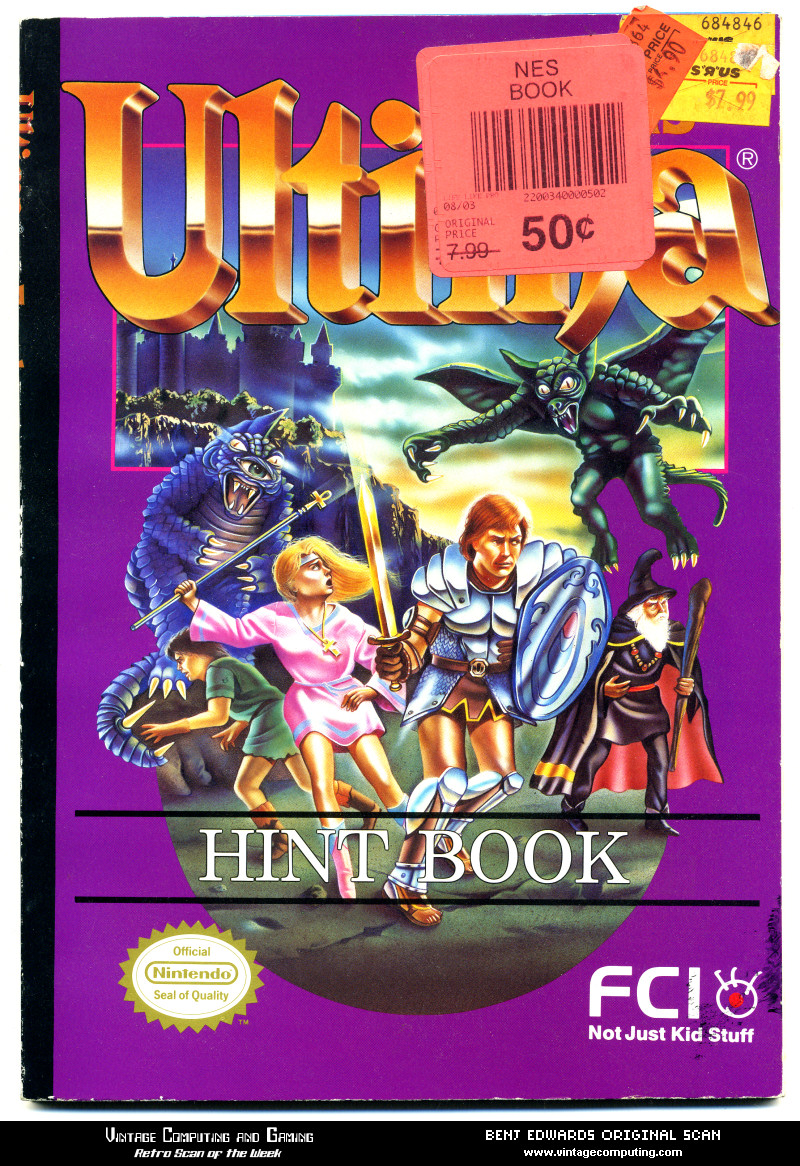
Ultima Exodus NES Hint Book Cover - 1989Retail price? $7.99. For you? Fifty cents.

In the early-mid 1990s, I regularly made trips to Toys ‘R’ Us to pick through their video game clearance section. It was then that I built up the foundations of my fast-growing vintage game collection.

I had a blast when they started clearing out their NES items — for example, I picked up Kirby’s Adventure for $10 and a whole bunch of unopened NES accessories like controllers and cleaning kits from that time for a mere pittance (I still have about four new-in-box NES Advantages from that time that I bought for $2 a piece). This is the same place where I bought the Virtual Boy and Sega 32X new in their boxes for about $30 a piece. Man, those were the days.

One day while browsing the store’s video game strategy guide rack, I noticed this forlorn and chronically passed-over hint book for Ultima: Exodus, a poorly received port of the PC classic Ultima III for the Nintendo Entertainment System. The copyright date in the back said 1989, and by the look of the discount stickers on the front, it appeared the booklet had been sitting on the shelf since that time. After five years of neglect, its cover had become scuffed, dirty, and mysteriously ink-stained on one corner.

The book’s binding was off-kilter when I bought it for the low low price of 50-cents, which may be why consumers passed it up in favor of non-defective printings of the same book. On the other hand, they may have simply passed it up because the associated game wasn’t too popular.

[ From Ultima Exodus Hint Book, 1989, cover ]

Discussion Topic of the Week: When’s the last time you bought a physical paper hint book for a video game?

Interview: John Linnell of They Might Be Giants on Technology, Video Games, Injuries

Monday, June 13th, 2011

John Linnell of They Might Be Giants Interview on Technologizer

Up now on Technologizer.com is my recent interview with John Linnell of the tech-savvy rock band They Might Be Giants. Linnell and I discussed his personal computer and video game history, how he’s integrated computers into his music career, a fierce Tetris addiction, and gruesome encounters with X-Acto knives. I hope you enjoy it.

By they way — Happy Birthday to Mr. Linnell, who turned 52 yesterday.

[ Retro Scan of the Week ] PlayStation 2 at Target

Monday, June 6th, 2011

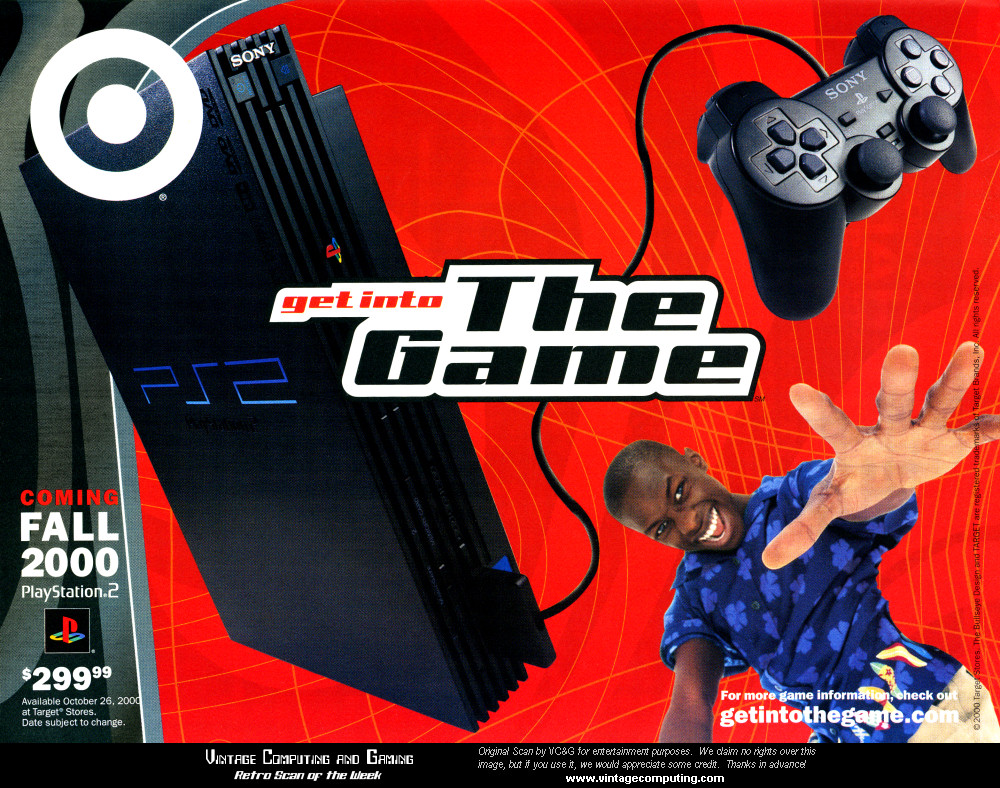
PlayStation 2 Launch Ad by Target - 2000GET INTO THE GAME. YEEEEAAAAHHH

By golly. Has it really been 11 years since the PlayStation 2 came out? Sony launched the massively successful console in Japan on March 4th, 2000, making the platform one of the longest-lived in history. Games are still being made for it (one of its most recent releases, WWE All Stars, landed in March of this year), and the console hardware is still in production.

During this week of E3, which will include a new console announcement, it’s interesting to look back a decade to the launch of this massively successful machine. The early ad for the PS2 you see above was published not by Sony, but by Target to promote its availability in its stores. It just goes to show how closely hardware vendors and retailers must work together to make every new video game console launch a success.

[ From Electronic Gaming Monthly, November 2000, p.13 ]

Discussion Topic of the Week: When did you first get a PlayStation 2? What was the first game you bought for it?

[ Retro Scan of the Week ] A Packard Bell

Monday, May 30th, 2011

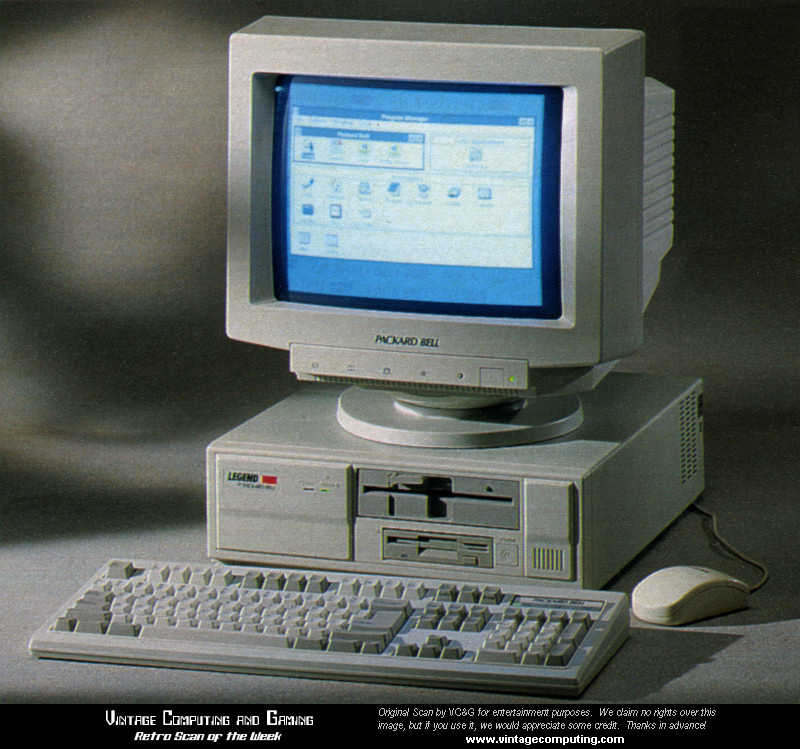
Packard Bell Legend 650 Plus in Sears Wish Book 1992It’s just, you know, one a them computers. One a them things. Don’t work.

[ From Sears Wish Book, 1992, p.728 ]

Discussion Topic of the Week: In your words, what is a computer?

[ Retro Scan of the Week ] Big Trak Keypad

Sunday, May 22nd, 2011

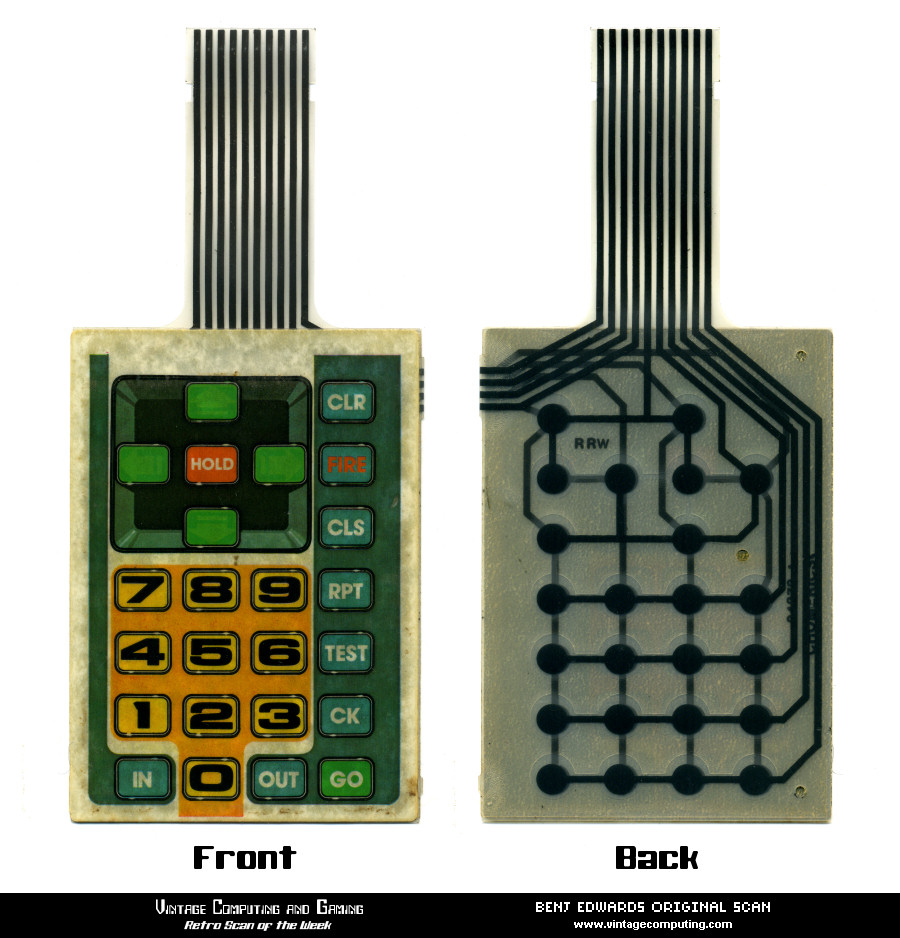
Milton-Bradley Big Trak Keypad - circa 1979Bloop bloop bleep bleep bloop bleep bloop

While cleaning out my garage the other day (as I do periodically to make room for new stuff), I came upon the family Big Trak, which my father bought for my brother and me at a flea market in the early 1980s.

In case you didn’t know, the Big Trak was an electronic toy tank that one could program to perform certain movements in a sequence. At its heart lay the famous Texas-Instruments TMS1000 microcontroller. While the user typed in commands on the keypad seen above, the Big Trak emitted an array of wonderful synthesized beeps and bloops that still give me warm and fuzzy feelings when I hear them today.

Like many of the flea market toys my brother and I received back then, our Big Trak arrived with a broken front axle and a missing battery door cover. My dad would purposely buy broken electronics for very cheap and fix them up for us. And so he did with the Big Trak. The gadget provided many hours of entertainment for us as it traversed our living room’s shag carpeting time and time again.

After about 10 years of rough play and 20 years of improper storage, my Big Trak was in pretty terrible shape when I came upon it recently. It was time to put the Big fella to rest, so I pulled out this keypad just before saying a final farewell to our old family friend.

[ From Milton-Bradley Big Trak keypad assembly, circa 1979 ]

Discussion Topic of the Week: What’s your favorite electronic (non video-game) toy of all time?

[ Snapshots ] Dinner with the Atari 1040STF

Tuesday, May 17th, 2011

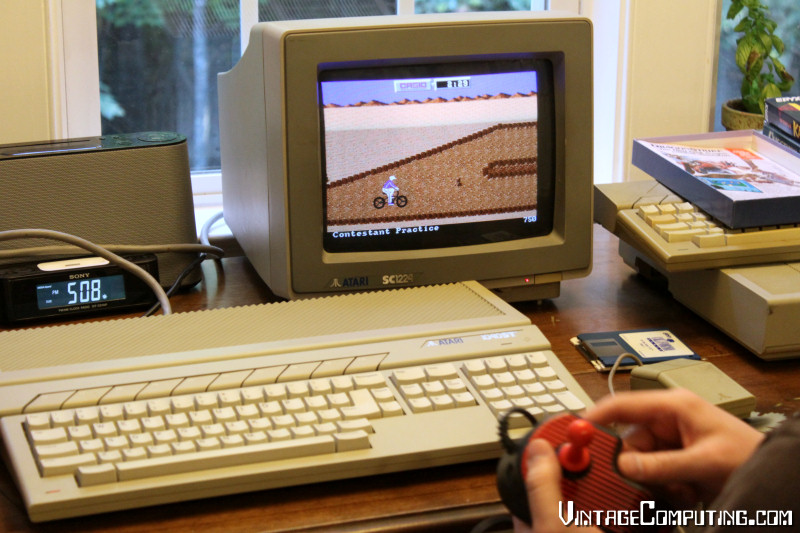
Dinner with the Atari 1040STF.California Games at the Kitchen Table (October 2010)

[ Retro Scan of the Week ] The Video Rack

Monday, May 16th, 2011

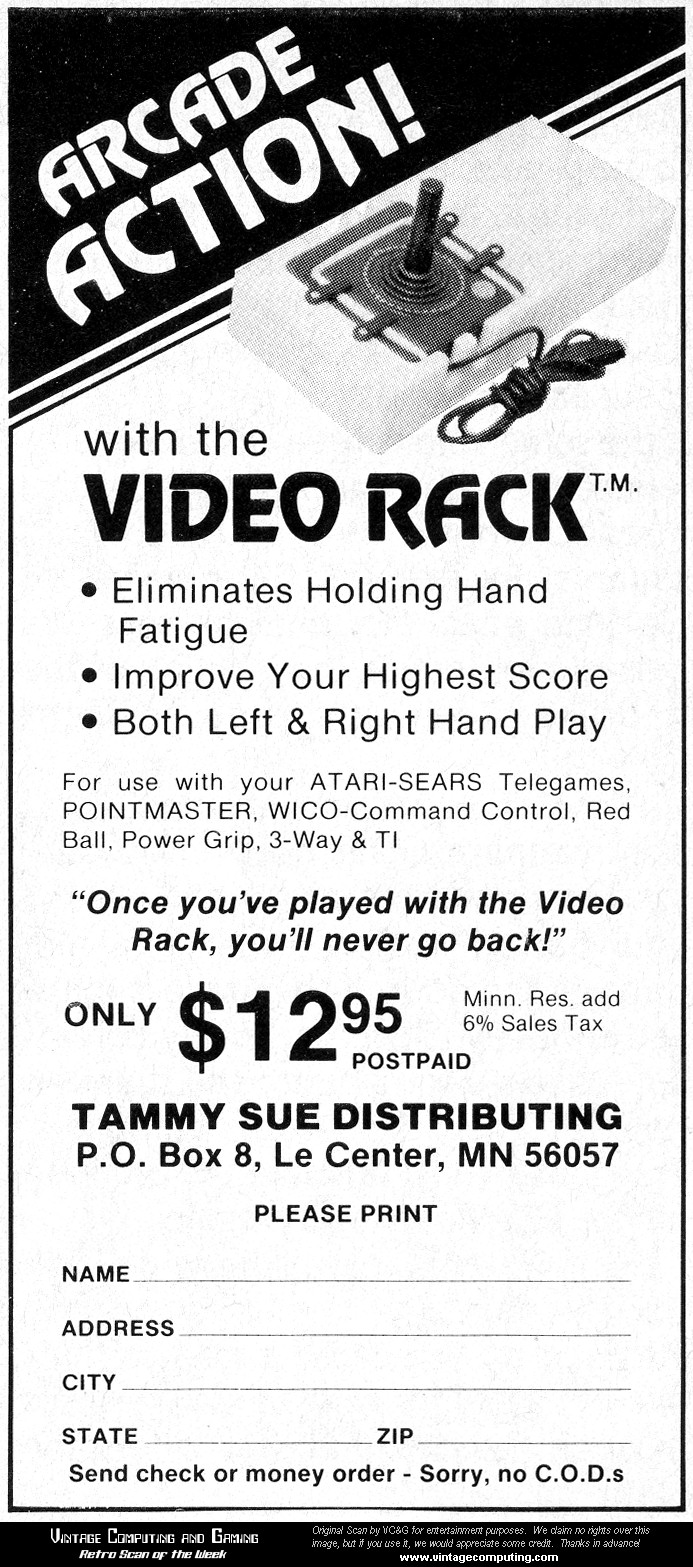
Video Rack Atari 2600 Controller Accessory Ad - Tammy Sue Distributing - 1983Oh Tammy Sue, How I Adore You

How do you make a handheld controller into a non-handheld controller? By strapping on a giant block of unwieldy plastic, of course.

The Stick Station (subject of a RSOTW in 2006) achieved the same feat by using a large poplar board. The result was far more stylish than the Video Rack, but equally useless.

While there may be a handful of games that benefit from an immovable joystick base (like an arcade machine), they’re in such a minority that they don’t warrant a special peripheral. I back up this observation by the fact that the Video Rack and Stick Station are exceedingly rare peripherals. If everybody had wanted one, they’d be common today.

There is one one notable case, however, where a joystick stabilizer really helps. Atari shipped a special dual-joystick mount with every copy of Robotron 2084 for the Atari 8-bit computer line. I have one, and it is awesome.

[ From Electronic Games, December 1983 ]

Discussion Topic of the Week: In your opinion, what video games would benefit from using the Video Rack?

[ Retro Scan of the Week ] AOL Titanium 5.0 CD

Monday, May 9th, 2011

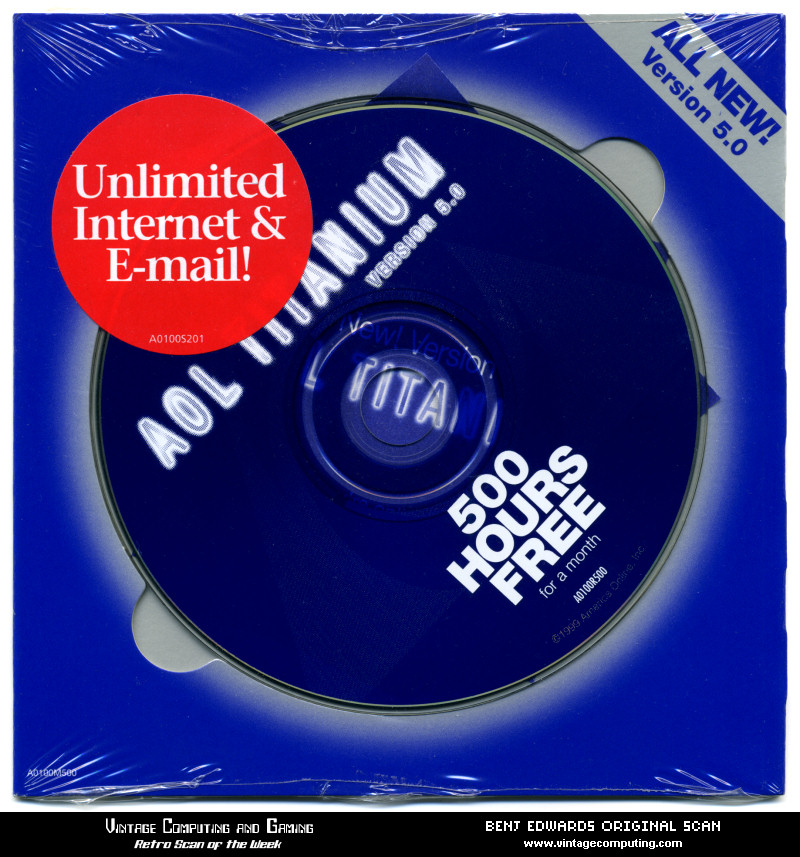
America Online AOL Titanium 5.0 CD Mailer - 1999There are about 730 hours in a month.

You may remember getting one of these in the mail in the 1990s.

Ok, ok…you may remember getting dozens and dozens of these CDs in the mail. Some people used them as coasters, some as Frisbees. Some put them in the microwave to watch them sparkle. (To any kids reading: please don’t try this.) Me? I collected them.

I saved just about every CompuServe, Prodigy, and America Online floppy disk or CD I ever received back then, and I amassed quite a collection. Some day I plan to write about these promotional disks more, but for now you’ll have to be satisfied with this shiny blue AOL Titanium 5.0 CD from way back in ’99.

[ From AOL Titanium 5.0 CD Mailer, 1999 ]

Discussion Topic of the Week: What did you do with all the promotional CDs and floppy disks you received in the mail?

[ Retro Scan of the Week ] Nuby Game Light

Monday, May 2nd, 2011

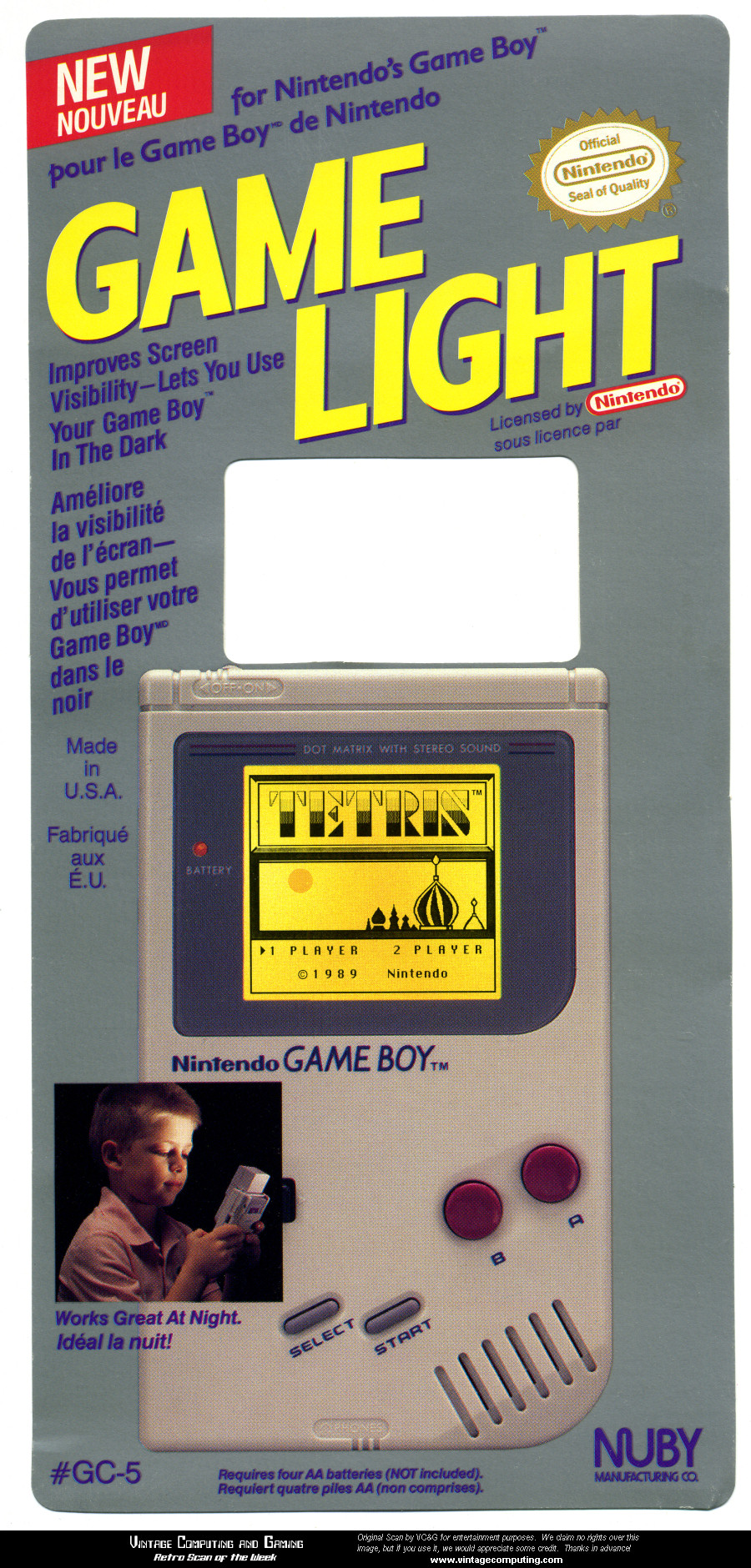
Nuby Game Boy Game Light Package Insert - ca. 1991“Lets You Use Your Game Boy In The Dark.” (see back)

[ From Nuby Game Boy Game Light Package Insert, circa 1991 ]

Discussion Topic of the Week: Did you use any accessories with your Game Boy back in the day? Which ones?

[ Retro Scan of the Week ] Apple II Digitizer Tablet

Monday, April 25th, 2011

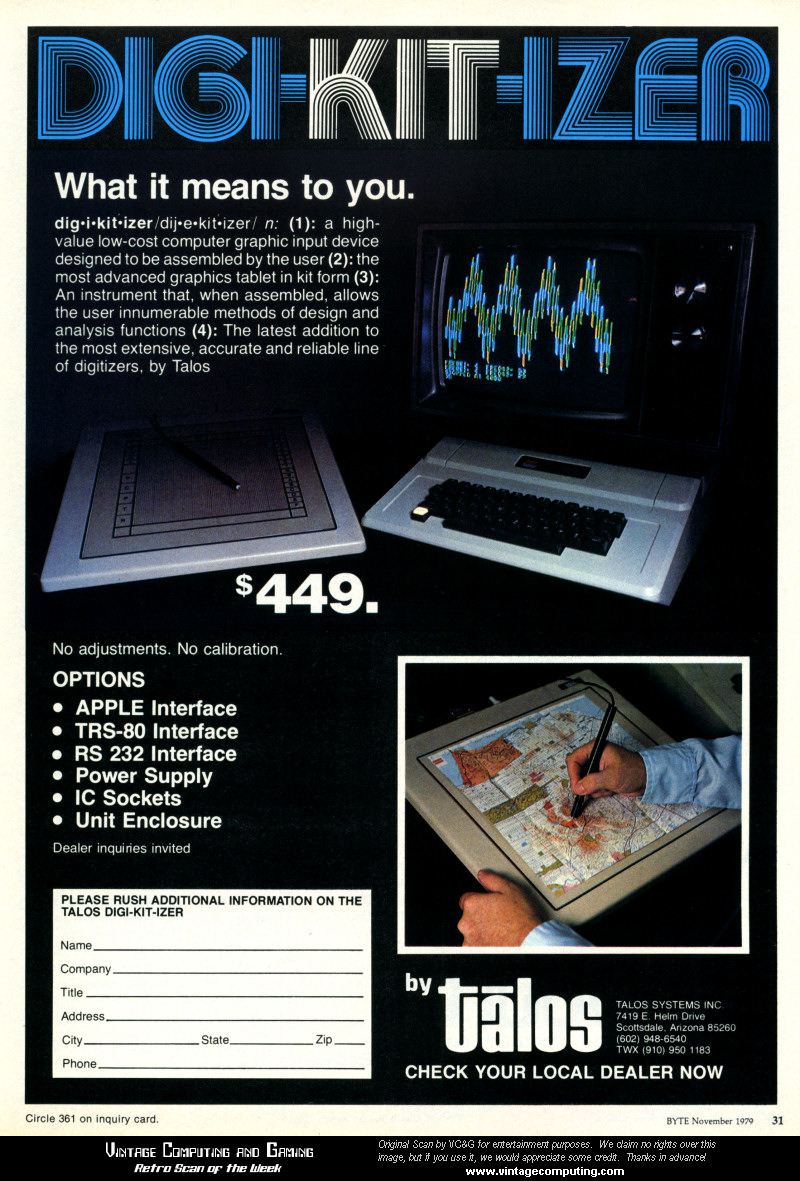
Talos Digi-Kit-Izer Digikitizer Ad - Byte 1979The Talos Digi-Kit-Izer digitizer tablet

Digitizer tablets were a popular way of digitizing graphical information in the 1970s and 1980s — an era before cheap optical scanners (and the memory to store those scanned images) became available.

To use a digitizer, you would place an image you wanted “digitized” (translated into the computer) onto the tablet and mark the key points of the illustration with a special stylus or cursor (a handheld mouse-like device with a small targeting window) hooked to a computer. Through this process, the stylus/tablet combination would interpret the spacial relationship between the points you marked into a series of graphical dots on the computer screen. Those dots, in turn, could be turned into a 2D computer image (think connect-the-dots) if desired.

With some tablets, it was also possible to trace lines of an illustration with continuous strokes of the stylus. These tablets evolved into the modern Wacom-style graphics tablet we know today.

[ From Byte Magazine, November 1979, p.31 ]

Discussion Topic of the Week: Have you ever used a graphics tablet (of any kind)? Tell us about it.