Author Archive

Moving a Mountain (One Computer at a Time)

Friday, April 28th, 2006
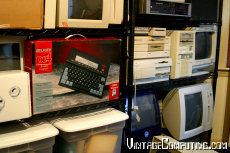
Moving the MountainOn an unusually personal note for VC&G, I thought I’d let you guys know why I’ve been so quiet recently. The answer is completely on-topic and has a lot to do with what is pictured on the right: computers. You see, I’m about to move. Moving is no simple operation for anyone, but it becomes exponentially more complicated when your house is filled with over one thousand cubic feet (wild estimate, maybe more) of bulky computers, their accessories, and video game systems. I’ve not even actually started moving yet, but I’ve spent the last few weeks packing things up and getting things ready for the big haul. Phew. Next Wednesday the actual move begins, and I’m planning on renting a big truck to move as much as I can in as few loads as possible. I’ll probably take some pictures to show you later.

To all our readers, and to all the people who have emailed me something that I haven’t replied to / published yet, I want to say thank you for your exceptional patience. Once I’m up and running in my new office, I’ll be pumping out new VC&G features like never before. That should be in a couple weeks at the most. I’ve got tons of cool stuff in the pipeline (including an account of my recent adventure to a local hamfest that resulted in some excellent finds), so stay tuned! Subscribe to VC&G articles via RSS and you’ll know automatically when we’re back in action.

Wish me luck on moving the mountain. If I get crushed under a PDP-11 in the process, don’t cry for me; at least I will have died moving something I loved. 😛

This Week’s Game Ads A-Go-Go:
“A Brief Guide to Gaming Diseases”

Thursday, April 27th, 2006
Ouch

This week in Game Ads A-Go-Go on GameSetWatch, I’ve assembled a brief guide to some particularly nasty video game diseases. Bring a copy of Dr. Mario — you’re gonna need it.

Retro Scan of the Week: Little Timmy and the Arm-length Power Glove

Monday, April 24th, 2006
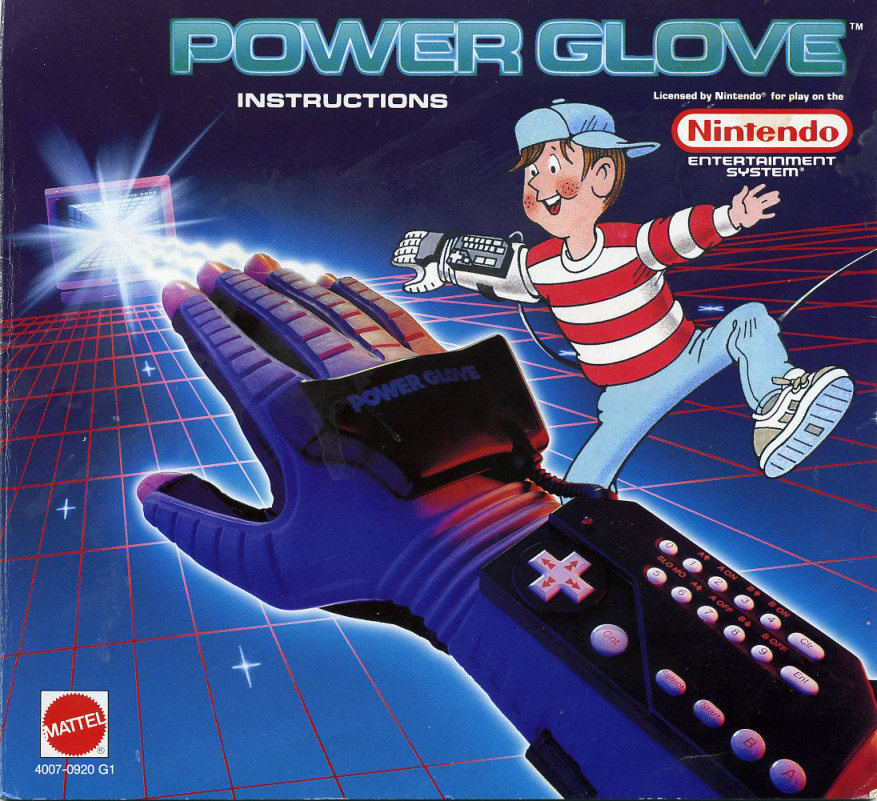
NES Power Glove Manual

In this action-packed scan of the NES Power Glove manual cover, we see little Timmy hopping from leg to leg, trying to get in on the finger-bolt-shooting action. “Oooh! Oooh! Lemmie try!” he begs Lighting Finger Man. “Sorry, little Timmy. I think that glove is a little big for you,” LFM replies. “You must also understand that with great Power Gloves comes great responsibility,” he continues, “You are not yet ready to wield the awesome power of this lethal device.”

[Note: The mysterious stains on the manual cover are not mine. For that, you can thank the previous owner.]

New “World’s Largest Video Game Collection” Article in this Month’s Probe Magazine

Wednesday, April 19th, 2006
Probe

Probe is an innovative Norwegian Flash-based web-only video game magazine. I recently wrote a new article for it about the “(Possible) World’s Largest Video Game Collection” based on the “Video Game Collector” interviews I published last month on VC&G. The new piece appears on pages 10-13 of the April 2006 issue (#20), which is online now. Check it out.

R&D Automation Taking Pre-orders for v2 Apple II Compact Flash / IDE Interface Card

Tuesday, April 18th, 2006

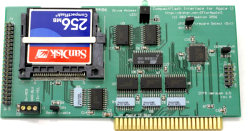
CFFAI’ve never been a huge fan of using emulators for any computer that I actually physically possess. The original hardware is almost always where it’s at — the unique look, the feel, and even the smell of a machine all add to the “authentic” user experience (kinda makes me sound like a wine snob, doesn’t it?). But original hardware breaks over time and sometimes becomes irreplaceable since it’s no longer in production. That’s where people like Rich Dreher step in with modern upgrades for vintage computers (for more on this phenomenon, check out my “New Tech for Old Computers & Game Systems” list).

Rich is now on the second revision of an impressive Apple II hardware add-on card he designed called the “CFFA” that enables any Apple II system to use a compact flash card, IBM MicroDrive, or IDE hard drive for storage. While definitely not the first Apple II IDE interface I’ve seen (or owned), this is a very slick piece of hardware. Here’s a brief rundown of its features, taken from the official site:

  • Standard Apple II form factor Card 3″ x 6″ (Usable in any slot, except slot 3 in IIe and later)
  • A Compact Flash/IDE Interface for Apple II family of computers (Type II Compact Flash socket — IBM MicroDrives work too)
  • Standard 40 pin IDE header connector
  • 3 terminal screw type power connection for IDE hard drives
  • Support for up to 128 MB (4 drives) or 256MB (8 drives) under ProDOS and GS/OS (without Dave’s GS/OS driver)
  • Support for up to 128MB, (four ProDOS 32MB drives) plus two 1GB drives under GS/OS (with Dave Lyons’ GS/OS driver)
  • On-board EEPROM for SmartPort firmware
  • User jumper to select 1 of 2 versions of the firmware
  • Allow booting ProDOS or GS/OS directly from the Interface card (for a floppy-less system)
  • Firmware available for 6502 machines (II, II+, IIe) and 65C02 machines (IIe enh, IIe platinum, IIgs ROM1 & ROM3)

Particularly attractive is, of course, the built-in CF socket. I recently read on Rich’s site that there’s even a new utility called “CiderPress” that will let you transfer files to / from the Apple II-formatted CF card when it’s plugged into a Windows machine!

Despite all its neat capabilities, what is actually most important about this card is that it’s actually for sale (currently US $105 plus shipping). Extremely unique short-run hardware doesn’t stay around for very long, so if you’re interested, don’t hesitate to jump on it while you still can. I’ve already got mine on order and am looking forward to running my Platinum IIe from a compact flash card soon.

Retro Scan of the Week: Happy Pac-Man and Floating “Video Wafers”

Monday, April 17th, 2006
Pac-Man Video Wafers

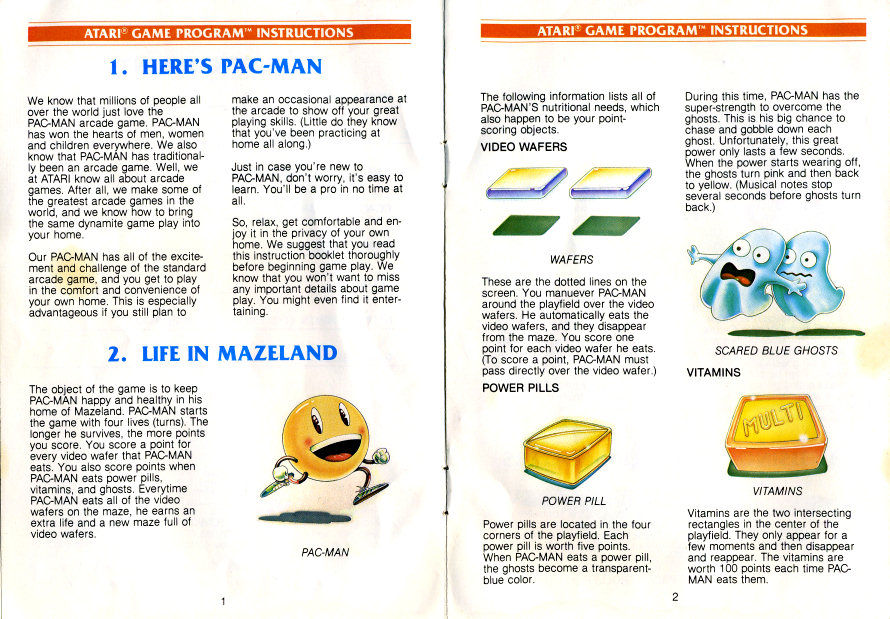
Look at the little spud, frozen mid-stride in a moment of pure ghost-running bliss. As a continuation of last week’s Retro Scan, here are two pages from the manual of the Atari 2600 version of Pac-Man. The game itself was a terrible translation of the arcade hit (for Pac-Man done right on the 2600, see Ms. Pac-Man). The graphics were so bad that the manual tells you about the “video wafers” (lines, in lieu of pellets) that Pac-Man eats in this game. Also, the bonus fruit have become “vitamins” — because they’re square.

I wonder if Pac-Man would be so happy if he knew that Atari would be burying thousands (if not millions) of copies of his game in a landfill a few years later.

This Week’s Game Ads A-Go-Go:
“The Dirty Mind of a Gamer”

Thursday, April 13th, 2006
Ballz

This week, over on GameSetWatch, I take a look at ads that are ripe for twisted interpretation. The only thing missing is your dirty mind.

The Music Computers Make: Impenetrable Noise and Silicon and Steel

Wednesday, April 12th, 2006

For some computer lovers, the sounds that computers make is music to their ears. And by “sound,” I don’t mean 32-bit digitized audio coming from a Sound Blaster Audigy; I mean the actual mechanical whirrs, clanks, and cronks that emanate from computing hardware in action. They make you feel warm and fuzzy inside.

It was this very love I had in mind when I set out to compose a “computer music” piece for a class I took at a local university back in Spring 2002. But I wasn’t exactly following the instructions (more on that later). The class focused on the history and composition of music generated by computers. Not pop music or anything like it, of course, but what I would typically call “highly inaccessible, elitist, please pull the stick from my ass” music. In particular, we learned about what proponents of the genre call “new music,” which pretty much means any music that has an unconventional structure, typically lacking vocals, instruments, rhythm or melody as we know them. The computer variety of this avant garde style arose from early attempts at generating music with computers in the 1950s and 60s, but lacking sufficient computational horsepower for a decent compositional AI at the time (and even now), composers could only squeeze abstruse sequences of notes from their machines. But (surprise!) some people thought it was cool because it was abstruse, and a new class of music elitists was born. They embraced the limitations of the medium and ran with them — straight into a wall. If you think you’d get a kick from the seemingly random bloops and bleeps generated from applying a complex algorithm to the DNA of sperm whales, then this music is definitely for you. Sure, it’s got a great “nerd factor,” but it’s hardly emotionally inspiring.

[ Continue reading The Music Computers Make: Impenetrable Noise and Silicon and Steel » ]

Retro Scan of the Week: “Good Gobbling and Good Luck”

Monday, April 10th, 2006
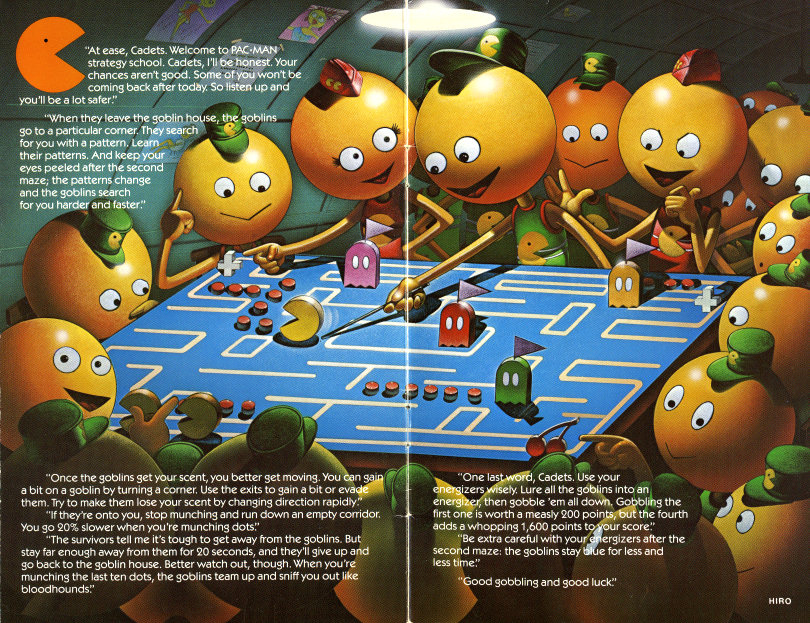
Pac-Man Strategy School

From the golden era of fancifully-rendered video game character depictions comes this gem, a scan from the instruction manual of the Atari 800 version of Pac-Man. Considering what we actually see in the game, the illustrator (“HIRO”) has chosen quite a liberal interpretation of Pac-People, drawing them as anthropomorphic, rubbery stick figures with giant round heads. For more of Hiro’s skinny Pac-Men, check out this buck-toothed Pac-Guy running for his life while eating floating discs from the cover of the manual.

The Official Golf Ball of Ultima III: Exodus

Saturday, April 8th, 2006
Official Ultima III Golf Ball

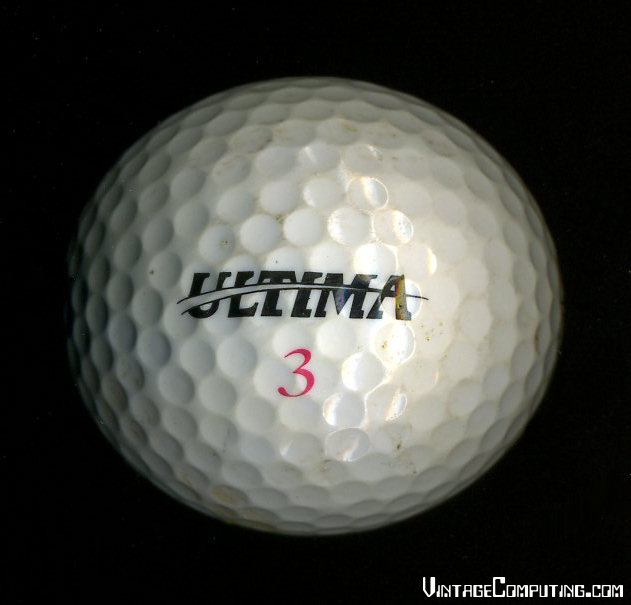
Here it is: the Official Golf Ball of Ultima III: Exodus. Back in 1983, if you found this ultra-rare object included in your Ultima III game box, you won an all-expenses paid trip to Lord British’s backyard swimming pool.

Ok, so I made that up. I actually found this golf ball in my back yard recently and thought it mildly amusing. The ball’s shape looks warped purely because my flatbed scanner wasn’t designed to scan 3D spherical objects. I wonder if Richard Garriott uses this brand when he hits the green.