[ Retro Scan of the Week ] IBM Smart Desk

Monday, April 28th, 2014

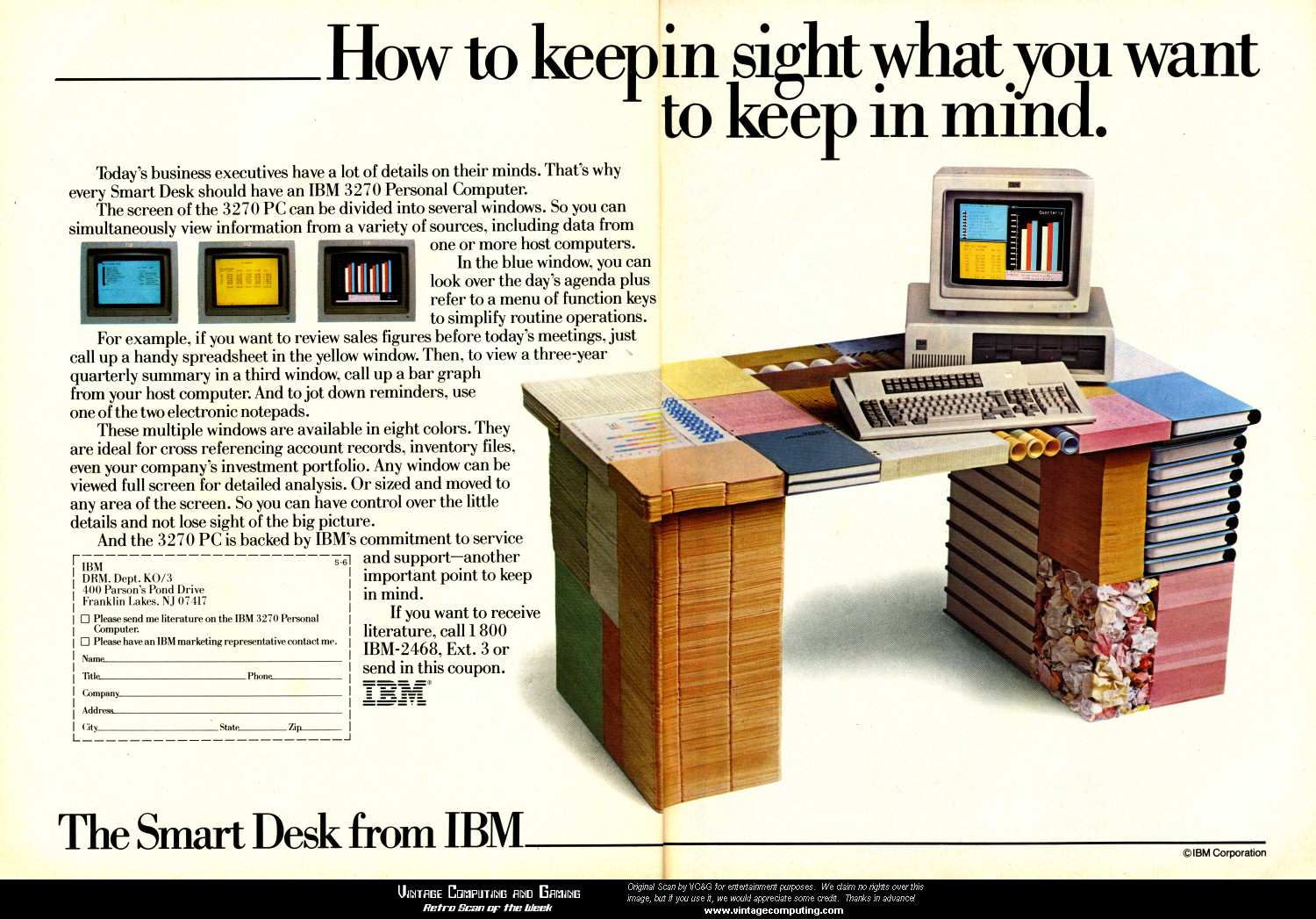
IBM 3270 PC Smart Desk 1985Multitasking in the early days.

Ah, the IBM 3270 PC. What a strange beast. It was essentially an IBM PC that could also emulate an IBM 3270 terminal, which allowed it to link up to IBM mainframes. In a sense, this was IBM’s version of the AppleLine protocol adapter (featured in a Retro Scan a few weeks ago), albeit one built into an IBM PC.

By the way, look at the keyboard on this machine. Function keys galore. I’ve always wanted one of those.

[ From TIME, May 6 1985, p.B14-B15]

Discussion Topic of the Week: Have you ever used an IBM mainframe computer?

[ Retro Scan of the Week ] Crystal Quest for Game Boy

Monday, April 21st, 2014

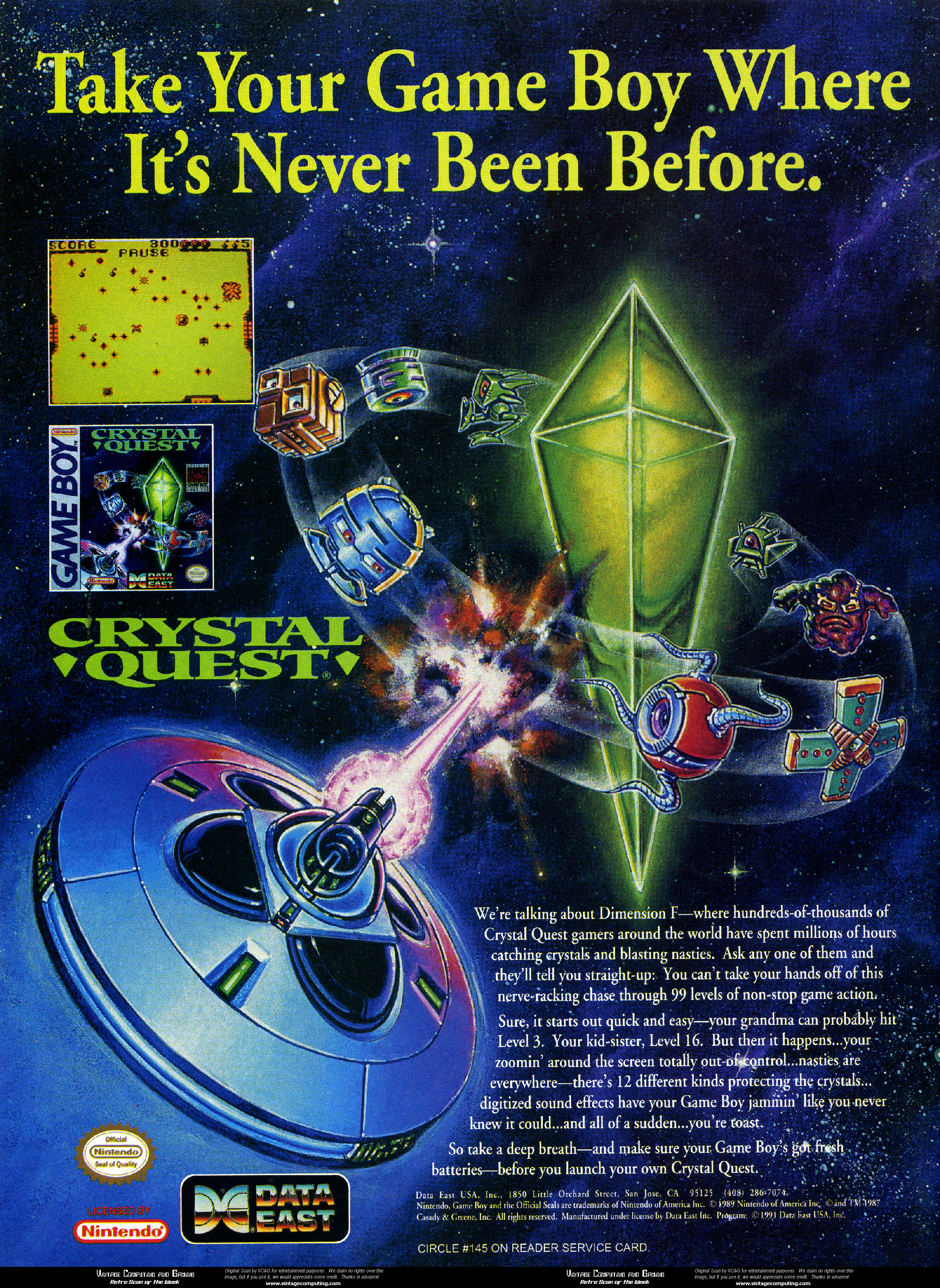
Crystal Quest for Nintendo Game Boy Advertisement 1991Game Boy: The Final Frontier

Fans of early Mac games will no doubt remember Crystal Quest, which (I believe) was the first Mac game to use color graphics just after the Mac II came out in 1987.

Crystal Quest on the Mac played like a space-based Robotron: 2084 controlled with the mouse, albeit with a loose trackball feel because your ship kept moving in the direction you nudged the mouse until you corrected its course. So I’m not sure how it played in this obscure Game Boy port from 1991. Perhaps I’ll fire up an emulator right now and find out.

[ From Video Games & Computer Entertainment, August 1991, rear cover]

Discussion Topic of the Week: Can you think of any other game that started on the Macintosh then received a port to a Nintendo console?

[ Retro Scan of the Week ] Canon Personal Computer

Monday, March 24th, 2014

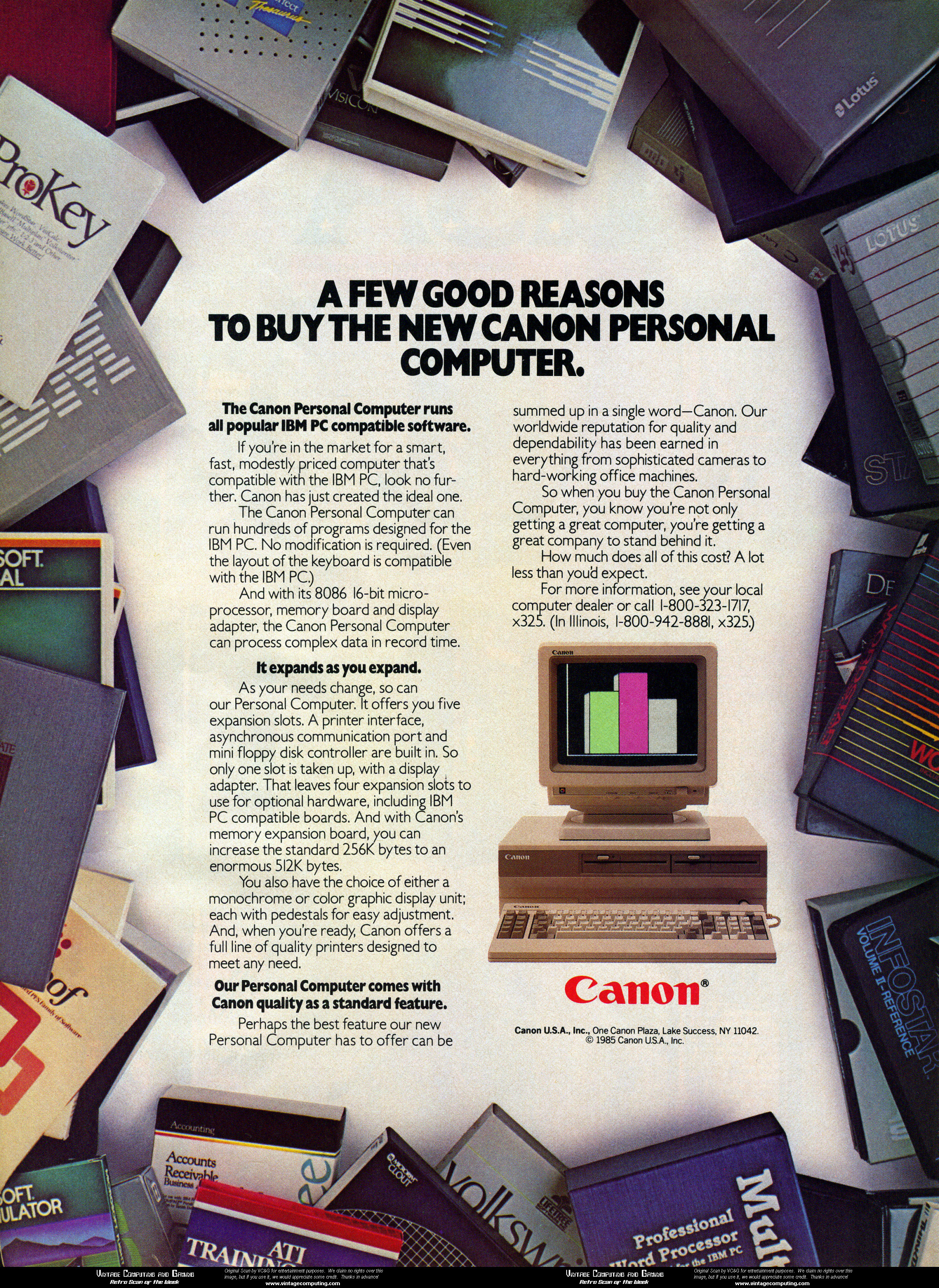
Canon Personal Computer IBM PC compatible clone Advertisement 1985May the Clone Wars begin.

Here’s another obscure IBM PC clone from the depths of time, the Canon Personal Computer.

As I mentioned in a recent RSOTW, it was pretty easy — even within a few years of the IBM PC’s release — to undercut IBM price-wise by integrating ports and peripherals directly into the motherboard of a competing computer.

Note that the Canon PC used an Intel 8086 CPU, which packed the full 16-bit data bus (verses the 8-bit bus on the IBM PC’s 8088).

[ From TIME (Small Business USA Insert), May 6 1985, p.2]

Discussion Topic of the Week: Canon is best known for its imaging products, but it made computers too. Can you think of any other companies best known for something else that made a PC?

[ Retro Scan of the Week ] Sega IR 7000

Tuesday, March 18th, 2014

Sega IR 7000 Haldheld Portable PDA Infrared Advertisement 1994“Whispering is for gutless weasels.”

In the early-mid 1990s, Sega experimented with a few electronics items that veered away from mainstream console gaming. Case in point, the IR 7000 PDA, seen here (and don’t forget the Sega Pico).

I’ve never owned an IR 7000, but I have to admit that I wanted one badly back in the day. The thought of sending secret wireless messages to other kids in class (I was 13 at the time this came out) excited me.

[ From Flux, Issue #2, 1994, p.7]

Discussion Topic of the Week: In your opinion, what was Sega’s weirdest product?

[ Retro Scan of the Week ] Pro 200 Super Electronic Handheld Gaming System

Monday, February 24th, 2014

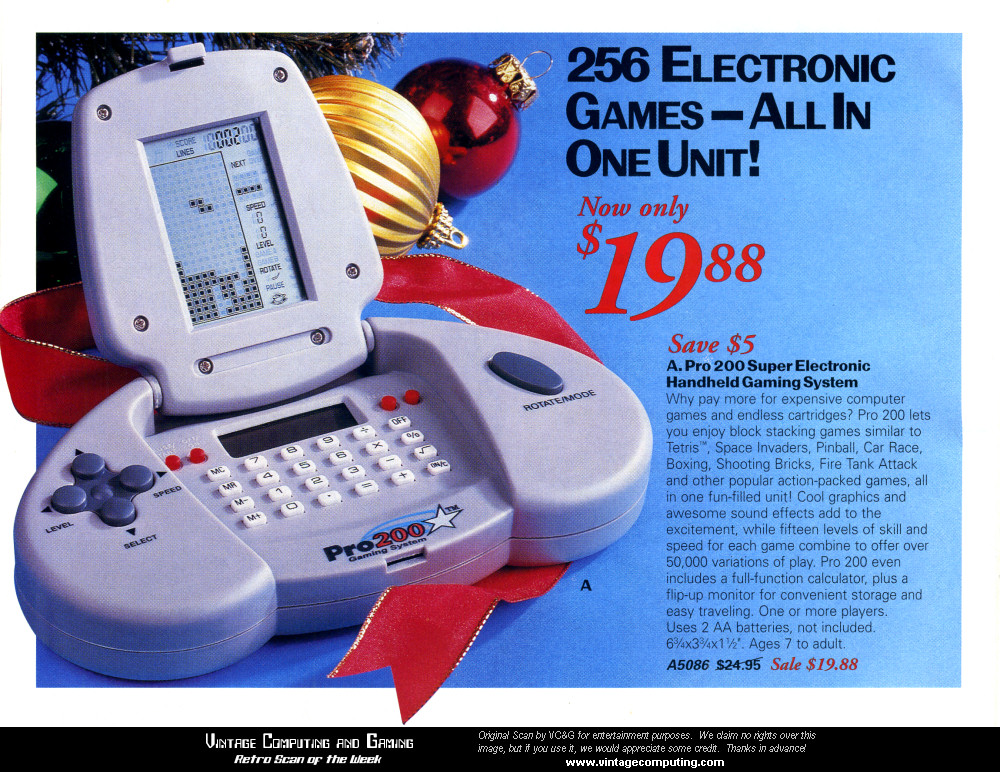
Protech Pro 200 Super Electronic Handheld Gaming System Catalog Advertisement 1998Plays the 200 variations of Tetris that Pajitnov rejected.

I must admit that I wanted this “Pro 200 Super Electronic Handheld Gaming System” upon seeing it in 1998 — even through I knew it was almost certainly a piece of junk. Not to play it, per se, but to collect it and to admire its gloriously gimmicky nature.

If history is any guide, I’m guessing that the Protech Pro 200 didn’t actually ship with 256 (or even 200) built in games. Rather, it likely contained 250 variations on a handful of distinct games — like most “1000-in-1” cheap off-brand multicarts from back in the day.

16 years since its release, I have still never played the Pro 200, so I can’t say if it had any play value. I did find this commercial on YouTube though.

Has anybody out there played one of these?

[ From Spilsbury Puzzle Co., Holiday 1998, rear cover]

Discussion Topic of the Week: What’s the cheapest, crappiest piece of video game hardware you’ve ever bought (think peripherals too)?

[ Retro Scan of the Week ] Super Mario Mac & Cheese

Monday, February 10th, 2014

Kraft Super Mario Bros. Macaroni and Cheese flier flyer Advertisement 1994The princess has lost her floatation powers…and Yoshi loves bongs.

My mom saves everything. Case in point, I ran across a mountain of mid-1990s coupon flyers — the kind that arrive stacked in an envelope through the mail — at her house this afternoon while I was looking for some old papers. This particular 30-cents-off coupon for Kraft’s Super Mario Bros. Macaroni and Cheese from 1994 caught my eye. It measures 4.5″ x 7.5″ (for those of you at home keeping notes).

I’ve never eaten Super Mario Bros. mac and cheese, but I bet it was every bit as delicious as the regular noodle variety. And besides — there was an adventure in every bowl.

[ From a coupon flyer mailing pack, ca. 1994]

Discussion Topic of the Week: Have you ever eaten any food products based on licensed video game characters?

[ Retro Scan of the Week ] Epyx Winter Games

Tuesday, February 4th, 2014

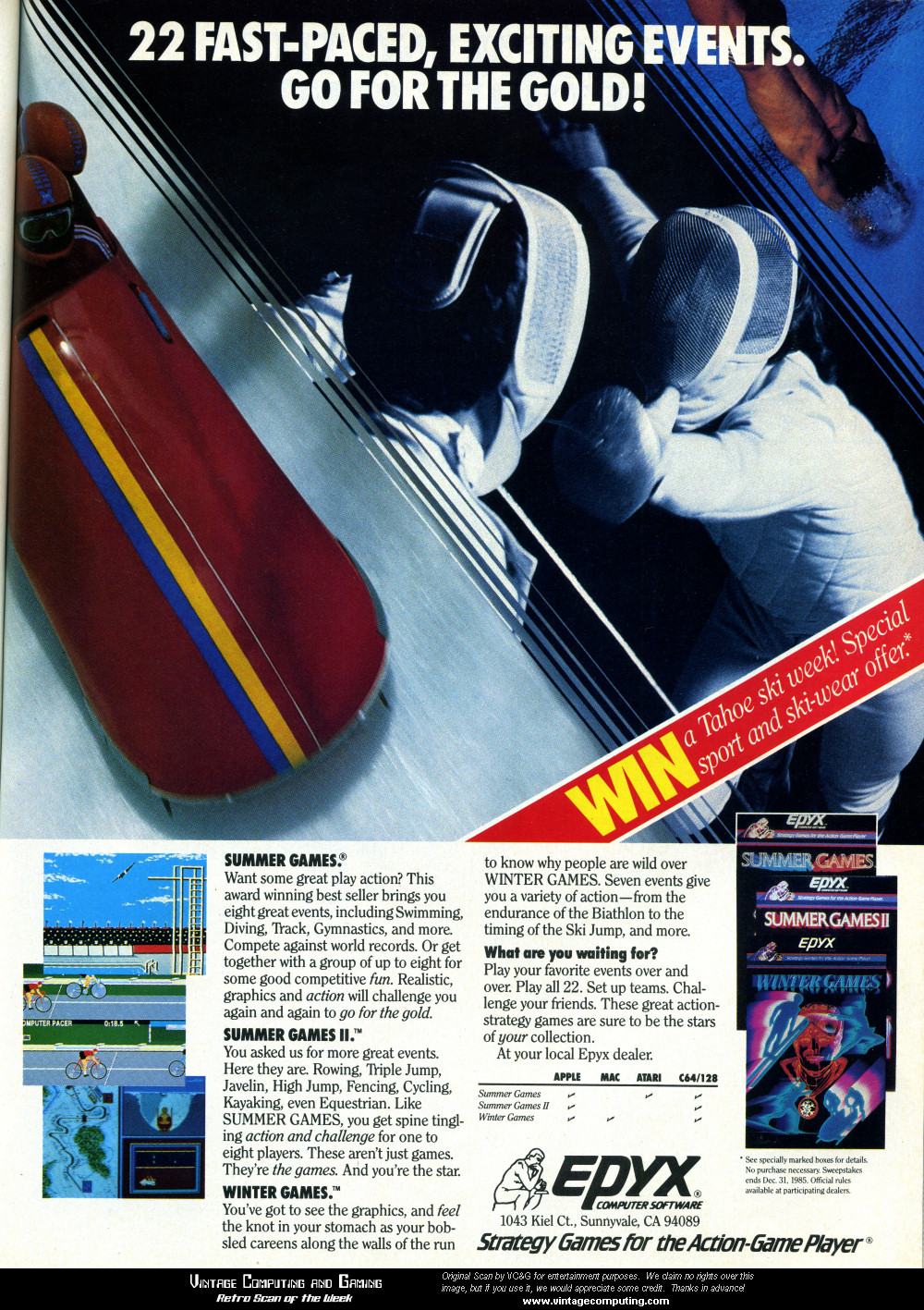
Epyx Winter Games Summer Games Summer Games II Advertisement 1985Just in time for Sochi. Sorry for the page fold.

[ From Compute!, November 1985, p.37]

Discussion Topic of the Week: What’s your favorite winter sport(s) video game? This is mine.

[ Retro Scan of the Week ] Stickybear Games

Monday, January 27th, 2014

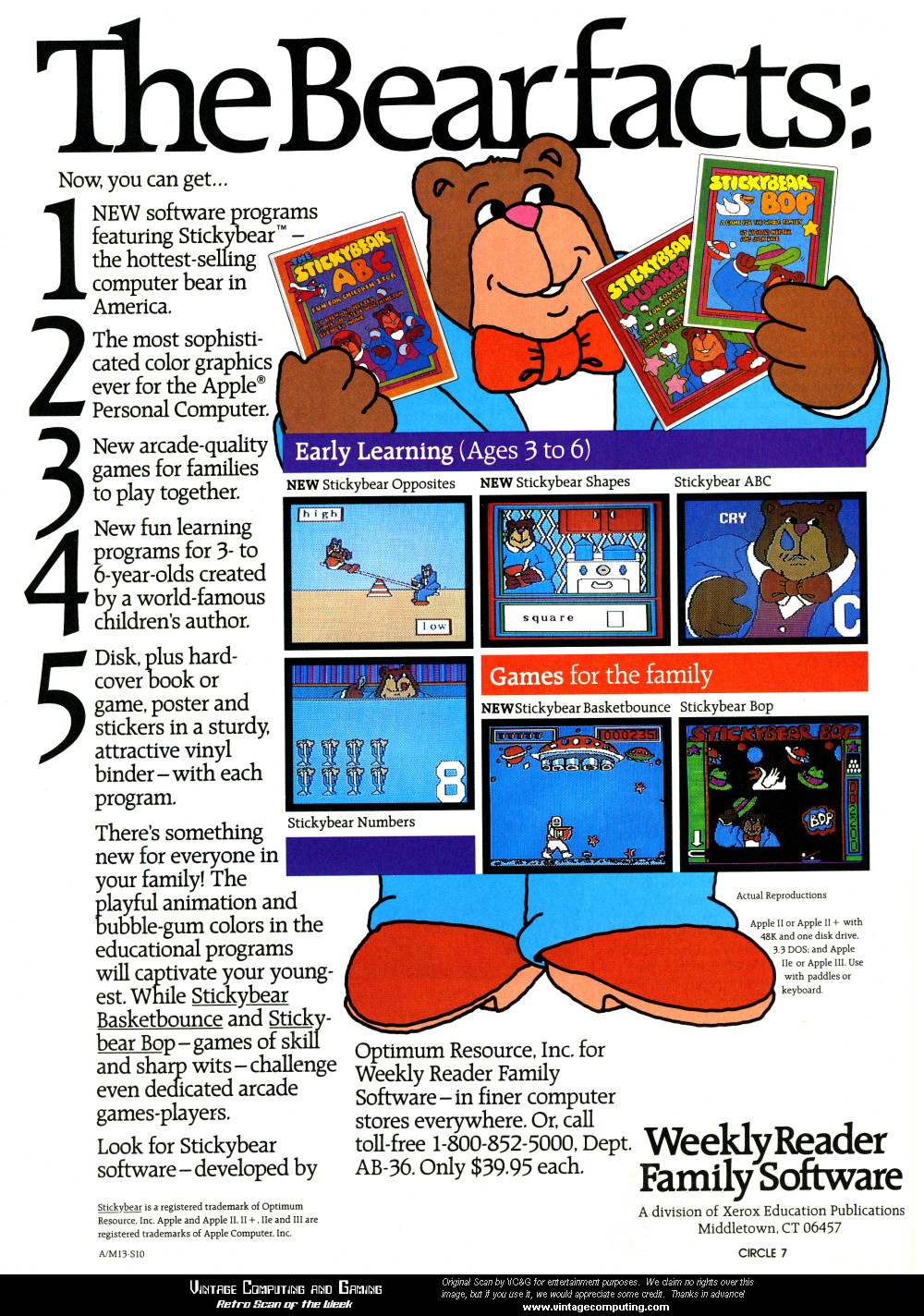
Weekly Reader Educational Software Stickybear Educational Game Software Advertisement 1983“Stickybear,” in retrospect, is a kinda disgusting name.

[ From Personal Computing, November 1983, p.108]

Discussion Topic of the Week: What’s your favorite educational video/computer game of all time?

[ Retro Scan of the Week ] Virtual Boy Wasteland

Monday, January 13th, 2014

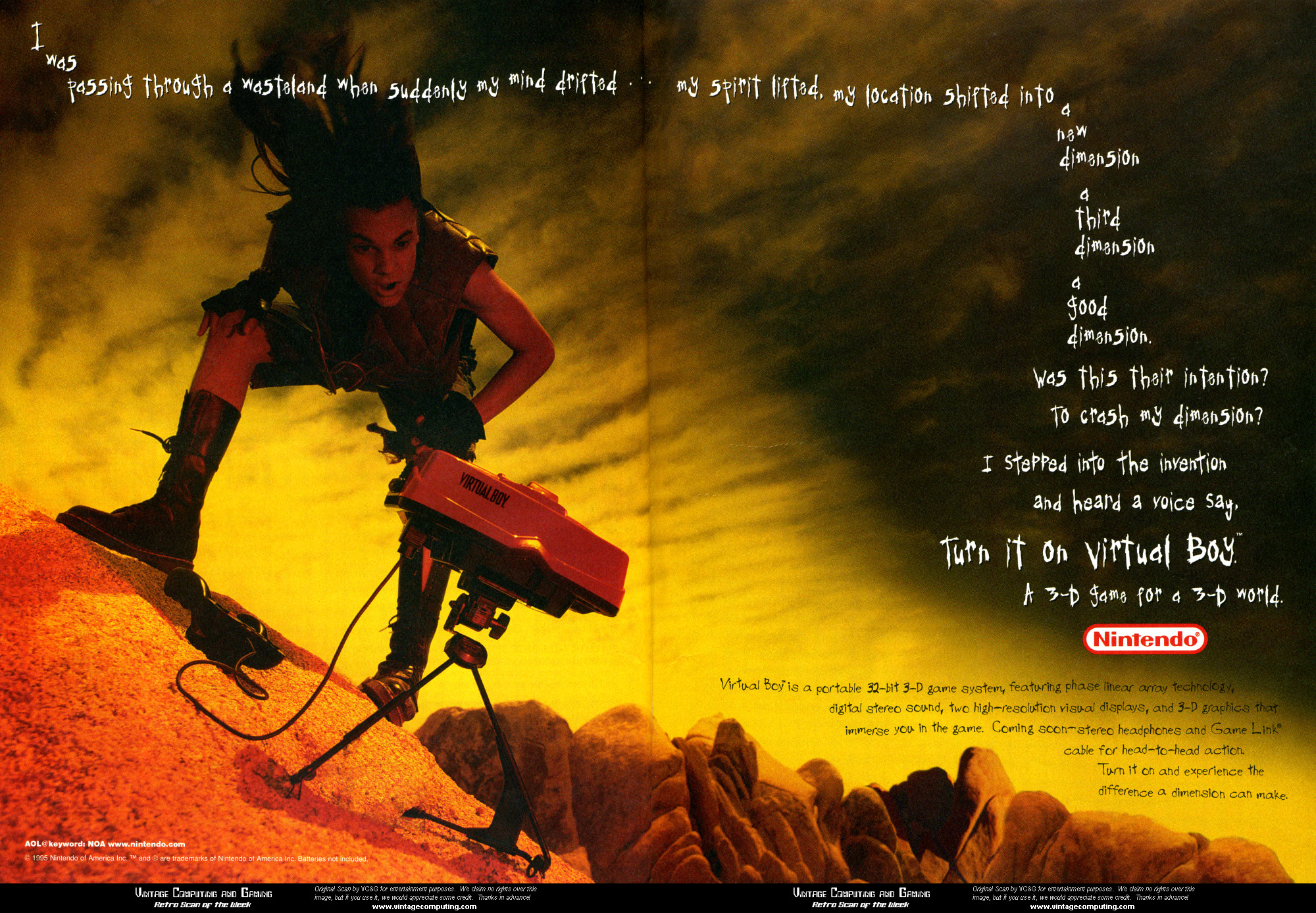
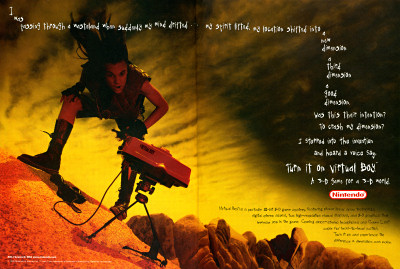
Nintendo Virtual Boy Wasteland advertisement- 1995Virtual Boy: The #1 video game console on Mars.

When the Virtual Boy first launched in 1995, I rented the console (yep, the whole console) and a few games from my local Blockbuster store. Prior to that time, I don’t remember Blockbuster offering any other systems for rent; I think it was a joint effort with Nintendo to get the novel machine into people’s hands to try it out. (Later, I also rented a Nintendo 64 and a PlayStation from Blockbuster. But I digress.)

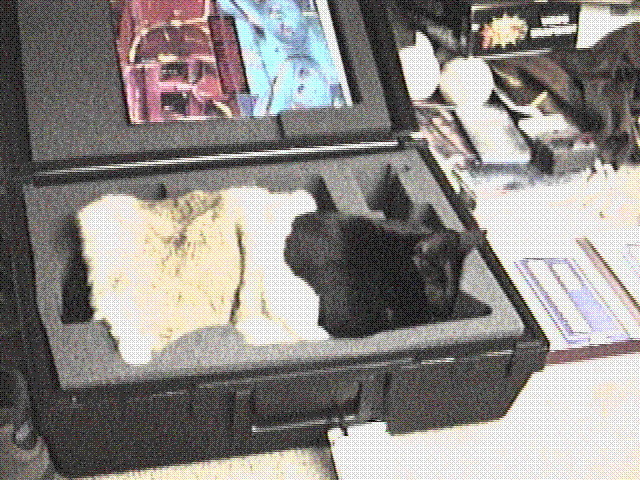
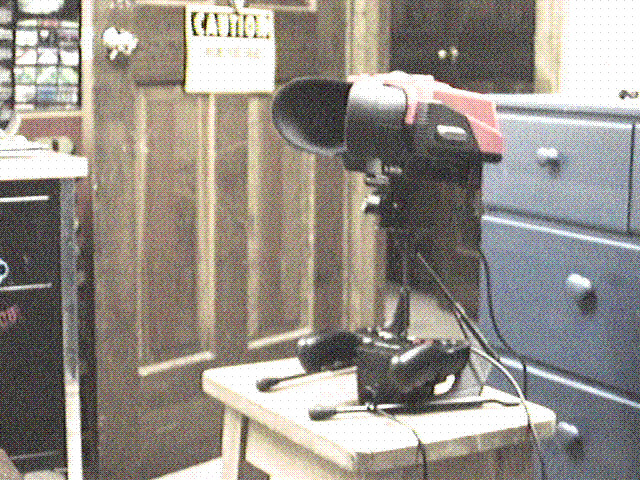
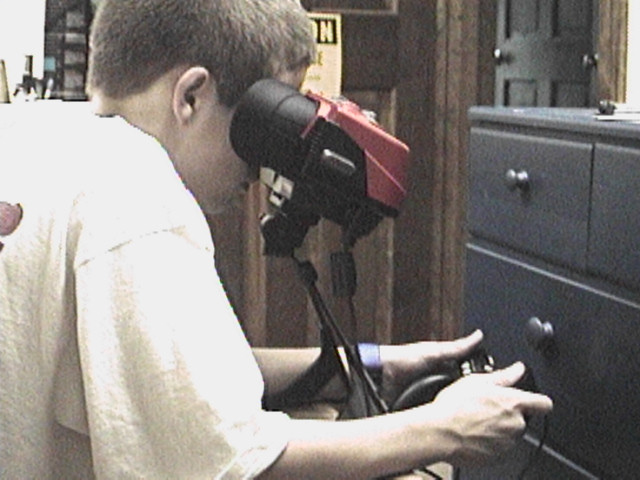
In fact, here are some early digital photos of that Virtual Boy rental, courtesy of my Snappy Video Snapshot. The first, dated 8/29/95, shows one of my cats sleeping in the plastic hard case the Virtual Boy arrived in when rented from Blockbuster. The second shows the Virtual Boy sitting alone on a stool in my room, and the third (dated 8/30/1995) shows my friend playing the Virtual Boy.

Virtual Boy Snappy Shots

The Virtual Boy was an interesting experience — not exactly mind-blowing, but neat. Its display was all red, all the time, but with stereoscopic 3D. I remember that it seemed expensive (MSRP of $179.99, which is $275.26 today when adjusted for inflation), and I remember thinking that if it only cost less, it could be successful.

But as we now know, the Virtual Boy failed to take off. Nintendo killed it the same year it launched in Japan, and the company pulled the plug in the US the following year. At that time I bought a Virtual Boy new in the box on clearance at Toys’R’Us for $30. I still have it; in fact it’s sitting next to me as I write this. Wario Land ranks among my favorite games for the system, and I always wished that this odd 3D console had lived long enough to receive a proper Super Mario Bros. title.

Why did the Virtual Boy fail? I wrote about some of the reasons in this 2009 article on Game Console Design Mistakes for Technologizer. I also briefly analyzed the Virtual Boy for my History of Stereoscopic 3D Gaming slideshow for PC World in 2011.

In some ways, it’s a shame that the system died so early, but in absolute business terms, its early demise made perfect sense. The Virtual Boy was an odd machine without broad appeal — one of Nintendo’s rare flops — but it makes for a heck of a video game collector’s item today as a result.

[ From Computer Gaming World, September 1995, p.8-9]

Discussion Topic of the Week: Have you ever played the Virtual Boy? What’s your favorite game for the system?

See Also: Virtual Boy Vortex (RSOTW, 2012)
See Also: The History of Stereoscopic 3D Gaming (PC World, 2011)
[ Retro Scan of the Week ] Low-End Virtual Reality

Tuesday, January 7th, 2014

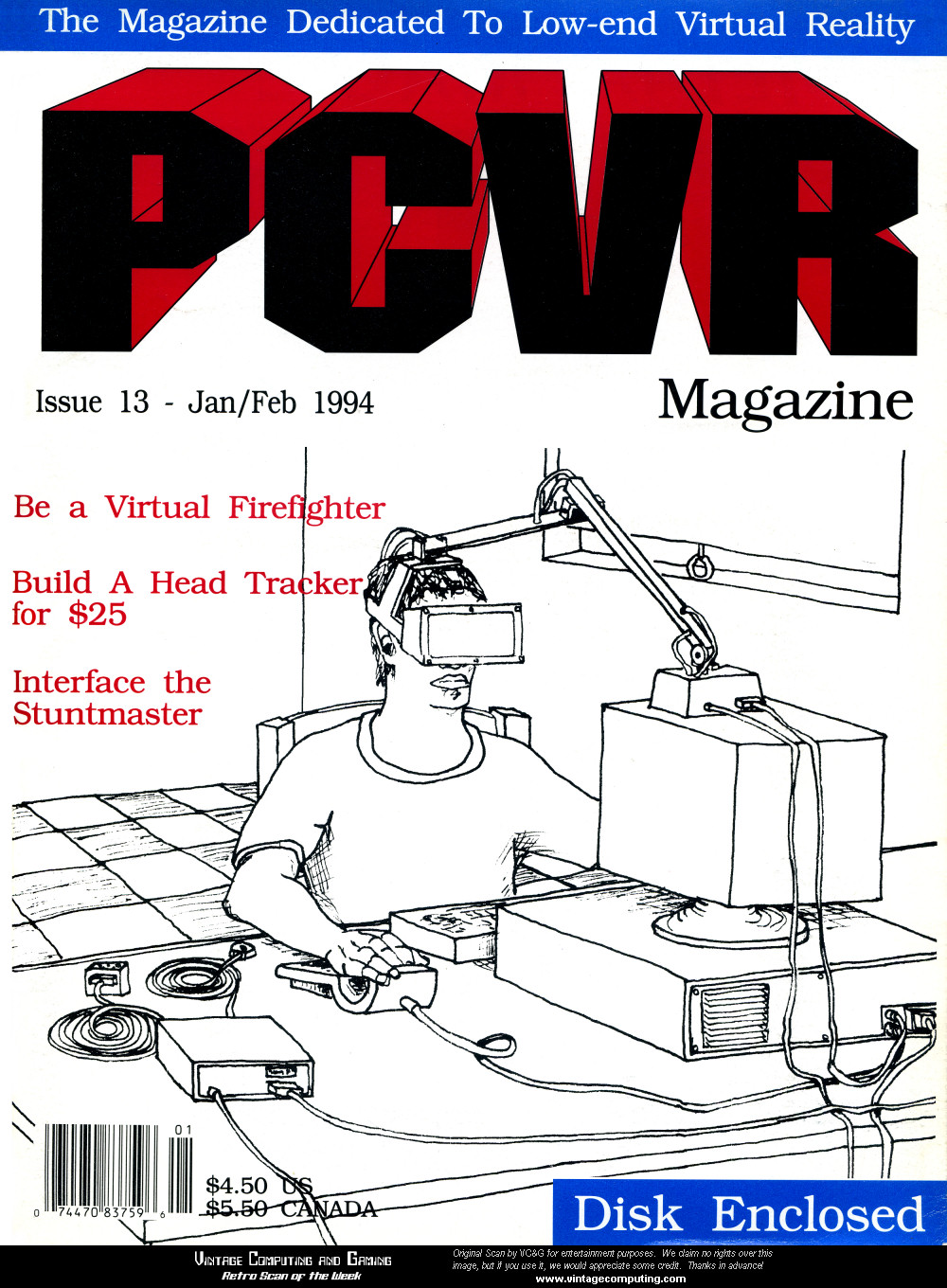
PCVR Magazine Cover Jan-Feb 1994Every new idea is an old idea with more transistors.

A few years ago, a relative gave me a couple issues of PCVR Magazine, a low-circulation 1990s periodical dedicated to virtual reality. Here’s the cover of the Jan/Feb 1994 issue, which features an illustration of the magazine’s build-it-yourself head tracker project.

In the early 1990s, the “virtual reality” concept hit a peak in the popular media that coincided with dozens of companies pursuing motion-tracking head-mounted displays — both with honest attempts and blatant gimmicks.

If I had to guess why VR exploded in the popular tech consciousness at that particular time, I would trace it it to the emergence of small, relatively low-cost color LCDs — the kind that made portable consoles like the Atari Lynx and Sega Game Gear possible. Compared to bulky, power-hungry CRT displays, the (relatively) thin, low-power LCDs could be worn on the head with mobility and without too much discomfort. That prompted a minor Cambrian explosion of VR headset hardware.

But the display technology just wasn’t there yet. Affordable LCDs were very low resolution (think 320×200 or less), and higher-resolution LCDs cost thousands of dollars a piece.

In addition, the hardware and software required to generate convincing virtual reality experiences were neither affordable nor generally available. So genuinely immersive VR found itself stuck in corporate and university research labs; meanwhile, the public got trickle-down fad headsets like the Stuntmaster.

Today, we find ourselves in the middle of a VR renaissance thanks to Oculus Rift. But this time, we may actually be at the edge of mainstream virtual reality headsets because the technology has come quite a long way since 1994. I look forward to meeting your 3D virtual avatar in cyberspace soon.

[ From PCVR Magazine, Jan/Feb 1994, cover]

Discussion Topic of the Week: Have you ever used a virtual reality headset of any kind? Tell us about it.

See Also: Retro Scan of the Week Special Edition: “At Last! Reality For the Masses!” (VC&G, 2007)
See Also: The History of Stereoscopic 3D Gaming (PC World, 2011)