Archive for the 'Gaming History' Category

ULAF CAPTURE THE SPEED WITH SPEEDBOARDS

Thursday, August 19th, 2010

NES SPEEDBOARD IS THE SPEED

SOME PEOPLES ASK ULAF THIS: HOW IS IT THAT MY MIND CAN CAPTURE THE SPEED? TO WHICH ULAF RESPAWN A SIMPLE WORDS: WITH THE SPEEDBOARDS OF COURSE. IT IS TRUE THAT THE SPEED OR THE BOARDS HAVE BEEN HARDEST TO TAME OF ALL ELEMENTS, SO THE MAGIC OF THESE DEVICE CANNOT BE UNDERSTOOD.

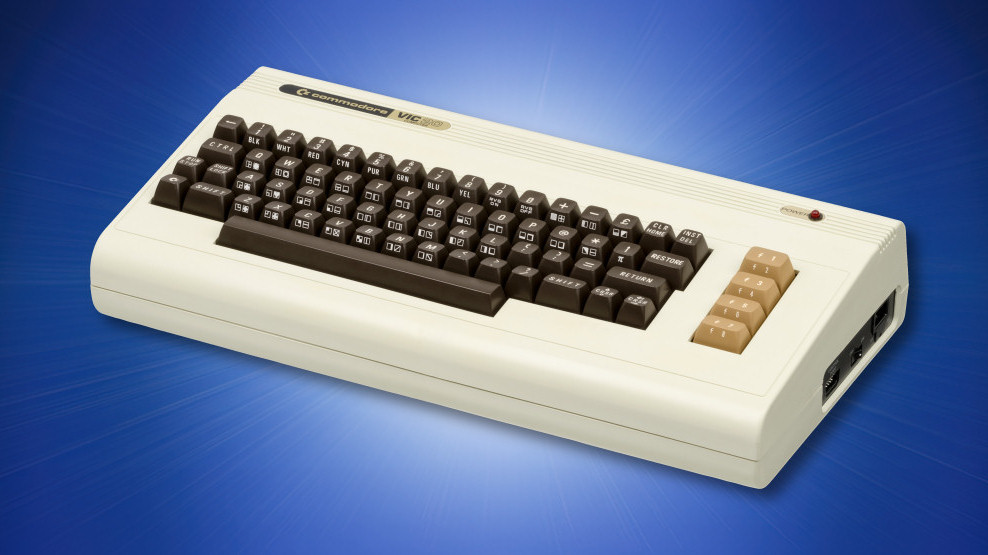
SO THEN ALWAYS RECALL THIS DAY THAT HERE YOUR MIND SEES THIS SPEEDBOARDS PHOTOGRAPHY, ONE PICTURES OF THAT ULTIMATE MASTER DEVICES FOR THE NINTENDO ENTRAPMENT SYSTEM (NES FOR ABBREVIATED). ULAF USE IT AND USE IT, THEN OBTAIN HIGHEST SCORE EVER DURING MEGA MEN II WITH FINGERTIPS. NO SMALL FEET.

JUST A QUICK NOTE FROM MY MIND. GO BACK TO LIFE NOW. UNTIL NEXT TIME THIS IS ULAF SAYING BE THE MASTER.

Ulaf Silchov is an expert in video games and computers. He also writes for “Svadlost Weekly” and “The Almost Perfect Circle Newsletter.”

[ Retro Scan of the Week ] Quake II Meat Market

Monday, August 16th, 2010

Quake II Meat Market Ad Playstation N64 - 1999“Hand-cranked and chock full of juicy new tidbits.
All stuffed into authentic id Software casing.”

Quake II will be 13 years old this December — has it been that long already? Seen here is a 1999 advertisement from EGM promoting the PlayStation and Nintendo 64 ports of the classic PC shooter. The designers of the ad chose a clever theme that parodies a grocery store circular (commonly inserted into newspapers here in the US), complete with a fake coupon and flashy pricing. Very clever, and very effective.

[ From Electronic Gaming Monthly, September 1999, p.73 ]

Discussion Topic of the Week: Let’s talk Quake. Best game console version of Quake? How about Quake II?

[ Retro Scan of the Week ] ASG Video Jukebox

Monday, August 2nd, 2010

ASG Video Jukebox VJ Dock for Sega Genesis Ad - 1994“ASG: Eating the Rules” (It really says that.)

Rack and stack, Jack! This totally radical ASG Video Jukebox allowed you to play six of the Sega Genesis games you already owned for only $49.99. Imagine finally being able to play those games you bought without having to insert and remove them from the system every time. Imagine.

The problem with this device was one of scale. If you had only six carts to choose from, it’s wasn’t worth buying a jukebox device to let you switch between them quickly: keeping track of six cartridges was easy. The ad says you could chain up to six of these jukeboxes together for a total on-line selection of 36 carts. By that point you were looking at a $300 investment in gadgets that weren’t actually that useful.

On the other hand, if you had a device that let you switch between 100, 200, or 500 carts at once, that would have been legitimately handy. But the device would have cost $1000 and nobody owned that many carts back then anyway. Today, we have the same functionality in the form of emulator software, so lazy Genesis fans have long since been appeased.

If anybody actually bought one of these, I’d be interested to know about it.

[ From GamePro, September 1994, p.123 ]

Discussion Topic of the Week: How many Sega Genesis cartridges do you own? How many did you own in 1994?

[ Retro Scan of the Week ] Road Rash 64

Monday, July 19th, 2010

Road Rash 64 N64 Nintendo 64 Ad - 1999Road + Baby = Road Baby

[ From Electronic Gaming Monthly, September 1999, p.41 ]

Discussion Topic of the Week: What’s the best four player game for the Nintendo 64? Feel free to list a few if you like.

Eventually, the Yeti Will Eat Us All

Tuesday, July 6th, 2010

Yeti Food

[ Retro Scan of the Week ] Rampant Inflation

Monday, July 5th, 2010

Dig Dug Atari 2600 5200 Ad - 1983So that’s what belly buttons are for. (Dig Dug)

[ From Electronic Games, December 1983 ]

Discussion Topic of the Week: In your opinion, which is the superior system: Atari 2600 or Atari 5200? And I’m not talking tech specs.

[ Retro Scan of the Week ] Tiger Game.com

Monday, June 21st, 2010

Tiger Game.com Manual Cover - 1997The original touch-screen game system.

Pop quiz: which video game console first featured a touch screen? (Hint: It’s not the Nintendo DS.) How about this one: Which handheld console first supported Internet connectivity?

Believe it or not, Tiger Electronics — a toy company famed for its cheap electronic games — came in first on both counts with the Game.com in 1997. (Sega Saturn was the first home console to support Internet in 1996).

I was a Game.com early adopter, having bought one close to its release. The wonder of its primitive touch screen alone seemed to make up for its deficiencies at the time, so I was pleased at first. The unit shipped with a built-in version of Klondike Solitaire and a Lights Out game cartridge, both of which showed off the system’s touch capabilities well. But my infatuation with the Game.com turned out to be brief.

[ Continue reading [ Retro Scan of the Week ] Tiger Game.com » ]

[ Retro Scan of the Week ] Nintendo Scratch-Off Cards

Monday, June 7th, 2010

Double Dragon Nintendo Game Packs Scatch-Off Game Card Front - 1989He soon landed with an embarrassing splash.

This Double Dragon scratch-off game card came from a pack of Topps “Nintendo Game Pack” cards that I bought, likely in a drugstore, circa 1989. Of all the cards in the pack, this one remains unscratched for whatever reason. Perhaps I wanted to preserve the mystery and potential of a single unscratched scratch-off card. After all, the cards become worthless and ugly after you impart jaggy scratch lines all over those silver little pads.

Double Dragon Nintendo Game Packs Scatch-Off Game Card Back - 1989

The reason Nintendo and the scratch-off concept share the same milieu is that each card presents the owner with a game of sorts. Once you scratch a pad, you reveal a graphical symbol that determines your fate depending on the directions printed on the back of the card. In this case, you need “1 arrow and 2 kicks or 3 elbows or 4 punches” to win. I’m not sure how many variations of the symbols Topps printed under those silver pads, but I hope there was more than one. Otherwise, if you had multiple copies of the same card, the “game” might have unfolded in exactly the same way if you scratched the same pads.

Nintendo Game Packs cards featured Super Mario Bros., Punch-Out!!, and The Legend of Zelda as well, although those were too irresistible for me to not scratch off, so none survive in tact in my collection.

A number of websites examine these cards in more detail. This one has scans of all the cards in the series. Another one features photos of the stickers that came with each pack of cards — I remember plastering those all over my walls as a kid. I may have a couple of the uglier stickers left un-peeled somewhere. If I ever find them, I’ll probably just burn them as an offering to Hgnagg, the God of Nostalgia.

[ From Topps Nintendo Game Packs Trading Cards, circa 1989 ]

Discussion Topic of the Week: Did you collect trading cards as a kid? What kind(s)?

The Evolution of Video Game Media

Tuesday, June 1st, 2010

The Evolution of Video Game Media on PCWorld.com

A few days ago, PC World published my latest slideshow, The Evolution of Video Game Media. Many people probably missed it due to Memorial Day weekend, but I’m here to remind you that it exists. It’s the third in my “Evolution” series of slideshows after “Evolution of the Cell Phone” and “The Evolution of Removable Storage.”

For this slideshow, I scanned every type of video game storage media I have — about 66 different cartridges, optical discs, and magnetic disks in all. I visually presented all of these formats to scale with each other between slides so you can get a sense of the size of each. While I included media from a majority of the video game systems ever released, I didn’t include every single one.

A large portion of the text was cut in edits for this slideshow (it’s hard to squeeze a lot of info into a small caption space), so I plan to publish the full text along with the images at a higher quality on VC&G at some point in the future. I hope you enjoy it.

The Playable Pac-Man Google Logo

Friday, May 21st, 2010

Pac-Man 30th Anniversary Google Doodle

In honor of Pac-Man’s 30th anniversary, Google has created its most amazing Google Doodle yet: a playable browser-based version of Pac-Man in the usual Google logo space. They did an excellent job, complete with authentic graphics, sounds, and scoring.

When you first go to Google, you’ll see a static image. Wait a few seconds and the page will reload with a hybrid JavaScript/Flash application (it uses Flash for sound) that brings the Google logo to life. Excellent work, Google!

P.S. If anyone figures out how to save a playable version of the game, let me know. I haven’t had to time to dig into it yet.