Archive for the 'News & Current Events' Category

[ Retro Scan of the Week ] Doom is 20

Monday, December 9th, 2013
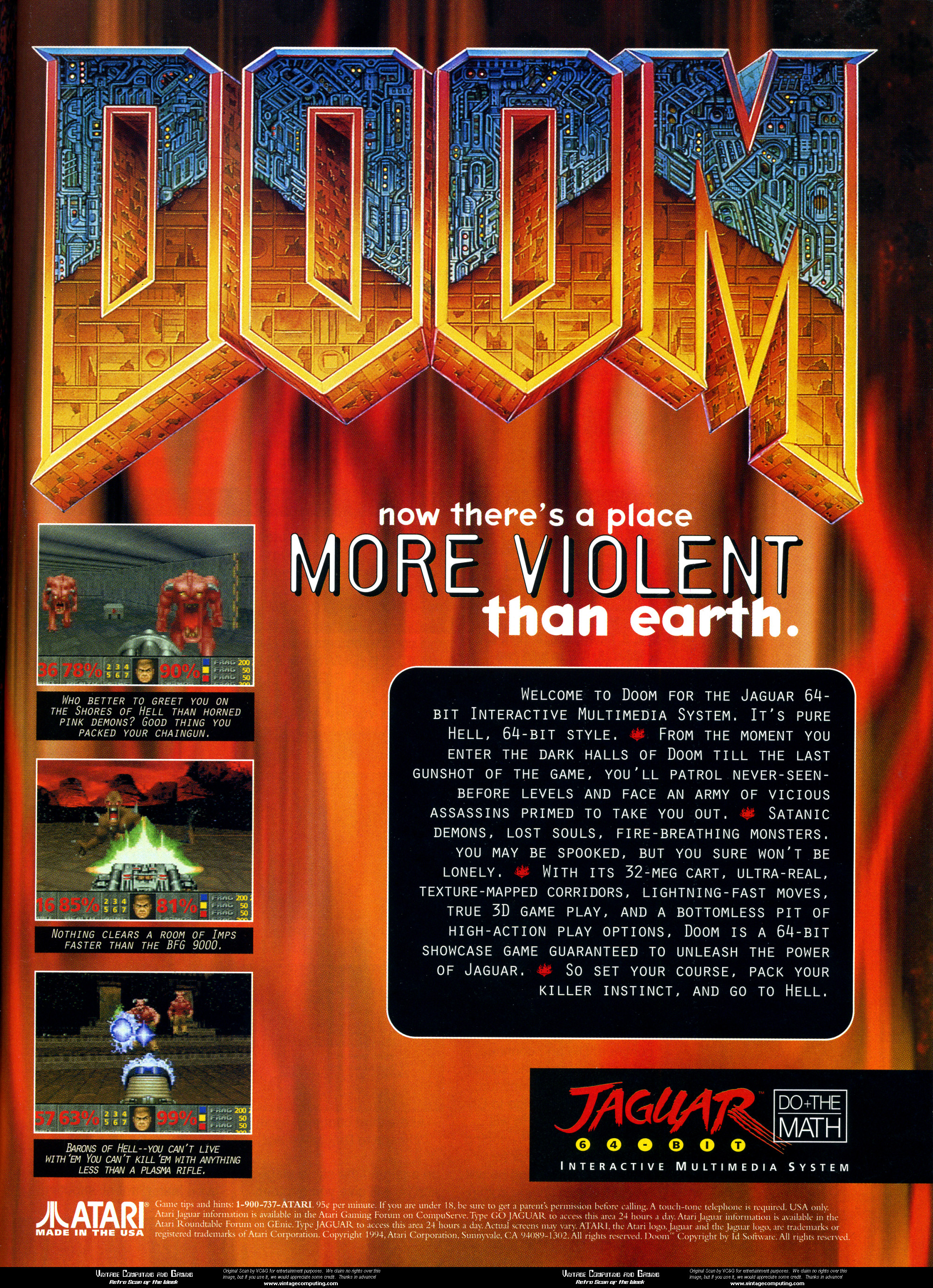
id Software Doom for Atari Jaguar Ad Advertisement - 1994One of the best reasons to own a Jaguar circa 1994

Twenty years ago this week, id Software launched one of the most important and influential PC games of all time: Doom. It started as a modest shareware download but grew to change the entire video game industry. To explain how, here’s 2009 Benj writing about the title for a PC World slideshow:

Id’s archetypical first-person shooter triggered a sea change in the PC game industry, which had formerly been dominated by slow, plodding strategy turn fests, brainy simulations, and stilted PC action titles of yore.

In contrast, Doom was the first of a new generation of fast-paced, smooth action titles that utilized new visual techniques to push PC hardware to its limits. With Doom, PC gamers could experience fluid gameplay, graphics, and sound that easily topped what was found on home game consoles of the day — an uncommon achievement at that point.

Moreover, it introduced exciting new network multiplayer options that are widely imitated to this day, coining the term “deathmatch” in the process.

From its lowly roots as a MS-DOS shareware title, Doom spread like a weed to other platforms, including game consoles, which now count first-person shooters as one of their best-selling genres.

Doom defined the 3D shooter genre and made multiplayer gaming mainstream,” says Tim Sweeney (founder of Epic Games and creator of the Unreal Engine), “And it did them with such incredible polish, artistry, and foresight that it created an industry.”

Considering that Doom launched in 1993 via shareware channels, I’m not aware of when or in what publication the first advertisement for Doom appeared. (I believe GT Interactive became distributor for the full, boxed PC version of Doom much later, but I could be mistaken.)

So instead, I found this nifty November 1994 scan for the Atari Jaguar version of Doom. I received this version of the game for Christmas in 1994, and it was an amazing gift.

Pushing the PC Limits, Jaguar Relief

Most people don’t remember how much horsepower Doom required in a PC at the time — at least 4 MB of RAM, a mid-range 486 CPU, and a sound card to run passably well. So I had trouble running the game on any PC up to that point.

In 1993, we had one 486 in the household with exactly 4 MB of RAM (to contrast, my personal PC sported a 16 MHz 386 and 2MB RAM), and I had to make a special 5.25″ boot disk that loaded fewer resident DOS drivers, etc. so I could run Doom on that 486 at all. If I recall correctly, I didn’t have enough spare RAM to load the SoundBlaster drivers at boot, so the experience was limited. My friend had to run Doom on his mom’s 486 the same way. Even then, the game didn’t run at full frame rate. Doom pushed the limits.

So coming from that environment, it was an amazing convenience to just plug a Doom cartridge into the Jaguar and play, full-speed, full-screen, with glorious sound and no hiccups. My brother and I played a lot of Doom on that console well into 1996 — until I got a more powerful PC that could run Doom with ease.

Until the PlayStation port of Doom came out (late 1995), the Jaguar port was widely considered the best port of the game (in terms of screen window size, lighting effects, monster interaction, sound, controls, and frame rate) available on consoles. Its biggest drawback was lack of a soundtrack during gameplay. I think that’s because John Carmack used the Jag’s DSP co-processor to handle graphics routines instead of music, which was unconventional on that platform.

But I digress. What a great game. I still play Doom regularly via modern source ports on the PC — most recently on my new 1080p big screen TV set. Add on Xbox 360 controller support via ZDoom, and you’ve got Doom heaven. It’s a game that never seems to get old for me, even 20 years on. That’s the mark of a true classic in my book.

[ From Electronic Gaming Monthly, November 1994, p.109]

Discussion Topic of the Week: How did you feel when you first played Doom? What are your memories of the occasion?
The VC&G Thanksgiving Collection (2013 Edition)

Tuesday, November 26th, 2013

Things That Nerds Should Be Thankful ForHello, and welcome to VC&G’s 2013 Thanksgiving Spectacular. I’m your host for this evening, Burt Edwards.
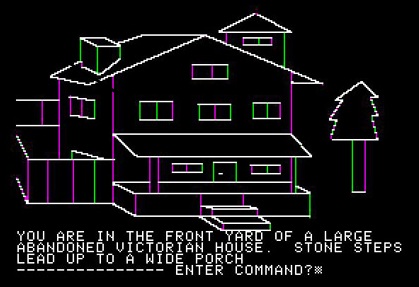
Thanksgiving is a great excuse to spend time with family around a four-player game of Gauntlet IV for the Sega Genesis. Or perhaps a Super Bomberman tournament. Or eight-player networked Atari Jaguar Battlesphere? Did I mention a 16-player Mario Kart Double Dash LAN battle?

One of each, please.

But before you stuff yourself with turkey and get lost in multiplayer fragfests, feel free to enjoy the following Thanksgiving-themed posts I have culled from the annals of VC&G history.

That is all for now. Let the thankfulness begin!

Happy Thanksgiving from Vintage Computing and Gaming

Internet Archive’s Historical Software Collection is the Best Thing That Has Ever Happened to Software Preservation

Tuesday, November 26th, 2013

Internet Archive Historical Software Collection

Three cheers for Jason Scott and his push to create a JavaScript-based port of the MESS emulator platform. The result, the Internet Archive’s Historical Software Collection, is nothing short of brilliant.

The collection puts dozens of vintage computer games and applications at your fingertips by allowing you to run them, emulated, from a browser window. It’s a huge step forward for preserving the heritage of our software culture. Here, ease-of-access is key.

I’ve been horribly remiss by not mentioning this earlier — but better late than never for something this important.

[ Retro Scan of the Week ] Jaguar on Clearance (Atari Jaguar Turns 20)

Monday, November 11th, 2013

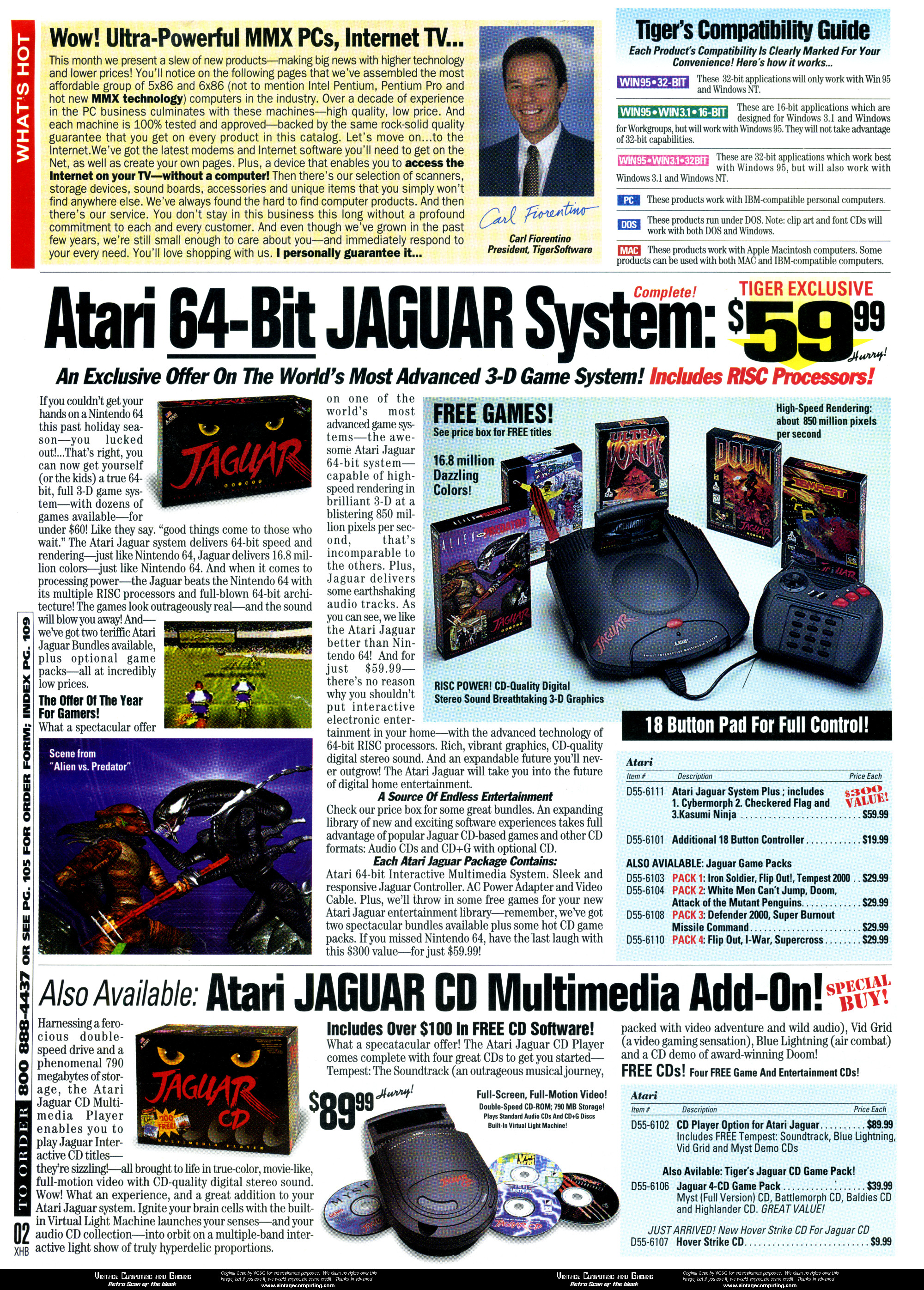
Atari Jaguar and Jaguar CD on Sale in TigerDirect Catalog - 1997Atari Jaguar on Sale in 1997: “Includes RISC Processors!”

The Atari Jaguar launched at retail 20 years ago this Friday — November 15, 1993.

In April 1994, I received a Jaguar for my birthday, and it was one of the most exciting days of my life. By Thanksgiving of that year, my parents gave me Doom for the Jaguar, and I had a blast. After that, not many truly great games came out for the Jaguar (I’d say Tempest 2000 is the system-exclusive standout).

Partly because of that lack of great software, the Jaguar sunk fast — especially in the face of strong competition from Sony, Sega, and Nintendo (throw in some 3DO and Neo-Geo in there as well). The mid-1990s was a hard time to be a video game console.

By 1997, the Jaguar was toast. If I recall correctly, TigerDirect bought up a huge inventory of unsold Jaguar and Jaguar CD systems and sold them through their catalog.

This scan is a page from a 1997 TigerDirect catalog advertising the Jaguar for a mere $59.99 and the CD add-on for $89.99. Lucky for me, this is how I bought my Jaguar CD system, along with the advertised ultra-cheap game packs. CD exclusives Myst and Cybermorph 2 were worth the purchase alone.

So happy birthday, Jag. Sorry I can’t write more about you now. But I’ve written a lot about you on VC&G in the past. To read more, check out the links at the bottom of this post.

[ From TigerSoftware Winter PC Sale Book 1997, Vol VII Issue 2, p.2 ]

Discussion Topic of the Week: What’s your favorite Atari Jaguar game?


See Also: Rayman and Frustration (RSOTW, 2013)
See Also: Atari Jaguar Debut Photo (RGOTW, 2013)
See Also: War + Mech = “Kinda Cool” (RSOTW, 2007)
See Also: Anatomy of a Young Collector’s Room (2006)
See Also: The First Atari Jaguar Press Release (2005)

[ Retro Scan of the Week ] Remembering My Dad

Monday, September 23rd, 2013

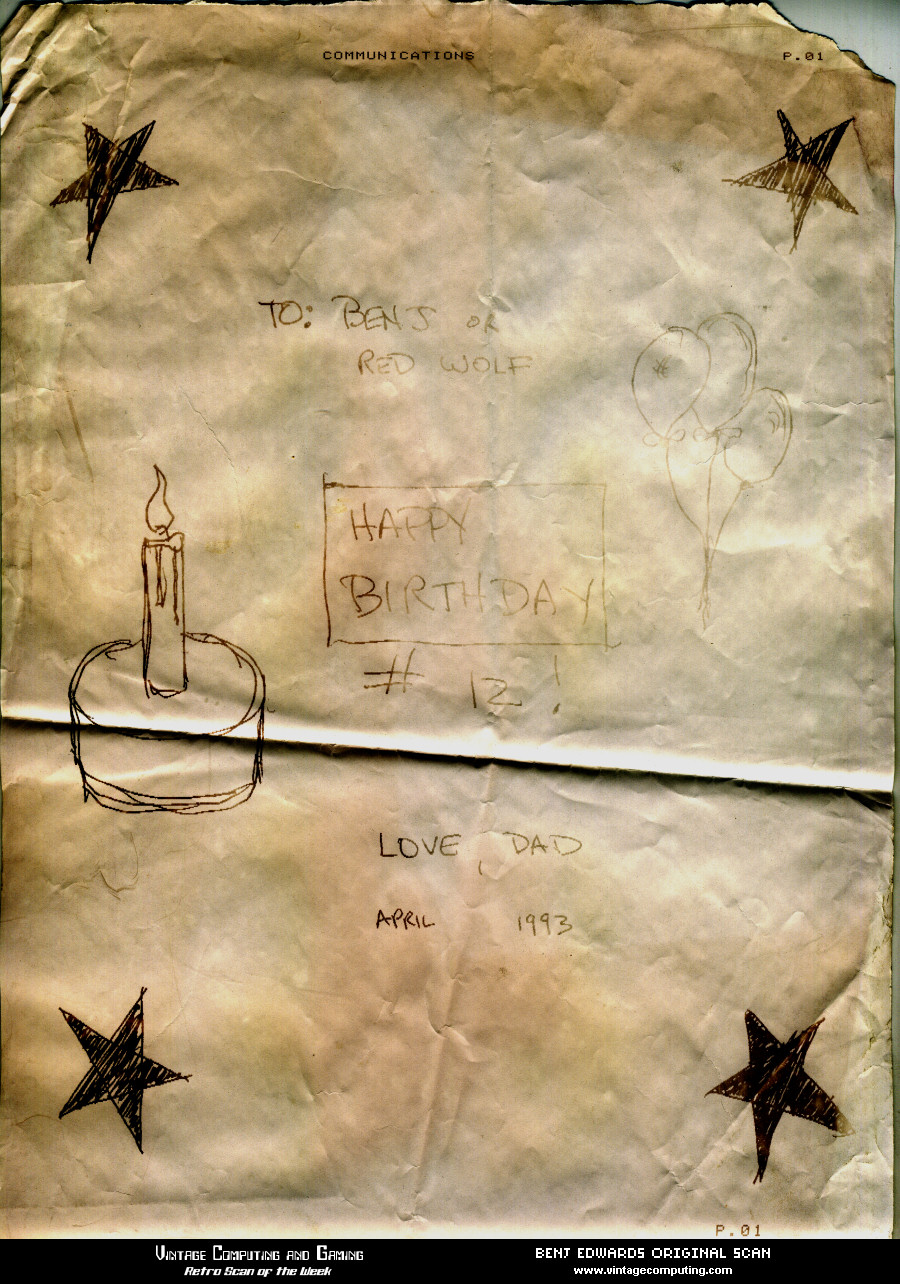
Benj's Birthday FaxBenj’s Birthday Fax

In 1993, I was heavily into BBSes and all things telecommunications, so my dad, an electronics engineer, lent me his old fax machine to set up in my bedroom. I hooked it to the second phone line in the house (used for my BBS at the time) so I could send experimental faxes to it from my dad’s office.

On my 12th birthday, just over 20 years ago, this particular fax came in as a surprise. It was a happy birthday note written by my dad. Receiving my very own fax (probably my first one) delighted me at the time, and I tucked it away for safe keeping. It was one of the most thoughtful personal notes my dad ever wrote to me.

Earlier this year, just after my dad was diagnosed with pancreatic cancer, I re-discovered the fax in a box of childhood mementos. Being printed on thermal paper, it’s now heavily faded, but the message of love, acceptance, and encouragement it conveys is still strong. It represents some of the best things about my dad.

He is the reason I’m here — both in a literal, existential sense, and also as the enabler of my passion for technology. Growing up, if I wanted to experiment with something, he made it happen. If I was curious, he was curious with me. We shared thousands of tech adventures together, and that made him an awesome dad.

Yesterday morning, my father passed away after a 9 month bout with that terrible disease. There will be no more tech adventures between us, and that breaks my heart. But there’s a new generation coming up, and I will do my best to continue his legacy of encouragement and gentle guidance with my own kids, who already possess a passion for technical and mechanical things like their grandpa.

Thanks, dad. For everything.

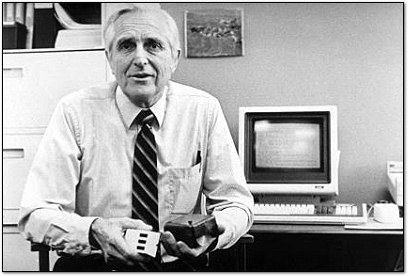
Douglas C. Engelbart (1925-2013)

Wednesday, July 3rd, 2013

Doug Engelbart RIPIn Memoriam: Douglas C. Engelbart (1925-2013)
Inventor of the Computer Mouse, Computer Pioneer

High-Res Scan of the World’s First Digital Computer Art

Tuesday, April 9th, 2013

Lawrence Tipton 1959 SAGE Photo of Computer Pin-up Art - World's first figurative digital computer art

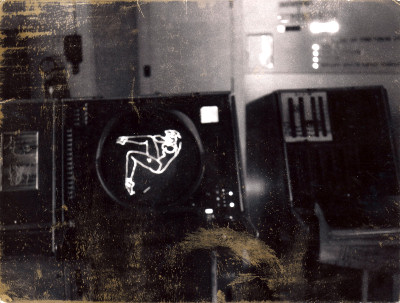
Back in January, I wrote an article about the world’s earliest known figurative computer art for The Atlantic. It it is also likely the world’s first digital computer artwork as well.

(Check out this timeline of computer art history to get an idea where this piece fits in.)

The only known physical record of this circa 1956-58 pin-up diagnostic, which ran on SAGE computer systems, comes from a Polaroid photograph snapped by U.S. airman Lawrence A. Tipton in early 1959. Tipton retains the original print, although it will likely go to a museum soon (more on that when it happens).

Lawrence A. Tipton, circa 2000sThe digital image of the photo used in my Atlantic article was provided by Tipton to a SAGE historian over a decade ago. It was previously the highest-quality version of the photo I had access to, and that posed a few problems. Someone (likely Tipton himself) had hastily retouched the image, removing various scratches, and it was not presented in a high enough resolution to examine in detail.

To remedy that, Tipton was kind enough to make a high resolution scan of the original print and mail it to me on CD-ROM back in February. With his permission, I am providing the high-resolution scan of the pin-up console photo unretouched and unmodified below so that (a) others may learn from it and (b) to ensure that our only record of this important achievement in art is not lost.

[ Continue reading High-Res Scan of the World’s First Digital Computer Art » ]

Kotaku’s Emulation Fear Mongering

Tuesday, March 26th, 2013

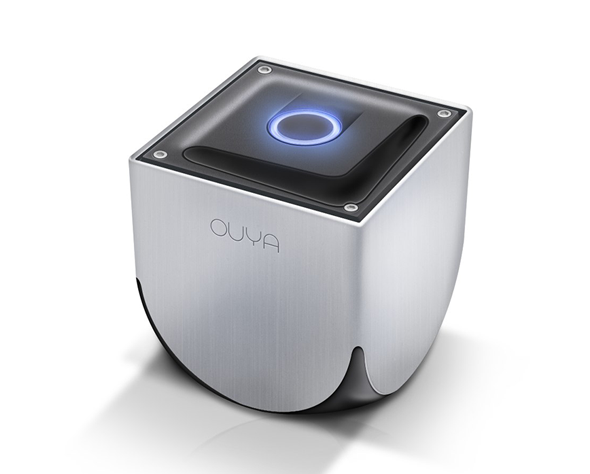
Ouya Console

Over at Kotaku, Tina Amini recently wrote a piece titled “Ouya Tries To Dispel Fears That The Console’s Nintendo Emulators Will Promote Piracy.” It’s not a good piece.

First of all, the author isn’t clear whose fears Ouya is trying to dispel. By my reading, it is only the author herself who “fears” what may happen if Ouya allows Nintendo emulators on its console, and only because she wants to drum up controversy for a blog post. Fear mongering bullshit.

Tina, don’t use fear over emulation or piracy as your traffic-boosting media pawn. It doesn’t help anybody.

Emulation isn’t the enemy. Piracy isn’t even the enemy. They’re bogeymen that help preserve a system where media companies overcharge and re-charge for their works over and over and over again. (I’m talking all media here, not just video games.)

The never-ending war against piracy isn’t a war against pirates. It’s a war against consumers. The content industry has dressed it up to look like a battle of good vs. evil when it’s really just a battle to keep your wallet pried open while dollars pour out.

That war has real casualties for everyone that are far worse than piracy: things like consumers’ fair-use rights over products they have rightfully purchased or licensed, free speech, security research, and our historical legacy.

Piracy, if left completely unchecked, would definitely hurt publishers. But it’s not unchecked. It’s illegal.

Let people do what they want with open platforms. Let the law be the law, and let the people decide if it’s in their best interest to respect it or break it.

You could always put people in straitjacket if you didn’t want them to break any laws, but it wouldn’t allow them to be free, would it?

DRM is a digital straitjacket, and a “walled garden” is a fancy name for a comfortable prison. If a company like Ouya is brave enough to let their console be used for whatever purpose, that should be commended, not discouraged.

P.S. Fix the DMCA

Predicting the Smartphone in 1989 — as the Smartwatch

Monday, March 25th, 2013

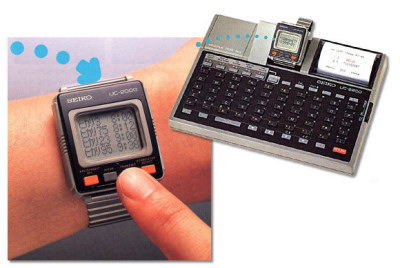
Seiko UC-2000 Semi-Smartwatch

While researching my slideshow on smartwatch history for TechHive last month, I came across an interesting 1989 letter to Computerworld magazine. It was a response to an earlier article in the publication about the inevitability of a wearable watch-sized microcomputer.

I find the letter prescient because its author imagines the consequences of walking around with a full-blown networked computer on your wrist. And he was right about his predictions in every regard except one: instead of computers on our wrists, we’re walking around with computers in our pockets. In other words, smartphones.

But that’s the nature of predicting the future. You can often get the general trends correct without knowing the details. Nobody in 1989 had any idea that the cell phone, instead of the watch, would first become the vehicle through which we’d wear tiny networked computers on our persons almost every hour of the day.

[ Continue reading Predicting the Smartphone in 1989 — as the Smartwatch » ]

Benj’s Macworld and TechHive History Roundup

Saturday, March 23rd, 2013

Macworld Logo
TechHive Logo

I last updated you on my Macworld work back in January. Since then, I’ve been busy writing more historically-minded pieces for the site as well as its sister site, TechHive. Below you’ll find a list of the ones I haven’t mentioned yet on this blog in convenient digest form.

Phew. I’ve been busy! Of those eight pieces, the Apple Lisa one can’t be missed. Plenty of interesting little-known history there. The Mac Color Classic and Abandoned Apples pieces are some of my favorites as well.

I’m not sure, but I get the feeling from the lack of comments on my Apple-related posts that not many Apple or Mac fans visit VC&G. Not quite sure why that is, but if you’re out there, let me know.