August 6th, 2007 by Benj Edwards
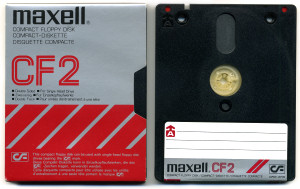
Sure, you’ve probably seen plenty of 3.5″ “micro-floppy” disks. But have you ever seen a 3″ compact floppy? I picked up a stack of these at a thrift store about seven years ago. The ones I found were once used with an Amstrad computer (strange to find in the US), which unfortunately wasn’t accompanying the disks at the shop. Amstrad, the once-prominent British computer manufacturer, used these disks in a few of their computer models (the CPC and PCW, or so I read), and consequently, mainstream usage of 3″ floppies was limited mostly to the UK. Sony’s 3.5″ floppy standard took firm hold in the US because of Apple’s decision to use it in the Macintosh.
I’ve seen an advertisement in an old computer magazine for a 3″ 128k compact floppy drive for the Apple II, one of this format’s first applications. Nintendo fans out there might notice similarities between this disk and Nintendo’s 3″ Famicom Disk System media, but Nintendo’s disks used a proprietary format based on a different standard.
A neat history of the 3″ compact floppy disk can be read here.
If you use this image on your site, please support “Retro Scan of the Week” by giving us obvious credit for the original scan and entry. Thanks.
Posted in Computer History, Design, Retro Scan of the Week | 6 Comments »
July 31st, 2007 by Benj Edwards
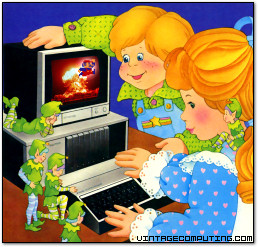 Sure; it’s easy to make fun of what kids say. They’re young, inexperienced, and they’ll do anything to finish a forced elementary school project on time. But I believe there’s no harm in finding entertainment in the whimsical creative works of children, especially when they attempt to write a history of video games. While some of the student-written history I’ve found online is impressively accurate, other times it seems ridiculously and hilariously mangled, probably the result of some quick copies and pastes from an online source. Either way, it’s all gold.
I find it exciting that certain teachers are web-savvy enough to let their students create online reports. It’s not only good for the kids, but it’s often funny as hell for everyone else. The following examples were taken from two different student reports on a real US elementary school website. I’d love to link to the actual pages themselves, but the URLs have been removed to protect the innocent and their microscopic bandwidth. You’ll just have to trust me on this one.
[ Continue reading Kids Say The Darndest Video Game History » ]
Posted in Gaming History, Humor | 7 Comments »
July 30th, 2007 by Benj Edwards
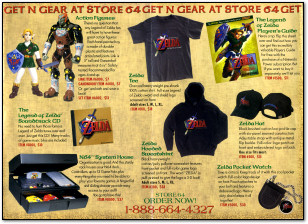
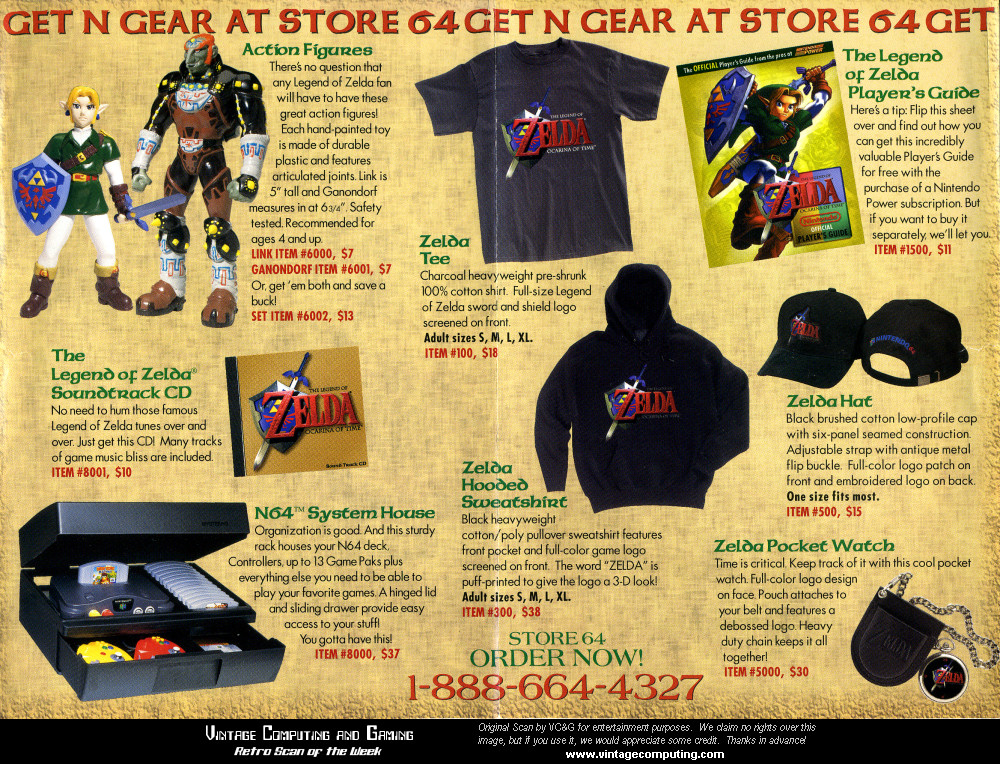
This mini-pamphlet came with my copy of
The Legend of Zelda: The Ocarina of Time back in 1998. I was pleasantly surprised when it turned up recently while going through some old papers. I love the action figures; they’d be worth having now. But what I want to know is, does anyone own the official Zelda pocket watch?
If you use this image on your site, please support “Retro Scan of the Week” by giving us obvious credit for the original scan and entry. Thanks.
Posted in Collecting, Gaming History, Retro Scan of the Week | 17 Comments »
Tags: 1998, merchandising, Nintendo, Ocarina of Time, pamphlet, Retro Scan, watches, Zelda
July 23rd, 2007 by Benj Edwards
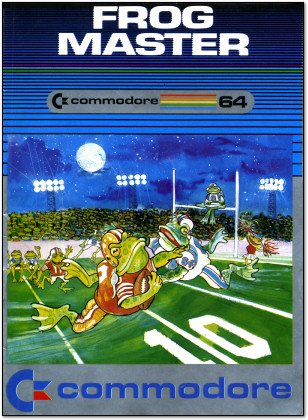
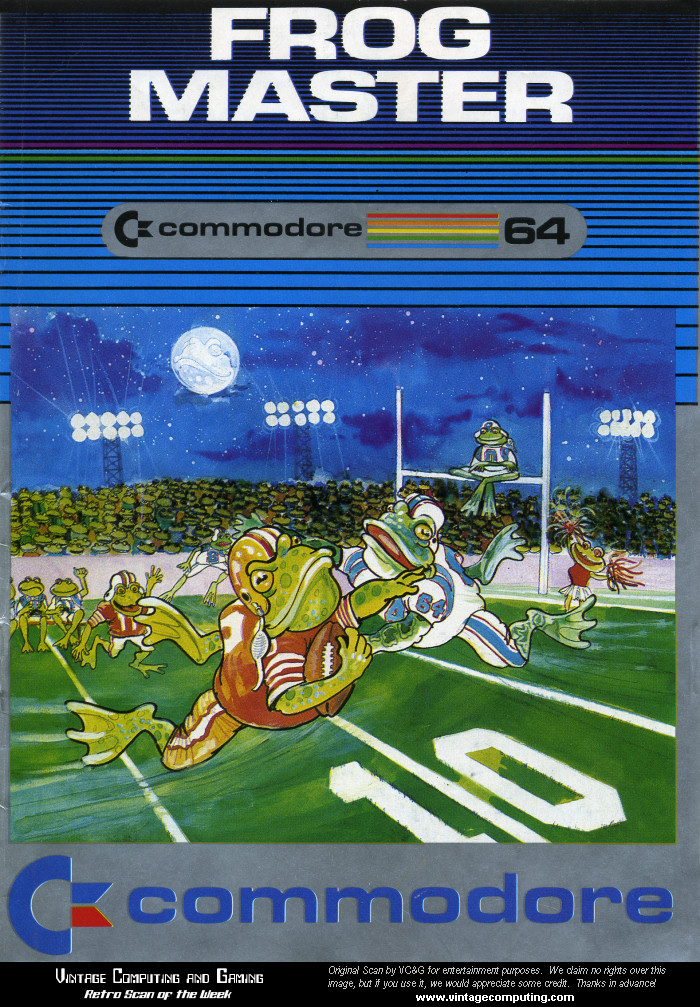
Now you too can become a master of frogs, with
Frog Master on the Commodore 64. Or at least frogs playing football. Either scenario is not too dissimilar from a nightmare I had last Wednesday.
I liked the fanciful artwork so much that I turned it into a .BMP desktop background for you: download 1280×1024 here, and 1024×768 here.
If you use this image on your site, please support “Retro Scan of the Week” by giving us obvious credit for the original scan and entry. Thanks.
Posted in Computer History, Gaming History, Humor, Retro Scan of the Week | 4 Comments »
July 18th, 2007 by Benj Edwards
 [ “Ask RedWolf” is a regular column where Benj Edwards (aka RedWolf) answers readers’ questions about computers and video games. ]
Late last year, I started fielding questions for a new series called “Ask RedWolf”(“RedWolf” being my long-time online alias that I used to go by on this blog). Many months later, I’m finally getting around to releasing the first one.
This time around, I discuss a technical question on the Sharp Twin Famicom and give my best educated guesses on two requests for game identification, which our readers might be able to help with. And of course, you can always ask me questions yourself for the next column. On with the show.
[ Continue reading Ask RedWolf: On Famicom, Winds, and Pyramids » ]
Posted in Ask RedWolf, Gaming History, NES / Famicom | 11 Comments »
July 18th, 2007 by Benj Edwards

Earlier this year, I spent a few months getting into everything Civilization for an in-depth look at the history of Sid Meier’s classic. The result of that work is now up on Gamasutra as “The History of Civilization.” It also includes (at the end of the article) the transcript of a lengthy telephone interview I conducted with Sid Meier on the topic.
I’d like to extend special thanks to Sid Meier, Bruce C. Shelley, and Troy S. Goodfellow for their indispensable help in putting the piece together. I hope you enjoy reading it.
Posted in Computer History, Design, Gaming History, Interviews, News & Current Events | 1 Comment »
July 16th, 2007 by Benj Edwards
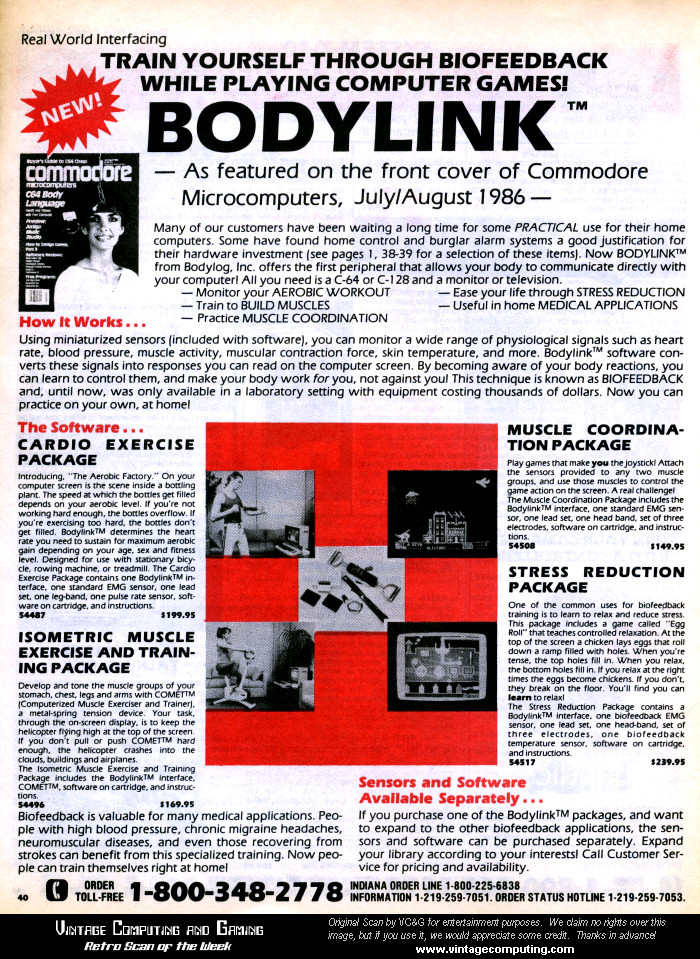
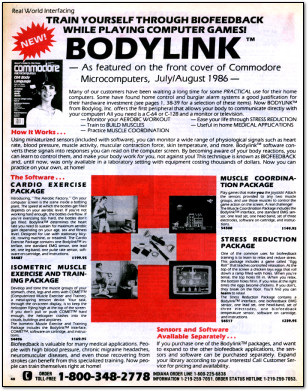 Let’s get wired up and play Jumpman!
[ Scanned from a 1986-87 Comb Catalog ]
If you use this image on your site, please support “Retro Scan of the Week” by giving us obvious credit for the original scan and entry. Thanks.
Posted in Computer History, Design, Design, Gaming History, Humor, Retro Scan of the Week | 2 Comments »
July 12th, 2007 by Benj Edwards
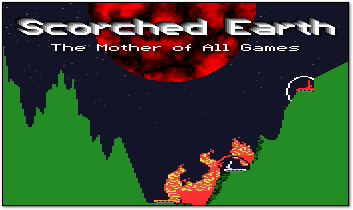
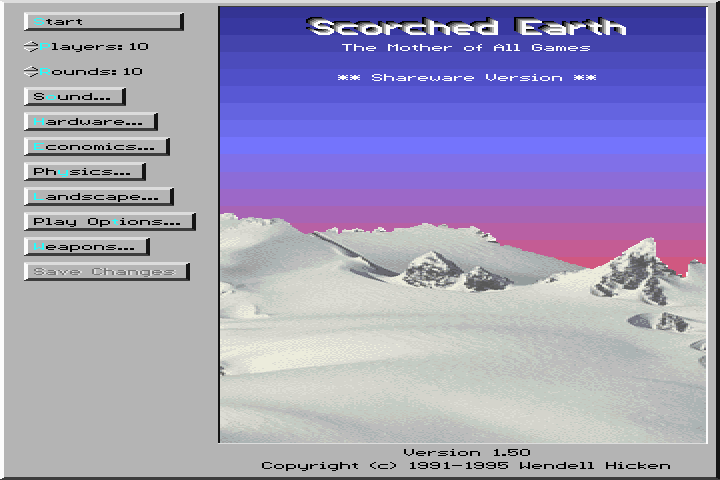
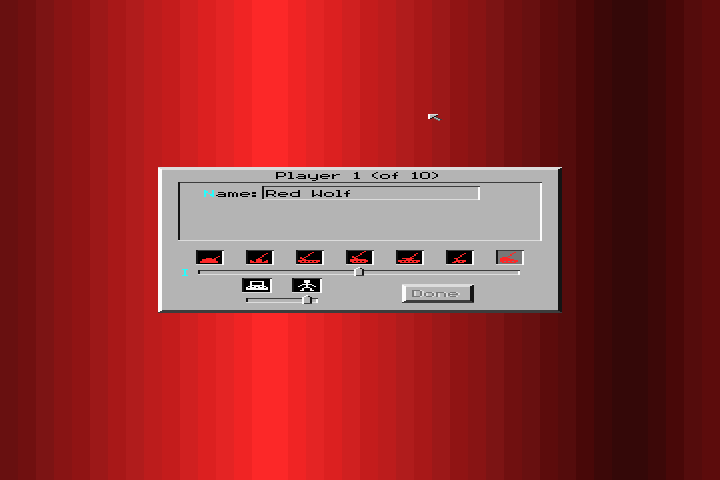
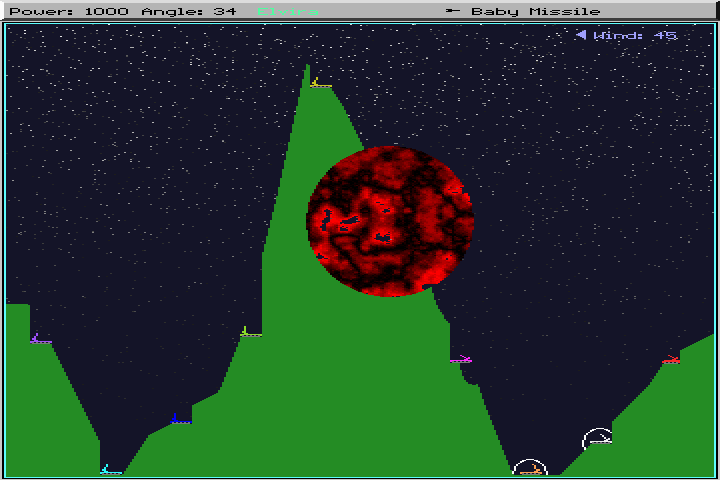
Sixteen years after its humble emergence in the golden age of the BBS, Wendell Hicken’s timeless 1991 artillery simulation remains a hallmark in shareware history. Scorched Earth stands as nothing less than a masterpiece in the field of computer games.
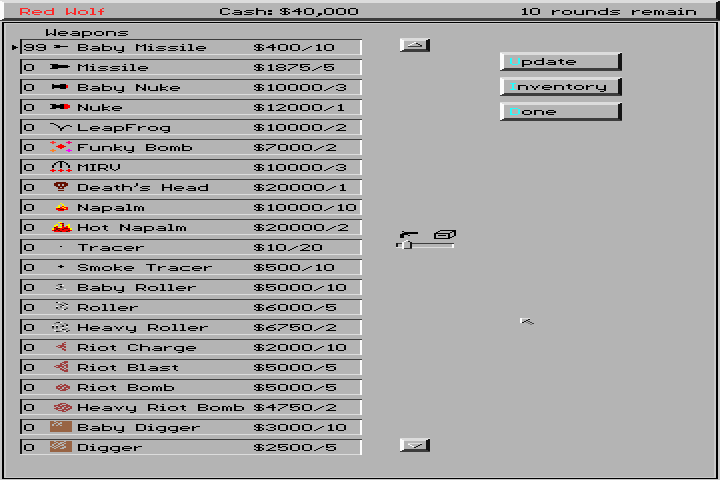
With its numerous gameplay settings, variable computer AI, and an impressive variety of entertaining power-ups, Scorched Earth possesses nearly infinite replay value. It’s also one of the greatest party games ever devised: up to ten players can take turns plotting the explosive demise of their closest friends at the hands of a Nuke, MIRV, or Death’s Head over as many as 1000 rounds. As a testament to the pure strategy of the game, veterans skilled in the ways of Scorch know the best ways to dispatch foes — or merely survive as others duke it out — under any circumstance, rain or shine, springy walls or rubber.
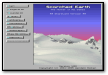

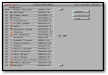

Many of today’s game designers seem envious of Scorch’s ability to consistently entertain for over a decade. Fans of Hicken’s classic have attempted modern remakes of or improvements upon Scorched Earth, but to this day, none has even begun to approach the solid feel, intricate balance, or professional production values of the original. That’s how good it is.
Hicken didn’t invent the artillery game; he perfected it. And as long as our computers run without smoking, we’ll still be playing the original Scorched Earth as good Wendell intended.
| Scorched Earth 1.5 |
| Release Date: |
1991 (1.0), 1995 (1.5) |
| Author: |
Wendell T. Hicken (aka “Sprig”) |
| Platform: |
MS-DOS |
| Runs Best On: |
Any 286 or 386 PC with 640K+ RAM and a VGA card |
Notes:
|
Amazingly, Scorched Earth runs pretty well on modern computers under Windows. If the game seems too fast, adjust the in-game “Firing Delay” setting (under “Hardware”). You might also want to try running the game under DOSBox. The game uses the PC speaker for sound. |
| – Download Scorched Earth 1.5 – (633KB) |
Posted in BBS History, Computer Games, Computer History, Gaming History, Great Moments in Shareware | 13 Comments »
Tags: 1991, artillery game, IBM PC, Scorched Earth, shareware, tanks, Wendell Hicken
July 9th, 2007 by Benj Edwards

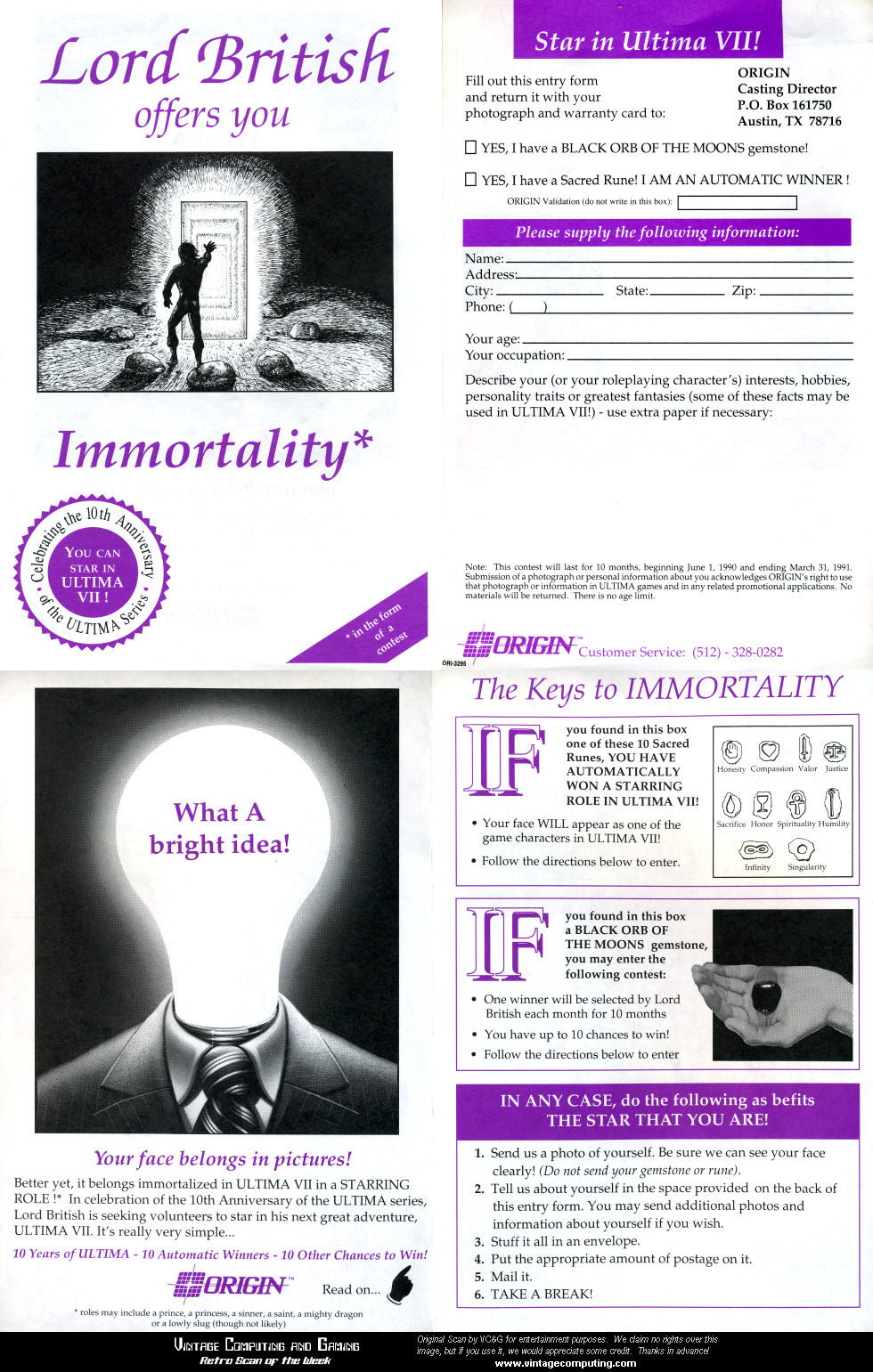
Once upon a time, Origin ran a contest in conjunction with the 10th anniversary of the
Ultima series. The developer included a “black orb of the moons” (a piece of polished obsidian) in most boxed copies of
Ultima VI, released in 1990. But in the case of ten lucky owners, they included a reproduction of an
Ultima rune (I assume ten, anyway — it’s the number of runes pictured on the flier). Folks who found a rune in their box automatically won a spot as an NPC character in
Ultima VII. Click on the image above to see the full flier describing the contest.
I’ve read about people winning the Ultima VII contest somewhere before, so I assume Origin went through with it. Did anybody out there get a rune or otherwise become an NPC in Ultima VII? By all means, let us know!
If you use this image on your site, please support “Retro Scan of the Week” by giving us obvious credit for the original scan and entry. Thanks.
Posted in Computer History, Gaming History, Retro Scan of the Week | 5 Comments »
Tags: 1990, contest, flier, immortality, Lord British, NPC, Origin, Retro Scan, Ultima, Ultima VII
July 2nd, 2007 by Benj Edwards
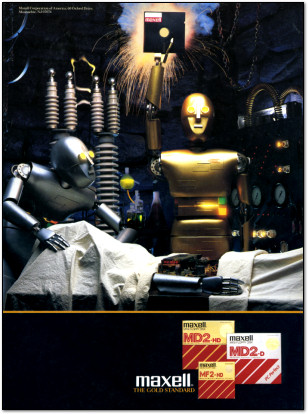
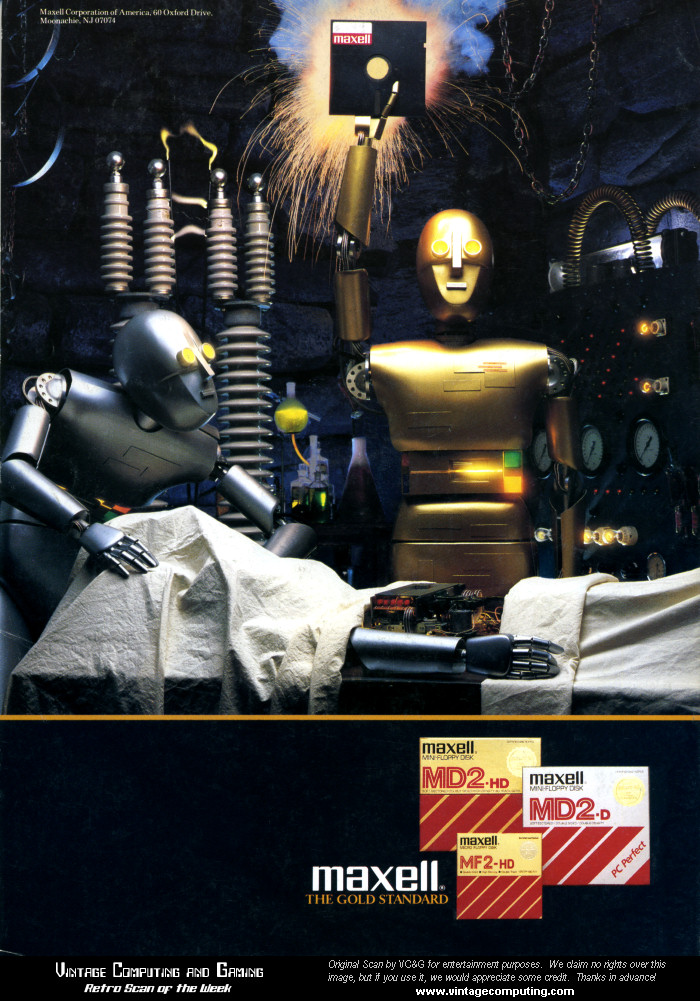
Call it
Frankenstein with robots.
Man, what a way to sell floppies. Twenty years later, these apparently-sentient humanoid machines remain powerful and evocative advertising icons. Their glowing eyes know no particular focus, but they symbolize a spark of intelligence and awareness of the world around them as they adroitly perform tasks heretofore reserved for humans. Each bot conveniently contains a 5 1/4″ floppy drive in its midsection, ironically making each unit ready for new programming via the pinnacle of 1970s consumer portable data storage technology. The whole idea is a tad creepy, but it works.
Maxell ran a series of robot ads like this one in computer magazines during the mid-late 1980s. This particular ad hails from the back of the 1987 BYTE magazine Extra Edition. If anyone’s interested, I’ll scan more from this series.
Does anyone know who the artist is that created this series of ads? If so, please let me know.
If you use this image on your site, please support “Retro Scan of the Week” by giving us obvious credit for the original scan and entry. Thanks.
Posted in Computer History, Retro Scan of the Week | 7 Comments »