[ Retro Scan ] The Atari Trak-Ball
August 16th, 2018 by Benj Edwards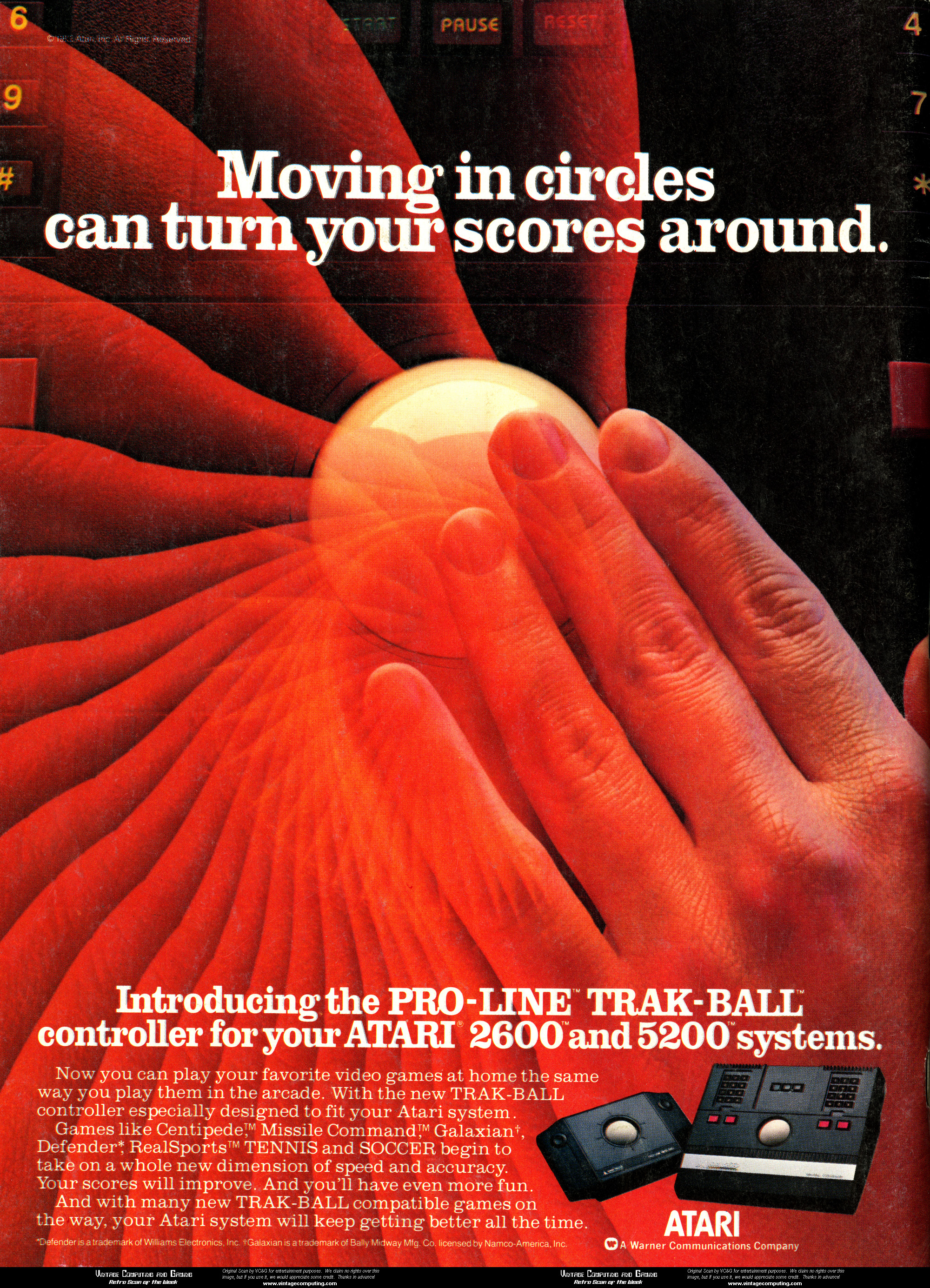 A controller bigger than your head
The reports of Retro Scan’s death are greatly exaggerated.
I just emerged from the other side of a huge house move that taxed my body and soul. Moving my huge collection was very difficult, and now dealing with where to put it all keeps that stress going. I feel behind on lots of things, but it’s time to catch up. One of the best ways to do that is with a new Retro Scan. So here we go — let’s talk trackballs.
As far as I know, the first arcade video games to use a trackball were Midway’s Shuffleboard and Atari Football, both from 1978. As to which came first, I have no idea at the moment.
Atari really ran with the trackball (they called it a “Trak-Ball”) and produced several mega arcade hits that used the interface, including Missile Command and Centipede. It only makes sense that they would bring the tech home to their Atari 8-bit computer line — and the Atari 5200, as seen here — in the form of the Pro-Line Trak-Ball controller.
(An aside: Despite the ad saying the Trak-Ball controller works for the Atari 2600, I know of no vintage 2600 games that support trackball mode natively. There is a joystick mode switch on the bottom of the controller, however, that lets you use it with any game.)
Of course, the 5200 version of the Trak-Ball controller is legendarily huge. It’s almost as big as the (already big) console itself. But I’ve heard good things about it, despite never having used one. I do have the smaller CX22 Trak-Ball controller and I enjoy games of Missile Command on my Atari 800XL with it from time to time, although it is criminally under-supported (in Trak-Ball mode) by games on that platform.
So how about you guys: Have you ever used the Atari 5200 Trak-Ball? What did you think about it?
Discussion Topic: Have you ever used a trackball with any game console? Tell us about it.
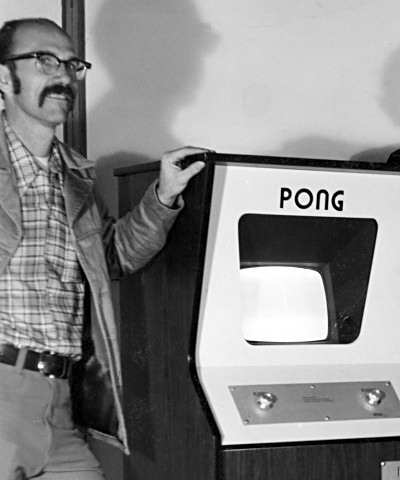
 There is some confusion about the reason Dabney left Atari. Dabney told me that Nolan forced him out. Bushnell commonly cites poor work performance as the reason Dabney left. Absent some documentary evidence, the real answer will always be one of those fuzzy historical points left to interpretation. What we do know for sure is that the two founders were no longer getting along.